
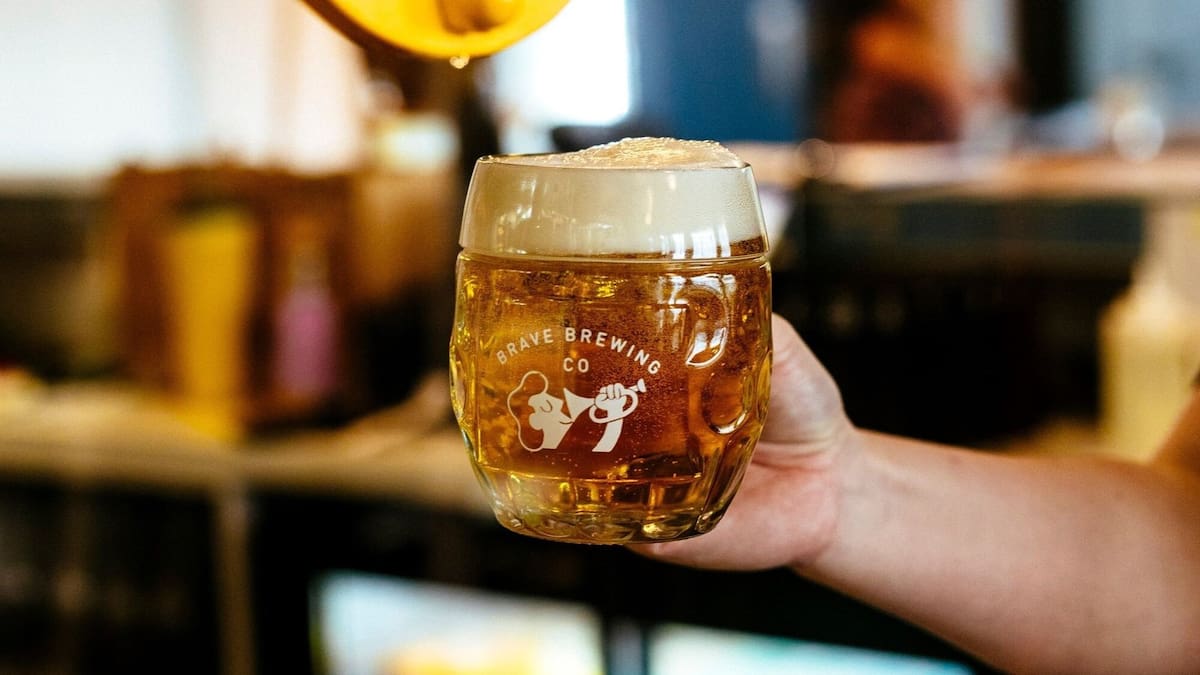
Some of that shift can be attributed to the cost of a pint, they said.
Draught beer excise tax increased more than 13% over the past three years – from $33.241 per litre of alcohol on July 1, 2022 to $37.836 per litre of alcohol on July 1, 2025 and brewers expect it to rise again this year.
A Curia survey of over 1000 New Zealanders from March 2026 showed 47% of respondents “occasionally” choose to drink beer at home over going out because of the high cost.
Current tax settings treat packaged and draught beer the same, so the organisations see a reduction in excise tax as a way to rebalance the market share.
The UK and Australia already applied a reduced tax rate on draught beer.
Hastings’ Brave Brewery co-owner Gemma Smith said ongoing excise increases had “significantly” raised the cost of serving beer on tap, putting pressure on their margins.
Brave Brewery co-owner Gemma Smith.
The brewery’s most popular product, Tigermilk IPA, costs them $125 in excise tax for every 50-litre keg they produce.
“Per 2400 litre batch made, it costs us $6000 per batch in excise tax,” Smith said.
“Comparing excise tax cost vs the cost of the raw ingredients used in the beer, excise makes up 59% of this cost.”
Smith said brewers paid excise upfront, which created cashflow strain, especially when brewing and hospitality had been under pressure since the Covid pandemic.
She said Brave was not arguing to stop paying excise tax, but for the Government to consider options to support “manufacturing, hospitality and communities” by providing relief in challenging times
Havelock North’s Giant Brewery founder Chris Ormond said venues paid more for kegs now than four years ago, which is why punters would have seen pint prices increase.
Giant Brewery founder Chris Ormond.
“That is just a direct result of the rapid increase in excise tax.”
Ormond said he had noticed a significant increase in the wholesale price of a keg, which had to be passed on to consumers.
“It’s a shame that it’s starting to turn punters away. That’s what the industry is trying to remedy.”
Hospitality NZ chief executive Kristy Phillips said a thriving pub sector was critical to local employment, tourism and the social fabric of the country.
“More than 160,000 New Zealanders work in hospitality, many in regional areas.
“This is about keeping beer in supervised community spaces and keeping both hospitality venues and breweries not just surviving but thriving.”
Executive director of the Brewers Guild of NZ Melanie Kees said breweries, especially in the regions, were already under pressure from rising costs, and the current excise increases the burden.
“Reducing excise on beer served from kegs would not only support their ability to do business but also strengthen the entire value chain while protecting the community infrastructure and social spaces that pubs, bars, and taprooms provide.”
Associate Justice Minister Nicole McKee said she was open to the idea.
“It’s much more expensive to drink at a licensed venue than at home, unsupervised, and I’m concerned this price gap may increase alcohol harm,” she said.
“The excise tax on alcohol is meant to reduce harm, so we should consider whether its current settings are doing that effectively.
McKee said cutting excise would mean less revenue for a Government already in deficit, but the more savings found “the more feasible tax relief of any kind becomes”.
“I understand changes in this area are being considered as part of the Ministry for Regulation’s hospitality review.”
Jack Riddell is a multimedia journalist with Hawke’s Bay Today and has worked in radio and media in the UK, Germany, and New Zealand.