
Pamela Shennan knows how it feels to watch someone you love die.
“It just shifts and rocks your whole world,” Shennan recalls. “You’re just like, ‘What do I do?’”
Shennan, who lost her parents within months of each other in her early 30s, lost her husband to melanoma when she was 48.
“You go through the pain he’s in as well,” she says. “The physical pain he is in, the pain of saying goodbye, the pain of watching your children say goodbye.”
Suddenly, the US native who moved to Tauranga in 2004 was left alone to raise four kids. “How do you hold space for everyone in that moment?”
It’s a sacred thing to look into another person’s pain, to sit with them in that pain, Shennan, now 55, says.
Her own experience with grief led to her work as a spiritual care co-ordinator for the Waipuna Hospice, as well as a grief counsellor – roles Shennan considers a privilege.
Over three years, Shennan has helped more than 100 patients at the hospice find “a bit more peace”.
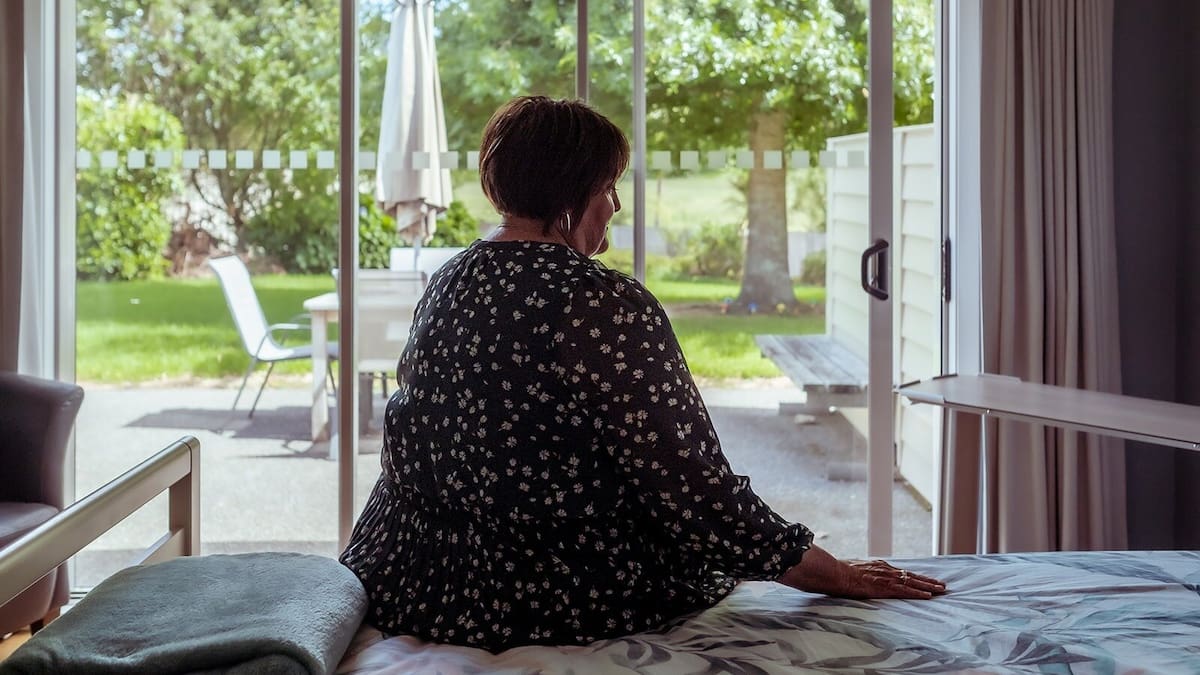
Pam knows how she wants to die. Photo / Supplied
What does it feel like to die?
She has heard death. She has seen death. But does she know what it feels like to die?
That’s the most common question Shennan gets asked by the dying.
The hospice staff, who are “very willing” to have deep conversations about death, hear patients’ needs, and doctors are there too. Wanting to know what happens in a spiritual sense is where Shennan may come in.
“Sometimes it’s a conversation they’ve not been willing to have with anyone,“ she says.
Shennan begins with open-ended questions: what would you want death to look like? What are you hoping death might be?
“Obviously, a lot of people want a pain-free death,” she says. But as death approaches, Shennan says there are similarities in what people report experiencing.
“They may start to see something happen,” she says.
“They’ll start to notice moths or birds or something significant … or they might sense something in the room… That is a very common thing.”
A good death
Shennan knows how she wants to die.
“I now have more of an appreciation for dying at home,” she says.
She used to worry about how her family would feel if she did that.
“Now I see it as I can be surrounded by music I love that gives me peace, I could have the smells around me that I love … it’s that comfort of my home.
“For me, a good death is going to be surrounded by people I love in a place I know with the things I love around me.”
No regrets?
When it comes to talking about their regrets in life, Shennan says there’s a common theme among the people she spends time with.
“Often people regret broken relationships … people regret knowing they haven’t done something”.
She says forgiveness of oneself and others is key to finding peace.
“We all make mistakes,” Shennan says.
But people don’t regret taking adventures.
“They don’t often regret travelling or going and doing something.”
People mention what their children have done or what they’ve done as a career (usually if they served others and found meaning doing so) when speaking to Shennan about personal achievements.
“For most people, [achievements are] not about material things,” she says. “It is about those relationships, in whatever way that looks like for them.”
Death is not to be feared
No one can escape death. It is a universal experience. Despite this, stigma around the topic exists, making it difficult to discuss openly. But Shennan believes people often fear things “we mostly see on TV [where] there’s a lot of drama”.
“We can’t control medical events, but often people have a very peaceful death, it is almost like going to sleep.”
Death is, in her opinion, “not to be feared”.
“I wish people realised hospice … can do so much to support them,” she says.
According to Hospice NZ, one in three people will need hospice care, but because Waipuna Hospice functions as a charity, only a portion of its costs are covered by the Government. This makes community support crucial to the continuation of its services, “whether that’s through partners like the House of Travel or people going to our shops, or donating goods, or donating their time”, project lead Ceilidh Dunphy says.
Asked what she thinks dying people wish the living would stop worrying about, Shennan says it is not caring so much about what others think.
“It’s about your life and what you value and what you think is important for your circumstance – not so much what other people think about you.”
Varsha Anjali is a journalist in the lifestyle team at the Herald. She is based in Auckland.