
EDITOR’S NOTE: Call to Earth is a CNN editorial series committed to reporting on the environmental challenges facing our planet, together with the solutions. Rolex’s Perpetual Planet Initiative has partnered with CNN to drive awareness and education around key sustainability issues and to inspire positive action.
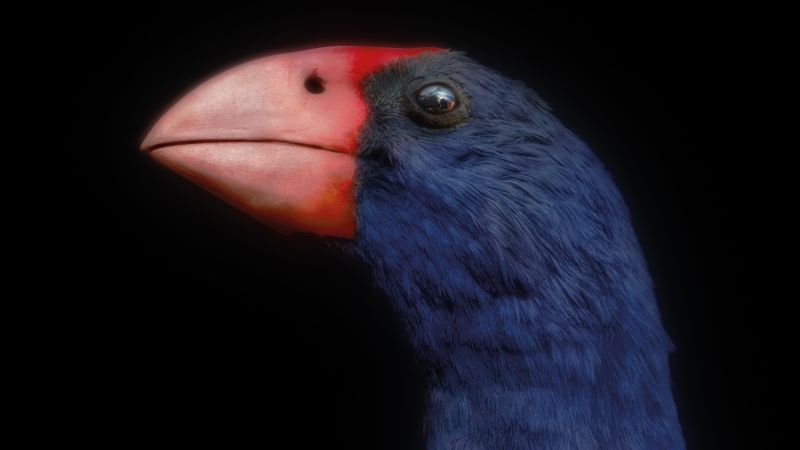
The first time Fiona Pardington saw a huia bird it was in a Christmas pudding. The artist, then a girl, bit down on a slice of her Aunt Nelly’s cake, only to hit an old silver sixpence bearing an illustration of the extinct species.
Pardington spat out the coin and looked at the bird, the male with its long, curved beak and pronounced wattle. She knew little about the huia; its distinctive song, nor its prized tail feathers. As an adult, she learned the bird was sacred to New Zealand’s Māori people, containing great “mana,” or life force. But it was hit hard by habitat loss, which accelerated after the arrival of European settlers, until it died out in the 1900s.
Today the artist, who is of Māori and Scottish descent, sees the irony of her first encounter — liberating the bird from a symbol of the culture that caused its demise. The huia, like some other native bird species, have “haunted our history,” she said.
Since the early 2000s, Pardington has worked to return New Zealand’s rare and extinct birds to their cultural context. She does so through unusual means: she shoots studio portraits of taxidermic specimens. Dead birds, she hopes, could help protect those still living in Aotearoa (the Māori name for New Zealand).
At this spring’s Venice Biennale art exhibition, Pardington’s photography will occupy the Aotearoa New Zealand Pavilion. Her series “Taharaki Skyside” (“The Multitudes Skyside”) features 17 portraits of birds including extinct species like the huia and whēkau (“laughing owl”), alongside vulnerable and endangered parrot species such as the kākā (forest dwellers) and the kea (the world’s only alpine parrot).
The birds come from museums across New Zealand and Australia. Some have traveled farther as part of colonial-era collections — as far as the British Museum — and been returned; a story unto itself about the plundering of the natural world in the age of empire, and institutions reckoning with their inheritance.
Shooting taxidermy is “not a task for the faint hearted,” said the artist. Each example in the show is an “imperfect specimen … You’re dealing with birds that are hundreds of years old, many in states of disrepair.” Damage and inaccurate anatomy are just two factors Pardington faces.
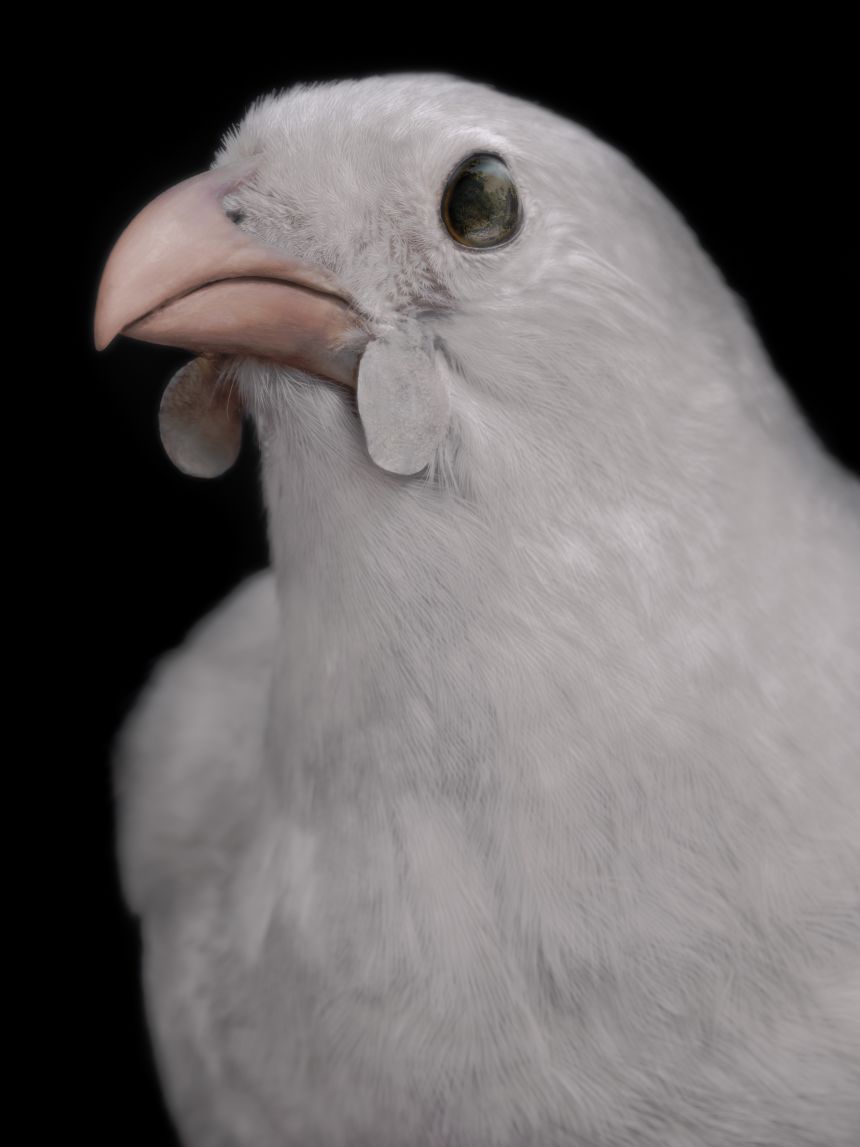
She photographs them against studio backdrops, collaborating with her brother, creative director Neil Pardington. Some of the birds look down her camera lens, others tilt their heads toward the sky. Paradoxically, the still portraits of dead animals are brimming with life.
In Venice, the exhibition will build on the uncanny photography by invoking Dante’s “Divine Comedy.” The medieval Italian poet imagined the Southern Hemisphere was the location of mountainous island Purgatory, and Pardington positions New Zealand as a “Purgatory of birds,” writes Andrew Paul Wood in an essay accompanying the show. The portraits, he adds, represent “the sins of ecological devastation, human-driven extinction and colonization. They judge us and are us.”
“Birds are our tupana — they’re our ancestors,” Pardington said of Māori beliefs. “In myths they’re enormously important. There were many deeds they did, and they embodied very powerful qualities, and carried huge stories.”
She described the “wholesale consumption” of endemic birds in the past, where they were hunted, stuffed and exported for collections or fashion, as a “violation.”
“You may look at a (portrait) and go, ‘that’s a small white bird with a finch-like beak,’ but for me, behind that is all the mana and cultural profundity — which is not going to be obvious to anybody outside of New Zealand,” she added.
To bridge the knowledge gap, Pardington has enlisted specialists including Maia Nuku, curator of the Oceania section of the Metropolitan Museum of Art, New York, to write on the social significance of the show’s subjects, as well as their unique biology.
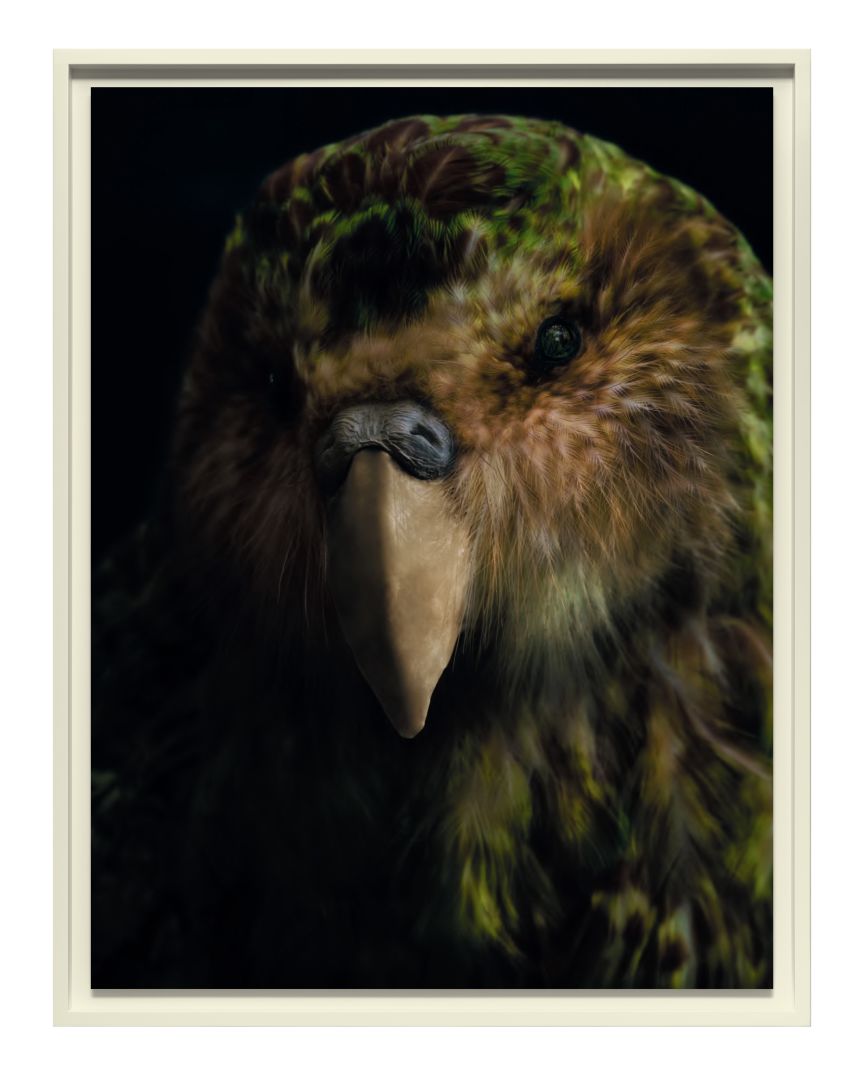
For millennia New Zealand was an “alien planet,” said the artist. Its lack of natural predators protected birds with unconventional lifestyles by most bird standards. Species like flightless parrot the kākāpō happily live, sleep and nest on the ground, for example. But the introduction of predatory mammals including rats and cats left them vulnerable. Only 236 kākāpō exist today, the vast majority on publicly inaccessible islands that have undergone pest-eradication programs.
New Zealand’s Department of Conservation lists 69 threatened bird species, 18 of which are at “immediate high risk of extinction.” The most endangered is the New Zealand fairy tern, tara iti, with a population of less than 50, including 10 breeding females.
The nation is known for its conservation-forward image, but Pardington believes more investment is needed to stop invasive species like wallabies and possums (both of which were introduced from Australia). She rails at what she calls “clean, green posturing” by the government, which last year removed a ban on new oil and gas exploration, and at proposals to expand coal mining operations in the biodiverse Denniston Plateau on the west coast of the South Island.
Her artwork, silent, stoic, is a testament to what is lost, and could still be lost, when consumption and exploitation run unchecked and unchallenged.
Pardington hopes the photos will influence Venice’s international audience. “Art isn’t just a frivolous thing. It can affect people very deeply and move cultures,” she said.
“People can be very politically strident in the arts,” she said, though she opts for a quieter register on purpose: “I’m talking to people about difficult subjects in a way that might entice them in closer, so when I’m speaking to them, I might only have to whisper, but they’ll hear me.”
“I think you can do a lot more with love, respect and beauty,” she added.
The Venice Biennale opens on May 9 and runs until November 22. The New Zealand Pavilion will be located at Istituto Santa Maria della Pietà, Calle della Pietà, Castello 3703.