
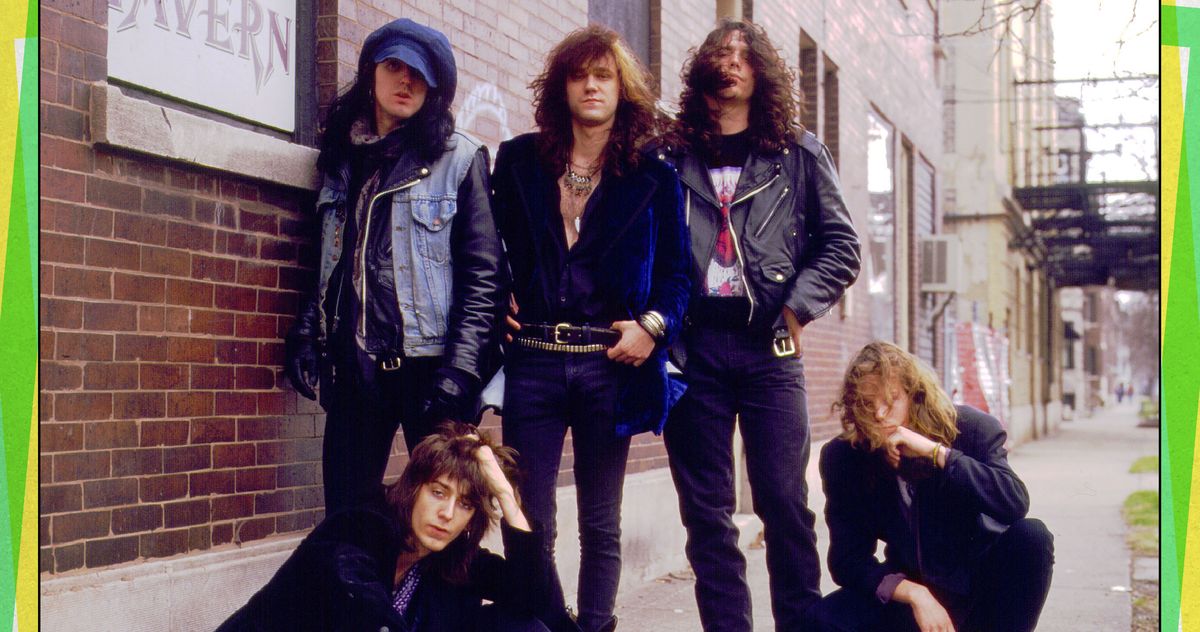
A Vulture series in which artists judge the best and worst of their own careers.
“You see a lot of kids and they’re like, I canceled my shows because I’m having a mental health issue. And I’m like, Jesus, the whole nineties was a mental health issue for us.”
Photo-Illustration: Vulture; Photo: Paul Natkin/WireImage
Chris Robinson is a bit bemused at the idea of a column being dedicated to legacy musicians, even if his own band, the Black Crowes, released their swaggering debut album 36 years ago and are now eligible for induction into the Rock and Roll Hall of Fame. “Basically, it’s just for anyone over 40 then?” he asks. “I mean, I’m far older than that. I find it weird looking back. Rock and roll is different from pop music.” The front man even does his best impression of today’s “Hot 100” artists to further his point: “They’re like, I have a billion streams and now I have my own chicken restaurant. Oh my God, I can’t wait until the next album. They must be so busy with biscuit recipes. Or, This is my new energy drink and this is a credit card commercial. Hey, man, it’s capitalism. I dig it. It’s funny because there’s a juxtaposition. It really brings into sharp focus the difference in generations.”
Robinson, together with his brother, Rich, have been the two continuous Black Crowes members throughout their turbulent history — unapologetic stewards who carried the tradition of American rock music during a transitional period for the genre. (Even if they were, ahem, a bit hard to handle for some people.) Now they’re having another big year. The band’s tenth album, A Pound of Feathers, was released earlier this March, and they’ve been nominated a second time for the Rock Hall among a particularly stacked ballot of contenders. And like their relentless touring schedules of the past, the brothers will traverse the world for several months in support of the album. Robinson promises, above all else, that the Black Crowes remain one of the best visceral experiences you can find in music. “Perfection,” he says, “has never been what we’re looking for around here.”
Rich would probably give you a different answer. I hate to say it, but “Cursed Diamond” from Amorica is an open wound of a song. Our balladry is one of our strongest suits. It’s funny that we had a hit with “She Talks to Angels,” and then as the years went by, people were like, They’re a rock band. They sound like the Rolling Stones. I think some of our ballads get lost in the mix. “Cursed Diamond” is funny that way because it starts as a ballad but then moves into this mid-tempo riff. A lot of our songs are romantic — a dark romance. Certain creatives among us grew up in a time where if it’s not passion to the point of madness, especially with young love, it doesn’t exist.
“Thorn in My Pride” from Southern Harmony. It has to do, simply, with the groove of the song. That song expanded from the record. We were playing it a little bit live before that album was released in 1991, but it extended to where the drums changed the groove and I can play harmonica. It’s anything that makes me want to dance. As the years go by, your crowd gets older. There’s more sitting down at concerts in general, not just with the Black Crowes. People are on their phones looking at other things. I’m like, It must be nice. I’m not great at acting. It sounds New Age-y, but I need their energy.
Especially early in our career, if I was depressed or going through something and the crowd wasn’t with it, I would lash out. It’s not like that now, of course. I found a deeper emotional vocabulary than lashing out. It’s still available if I need it, but I really do need everyone in there. It’s also reciprocal. The cerebral part of rock and roll is not why I got into it. It has to be a full, physical thing. That’s hard to define. I’ve walked off stages going, Oh my God, that was the fucking best, and no one says a word. And I’ve walked off stages thinking that was dog shit, and people would be like, That was amazing. So it’s a hard thing to quantify.
“Profane Prophecy” on our new record. Rich plays all the guitars and bass on that track — it’s an open G riff. Rich loves Keith Richards, Nick Drake, and Stephen Stills. People who played in open tunings. But Rich alone is a very unique guitar player. We were listening to Mississippi Fred McDowell the other day and having a little blues moment. His slide playing was really important to us growing up. We love that country blues. A lot of people would listen to Mississippi Fred McDowell and then play every note, but Rich didn’t give a fuck about that. Rich took what he liked and how it made him feel. He can incorporate some of it, but he wasn’t interested in playing the exact thing.
It’s the same with all of his influences. Rich didn’t want to play regular blues. We didn’t sit around learning “Stairway to Heaven.” We just started writing songs. I think that’s the core of Rich’s uniqueness. You can see things that inspired him, but he always had a singular thing. Also, his right hand is the best drummer in the world. We’ve had a lot of members in the band, but the one thing is if you’re going to be in the Black Crowes, our rhythm section is driving everything. Rich really is the drummer and everyone else is playing to Rich, even our drummer. There’s a few people who can do that rhythmically, but I don’t know if they do it as profoundly as he does.
Three Snakes and One Charm, our fourth record. Maybe people can now start digging deeper into Black Crowes, find that record, and be like, Oh, wow. The band has benefited and suffered from this whole dynamic that it’s not exactly what you think it is. We’re not a “southern rock blues band.” Those are things that stuck because the average person has a few sentences to write about your life’s work, and they truly aren’t that imaginative and they’re lazy, too. We’re a blues, bass-rock band from the South, and because of the element of roots music in us, it has a southern vibe. That’s the nature of it. Three Snakes was us being young artists — young musicians who were unaware of the pressures around us to continue to feed the machine.
It’s almost like the movie Quest for Fire. These Neanderthal types of people have to take fire because they don’t know how to make fire unless they have it from lightning. But they keep it in this little thing, and they’ve been chased out of their cave by other people. In some ways, that flame they’re saving, that’s me and Rich in the way we feel about music. We’ve never lost that kind of wide-eyedness. We believe in the magic of it. It should be read like mythology. It’s not a black-and-white narrative. We tapped into it and committed ourselves to this as young people, but we were always searching for that purity. Three Snakes was just where we were at the time. The first six years of the Black Crowes were insane to process. 1989 to 1996 wasn’t a great expansive time, but we did a lot of living. We went from being these kids in our hometown to being out in the world and being in a very adult world in terms of our expectations all meeting the criteria on that record. But at the time, we would get hit with a lot of, “Where’s ‘Jealous Again’?” “Where’s ‘Remedy’?” I love the record because of that. It was an incredibly fruitful time in terms of where we were creatively.
It was a real turning point at the end of the ’90s when we made By Your Side. We had signed with Columbia Records, and it wasn’t a good fit. I thought the people there were horrible, like Donny Ienner. Tommy Mottola thought he was a gangster. They were unimaginably boring. But we were put in a situation to make this record, and I’ll always remember it as being kind of heartbreaking. Up until that point, I was always available to hear things. Oh, you didn’t sing that right. You’re out of key on that. But the lyrics have always been my place. This is what I want to say. To be honest, I don’t take a lot of criticism about lyrics because I feel that’s my domain. When we were working on the title song from the record, I remember sitting in the studio when one the worst people in the music business, John Kalodner, was like, “I don’t like the chorus.” Originally, the chorus was, “If it ever stops raining, we can dry our eyes.” I repeated “if it ever stops raining” a few times. That was the first time the other guys in the band were like, “Yeah, dude, redo it.” And I was like, “Oh, okay. Really? You guys are so easily swayed by trying to please the corporate entities of these people who could give a rat’s ass about what we do and what we are if they could just make a little bit of money.”
I get it. That’s the nature of the business. But I liked trying to be more subversive within that. Romantic naïveté. These are my themes. But everyone voted me out and made me redo it. So I went home and rewrote the chorus to “By Your Side.” I had the verses and it was like, When all your friends are fake, it seems like it’s a song to bring us together. I’ll be by your side. It’s completely cynical now. I did it as like a “fuck you” to my partners in the band and my brother. It’s subtle, but in my way. I realized we’ve run aground here in some philosophical way. Again, to a normal person, what’s the big deal? But to me, it was crushing. The only people who benefited from me changing those lyrics was my coke dealer at the time.
We shied away from the showbiz rock-and-roll thing, and I think that’s why our music and the musicianship got better. I was always pushing toward … well, we should be in a place as a band where everyone’s more free. That’s what we did. The song “Wiser Time” fits that idea well. On the record, the song has a keyboard solo, a Rich guitar solo, and a pedal-steel solo. So it was already a vehicle for something special in the solo section. We play it more like the record version now, but there were certain times where the keyboard player could just be nebulous and play however long he wanted. When you’re done, just look up and we’ll go to the next guy, stop the whole song to kind of reboot, and then let everyone find their way. In the old band, some nights it would be reaching heavenly heights, and some nights maybe we’ll just be at base camp. If you’re not trying, then you’re not getting anywhere. It’s the same thing today. We’re one of the last bands where there’s no laptops on our stage. We don’t play facing mechanical computers. We don’t even have in-ear monitors. That goes back to it being a visceral thing as opposed to like, Oh, well, everyone else is doing it. This will make it neat.
None, never. Those people were so far away from what we were doing and living the life that we lived. Critics never meant anything to me. I mean, if they liked it, then that would be better. If they didn’t, it would just be like, Of course you don’t. There’s no hostility, that’s just the fact. It’s the same thing as today where everyone is so happy and clean. You didn’t come up in clubs where people threw shit at you and said you suck because you opened for somebody. Or the dirty reality of life before becoming liked. No one got a record. I’ll be honest with you, a lot of times in the ’80s, the bands that were popular that played fraternities and had big followings didn’t get record deals. It was the weirdo kids like us who weren’t great, but we had something cooking. The cauldron was bubbling and people could see the potential. It wasn’t put together by grown adults. It was kids doing it and trying to dig deeper into what it could be. And it’s still the same. I don’t care. Who are you to say you like the food at this restaurant and I should go eat there? The fuck are you? I’ll trust myself and my experience.
I never think about singing. That’s the one thing I don’t think about. You know what? I’ll leave that up to the critics. Actually, since this has been on my mind a lot lately: With the Live at the Greek show we did with Jimmy Page that’s now out as a box set, one of the nuggets they dug out of the mine was “The Lemon Song” from a sound check. It was just ferocious. I was like, Wow, that was just from a sound check for a dozen people? When you’re with Jimmy, every time he plays, it’s up to a ten. There’s no mucking around. So I don’t know if that’s the best singing I’ve done, but when I heard it, I was like, That’s getting some work done up there with James Patrick Page.
The thing I learned the most from Jimmy was his work ethic. The Black Crowes were famously a lazy-rehearsal band. I want to get up there, see what’s going on, feel my way, and not be so put-together. I like showbiz, but I need a little more. But when we rehearsed with Jimmy, it was like the show. Sweating, working, and digging deep and being passionate and aggressive. He’s physical and intense, and we’re not going through the motions for one second. There was some shit story our ex-drummer said that Rich rejected doing a record with Jimmy. That’s just not real. It would’ve been amazing, but it never got off the ground.
That’s wild. It would have to be “She Talks to Angels.” That’s the song really in people’s imagination. One, it’s a very inviting song. It has a gentle and open tuning thanks to Rich’s orated intro. I wrote that song from a dark romantic perspective as a kid who was yet to really be in the world that much. Secondly, I was yet to experience some of the experiences that the song deals with, like addiction. The reason I say that song might resonate longer than any other is because I meet people all the time who say “She Talks to Angels” means so much to them — whether they knew someone like that or have been through something similar personally. People share their stories with me about the song a lot, and I always find it to be really poignant and touching. If you’re a songwriter, that’s what you’re shooting for, that soulful connection. It has to exist on some other levels besides just having a nice melody. I mean, when we play the song, we’ll still see people crying. To me, that’s what the song is for.
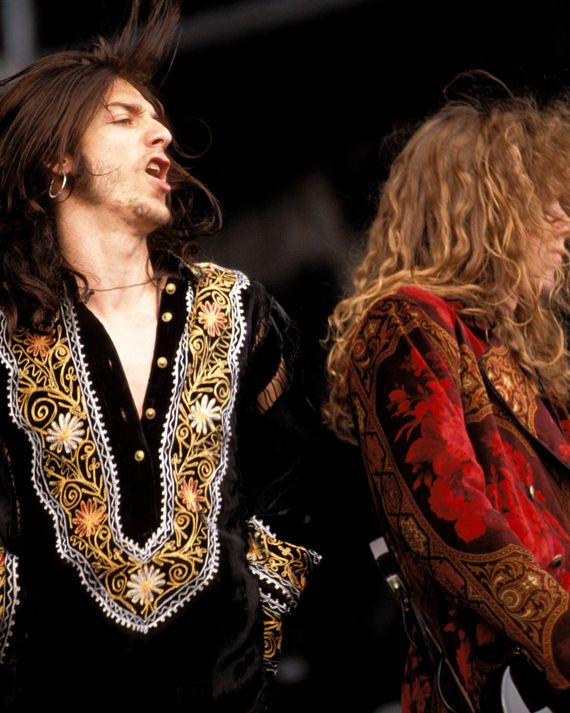
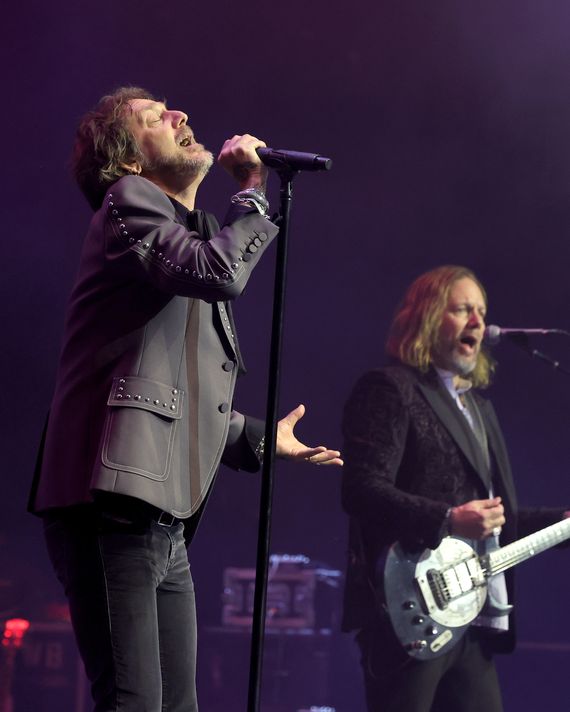
The Robinson brothers, performing 30 years apart. From left: Photo: Mick Hutson/RedfernsPhoto: Ethan Miller/Getty Images
The Robinson brothers, performing 30 years apart. From left: Photo: Mick Hutson/RedfernsPhoto: Ethan Miller/Getty Images
Finding ways to deal with the boredom. Or rather, accepting boredom as a tool. It’s a lot of waiting around for those few moments you get onstage. When you’re young, you have alcohol, drugs, and all sorts of things that your younger self can take in a day. You have to be comfortable with that boredom. I knew this when we were kids, like, Oh, everyone gets up and goes to work from nine to five, then they come see us, and then our day is from seven at night to three in the morning. We live completely opposite lives. It’s different now too. You see a lot of kids and they’re like, “I canceled my shows because I’m having a mental-health issue.” And I’m like, Jesus, the whole ’90s was a mental-health issue for us. We just had no choice. Fucking get out. You got to go do the gig. We had schedules and budgets.
Every band documentary you see, they always go, “If we could just have taken six months off, we could have cooled off.” You didn’t do that. You didn’t get the chance. You’re losing your mind or whatever. You just don’t say anything. It’s so different now. I told some younger musicians the other day that our first tour for Shake Your Money Maker was 350 shows in 18 months. And we did it. We were definitely different when we came home than when we left, but that was for a myriad of reasons. The future seems much more gentle.