
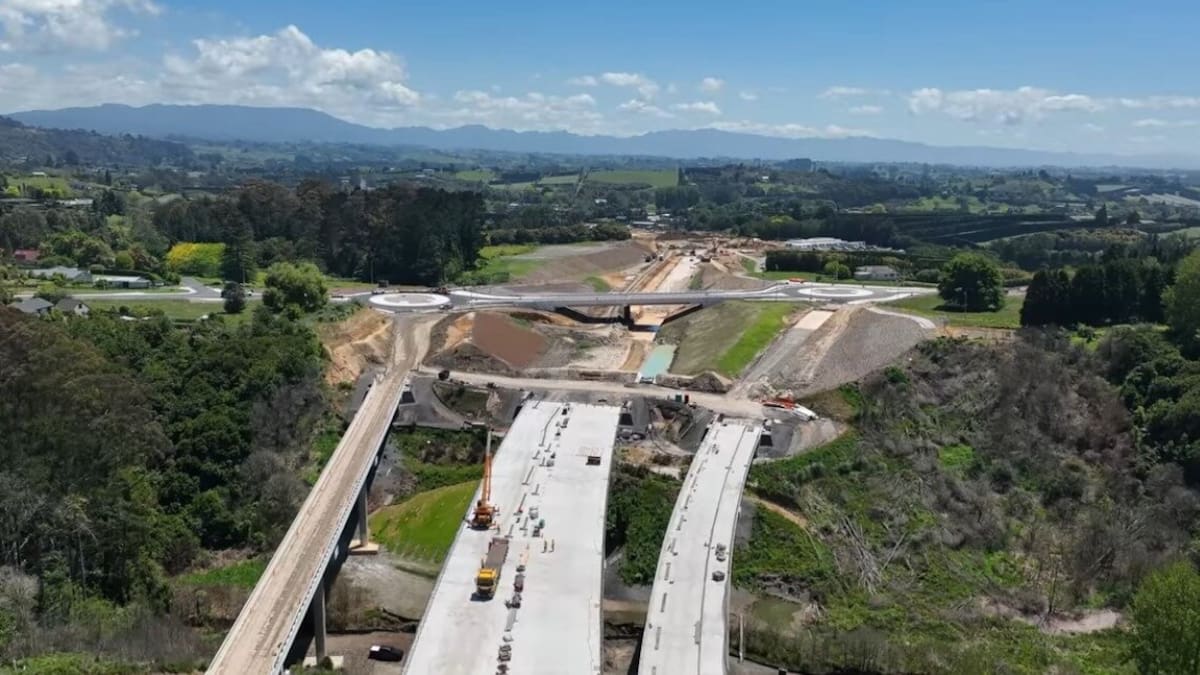
Stage 1 of the project, connecting Tauranga to Te Puna, is now in its fourth year of construction.
Work continues on the Takitimu North Link. This photo shows the progress on the Cambridge Rd & Cambridge East section of the project. Photo / NZTA
Major structures are largely complete, bridge construction is on track to finish in 2026, and the full Stage 1 project is expected to be delivered in 2028.
NZTA said the approval gave the council, landowners and the community certainty of the route and ensured NZTA was best placed to move forwards when funding for construction became available.
“As part of the Fast-track Approvals Act pathway, the panel received responses from parties invited to comment, including from Western Bay of Plenty District Council, Bay of Plenty Regional Council, Department of Conservation Te Papa Atawhai, Heritage New Zealand Pouhere Taonga, local hapū, and residents.
“NZTA is grateful for the input and contributions through this process and over many years, to get to this point on this important project.”
While design work for the project is underway, NZTA said it would continue to acquire property for the 7.7km expressway and identify opportunities for any early works to get underway.
“We expect to finish the pre-implementation phase in 2027.
“Our current focus is on pre-implementation. Specific construction timing for Stage 2 will not be confirmed until construction funding is approved.”
NZTA estimated the Stage 2 project could generate about $610 million in economic output for the Bay of Plenty and create more than 4800 jobs over its development period, Bay of Plenty MP Tom Rutherford said.
In welcoming the approval, he called the fast-track announcement “a significant win for one of New Zealand’s fastest-growing regions”.
He said the upgrade would ease congestion, improve safety, reduce travel times, and support housing and business growth across the Western Bay of Plenty.
Stage 2 becomes the 14th project approved under the fast-track process, and the first road project.
Bishop noted that it was part of wider Government work to deliver a credible pipeline of high‑value infrastructure projects and ensure they were ready to progress as funding became available.