
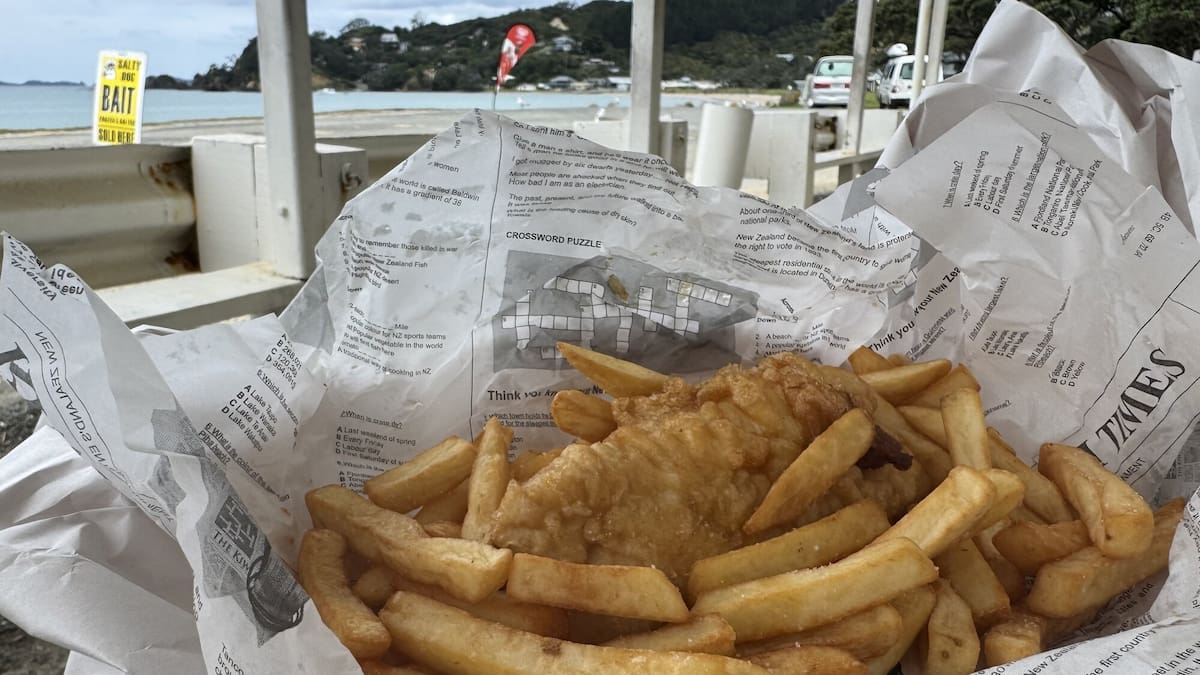
According to online sources, New Zealand and the UK sell 68% of fish and chip takeaways on Friday nights, and historians and consumer‑behaviour researchers have long known changes in that trend generally mirror the public’s mood – economically, culturally and even politically.
Widely considered a British creation, the traditional Friday “fish feed” has deep roots, starting with Christian Friday meat‑free rules and morphing into a cultural mainstay that still dominates end‑of‑week takeaway spending in the UK and New Zealand.
The meal’s place in national life was so strong in Britain that the government refused to ration it during both World Wars to protect morale.
Today, the rising cost of a simple “feed” is viewed as a reflection of inflation and financial pressure. Sicely said many New Zealanders still carried the nostalgic idea that fish and chips were a cheap family option, but rising ingredient costs had changed that reality. “People still think you can spend $10 and feed your whole family,” she said, “but you go to the supermarket, and it’s $55 a kilo for snapper.”
Researchers say fish and chip habits reveal surprising social patterns. High‑consumption eras have historically aligned with periods of higher disposable income, while today’s shrinking portions and higher prices reflect the cost-of-living crisis.
In the UK, areas with more fish and chip shops tend to vote more conservatively, and the ritual now shows a sharp age divide – beloved by older generations but slipping in popularity with younger diners.
In a post to customers on Calypso’s social media page, Sicely – aiming to lift the community’s spirits – wrote: “It turns out that fish and chip consumption reflects our human wellbeing … (yes, yes, I do get the irony) so I thought it important to check in with you, and share with you my poem about it,” a light-hearted take imagining her regulars “freaking out”, foregoing their usual Friday night meal filling up spare gas containers and vehicles before fuel prices climbed to “50 bucks a litre”.
She urged the community to stay mindful of the idea that “fear generates fear” and encouraged people to focus instead on more positive mindsets – “peace generating peace and love generating love”.
Research shows Friday night fish and chips consumption reliably tracks how people are feeling – economically, culturally and even politically. Labour Party members David Lange, Michael Bassett, Roger Douglas and Mike Moore were pictured tucking into theirs after a failed Labour Party leadership coup on December 12, 1980. Photo / NZME
Fish and chip shops contacted by the Northern Advocate in Whangārei, Te Kamo and the Hokianga confirmed last Friday’s sales were noticeably quieter.
One operator said New Zealanders were “very good at keeping up with the news” and he suspected fuel-price anxiety was already influencing spending, though most agreed it was too early to draw firm conclusions.
Meanwhile, some nay-sayers noted the Friday night on which the Kerikeri shop reported its much-depleted patronage also aligned with the annual Ninety Mile Beach Snapper Bonanza Fishing Competition, in which many regular customers might have been competing.
Sarah Curtis is a news reporter for the Northern Advocate, focusing on a wide range of issues. She has nearly 20 years’ experience in journalism, most of which she spent court reporting in Gisborne and on the East Coast.