

March 20, 2026 — 5:00pm
Save
You have reached your maximum number of saved items.
Remove items from your saved list to add more.
Save this article for later
Add articles to your saved list and come back to them anytime.
Got it
AAA
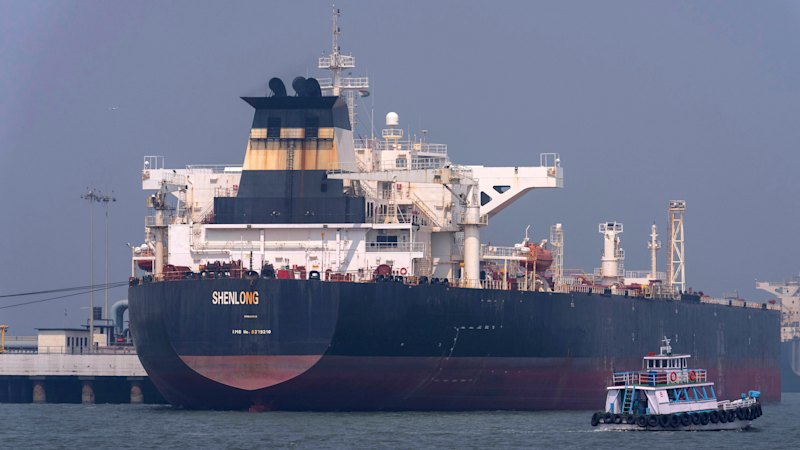
The world’s energy watchdog is pushing Australians to work from home, drive at lower speeds and avoid air travel to offset the risk of a severe oil shortage if the Strait of Hormuz remains shut.
The International Energy Agency (IEA), a Paris-based body set up after the 1973 oil crisis to help avoid shocks, issued a global warning on Friday, telling policymakers that a special release of 400 million barrels of oil 10 days ago would not be enough to offset the potential effect of the war.
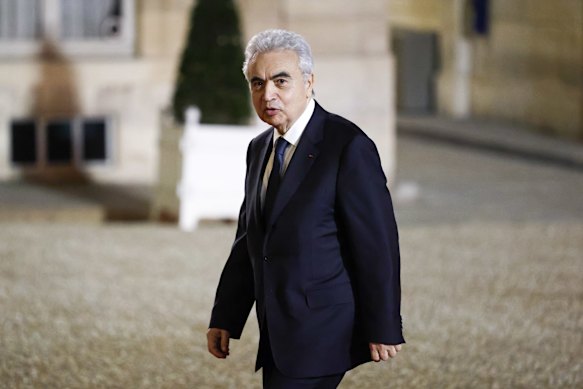 International Energy Agency executive director Fatih Birol.Getty Images
The organisation’s executive director, Fatih Birol, has been leading the global effort to pump reserve stocks into the market, and said that without “swift resolution, the impacts on energy markets and economies are set to become more and more severe”.
“The war in the Middle East is creating a major energy crisis, including the largest supply disruption in the history of the global oil market,” he said.
As Israeli Prime Minister Benjamin Netanyahu said he saw the war “ending a lot faster than people think”, Prime Minister Anthony Albanese ducked questions about Australia’s absence from a joint statement drafted by Western nations offering support to reopen the strait blockaded by Iran to drive allies of the US into recession.
Israel sparked an escalation in the conflict and roiled commodity markets when it struck a key gasfield earlier this week, but oil prices retreated off the back of Netanyahu’s declaration on Friday that Israel’s strikes had destroyed Iran’s uranium enrichment and ballistic missile production.
Companies are responding to the war’s inflationary pressures. On Friday, Uber said it would lift its fares to fund a 6 per cent increase in driver earnings – drivers were in uproar this week after finding their weekly take-home pay had reduced by as much as $100 because of soaring petrol bills – while Virgin Australia said airfares would be pushed up by 5 per cent.
The Albanese government on Friday announced an extension of state subsidies to Australia’s last two oil refineries to keep them alive into the next decade amid heightened worry about self-sufficiency.
Ministers also left the door open to a new windfall tax on gas firms, or drawing more revenue from the petroleum resource rent tax, as global LNG prices spike after Israel struck the South Pars gas facility in Iran, the world’s biggest LNG facility. The proposals were first reported by the ABC.
Related Article
Labor has tried to tamp down panic buying by repeatedly pointing out fuel is still entering Australia. However, the government has acknowledged that imports may not flow at normal volumes from mid-April, creating uncertainty among households and business chiefs across a range of oil-reliant sectors.
Birol, who will speak at the National Press Club in Canberra on Monday at a time when the world’s attention is fixed on the energy crisis, released 10 policies he said could help governments around the world cut demand for oil.
The IEA said that asking workers to stay home when possible could reduce oil consumption from cars by up to 6 per cent. Cutting speed limits by 10km/h would reduce petrol use by 5 to 10 per cent, the agency said. Road transport makes up about 45 per cent of global demand for fuel.
Other measures recommended include: encouraging public transport, allowing odd-number vehicle plates to use major roads on one day and even-number plates the next, carpooling, cutting back on air travel, and using non-gas cooktops.
Developed countries have not yet cut back on travel, according to an analysis of global policy responses from the IAE, but many Asian nations and other less developed countries have done so. France, Japan, South Korea, Croatia, Austria and other nations have moved to cap either fuel retailer margins or prices.
The Albanese government is not speaking publicly about its detailed modelling on the actions it might take to conserve fuel if the war dragged on, although sources involved in high-level briefings say it knows more drastic measures might be required.
The Department of Infrastructure wrote to major companies on Friday asking how their operations would be affected by a fuel shortage, although it said a shortage was not expected.
The energy and home affairs ministers in Australia have emergency powers to effectively nationalise elements of the economy and fuel supply, but Labor is not intent on using these powers as of this week. States also have extraordinary powers around fuel rationing.
In response to the IEA’s recommendations, Energy Minister Chris Bowen noted the agency had released “an options paper – it’s not a request or a set of instructions from the IEA”.
He met state counterparts on Friday, and the group agreed to meet more regularly to ensure supply, but the minister said fuel rationing was not yet being considered.
“We’re not there, and we’re not close to there. That’s not been contemplated as something that we need to do in the immediate future,” Bowen said.
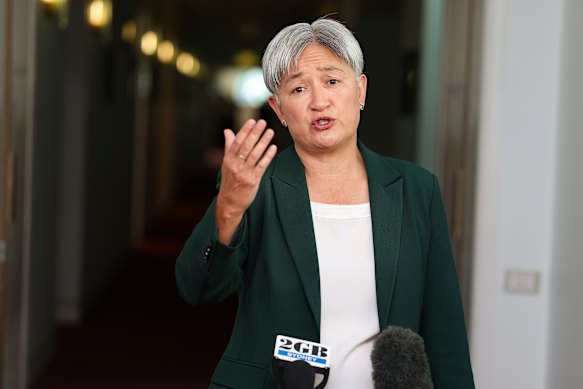 Foreign Affairs Minister Penny WongAlex Ellinghausen
Birol is also recommending longer-term measures such as buying more electric vehicles, as Spain attributes its lower energy prices to its shift to renewables at a time when European nations are gutting climate action policies to offset the energy crunch.
Foreign Minister Penny Wong and others including Resources Minister Madeleine King have been working the phones with international counterparts to lock in oil supply.
Related Article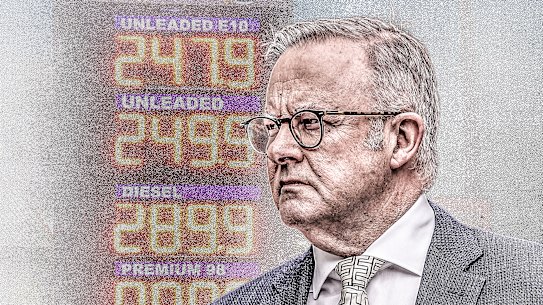
In a worrying development on Friday, China told fertiliser exporters to halt overseas shipments of some products, adding to the fears of Australian farmers. Earlier this month, China asked big refineries to stop exporting jet fuel, on which Australia relies for a third of its supply.
Wong held a phone call with US Secretary of State Marco Rubio on Friday morning, a day after Albanese called for a winding down of the war now that the US and Israel had degraded Iran’s military capacity.
Wong said she and Rubio “agreed that the international community must keep working together to ensure critical waterways are not held hostage”. Australia was not part of a joint statement from the UK, France, Germany, Japan and others expressing “readiness to contribute to appropriate efforts to ensure safe passage through the Strait [of Hormuz]”.
Australia’s non-involvement reflected the fact the statement was put together hastily in the middle of the night, local time, but also highlighted Australia’s decision not to send forces to protect the passage.
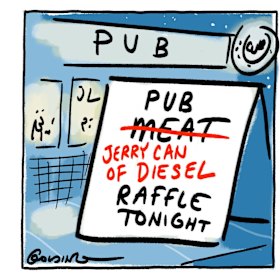 Photo: Matt Golding
Opposition defence spokesman James Paterson said: “The Albanese Labor government must urgently explain why we are missing in action. Were we not invited to participate? Did we decline?”
Albanese, speaking in South Australia, said Australia was “not at all” out of step with Western nations. “We want to see the Strait of Hormuz opened. We’re offering support, and have support on the ground in the region,” Albanese told reporters.
Nationals leader Matt Canavan, an advocate of fossil fuels and critic of green energy, said Australia should start drilling oil in the Great Australian Bight off the southern coastline.
Save
You have reached your maximum number of saved items.
Remove items from your saved list to add more.
 Paul Sakkal is Chief Political Correspondent. He previously covered Victorian politics and won a Walkley award and the 2025 Press Gallery Journalist of the Year. Contact him securely on Signal @paulsakkal.14.Connect via X or email.From our partners