
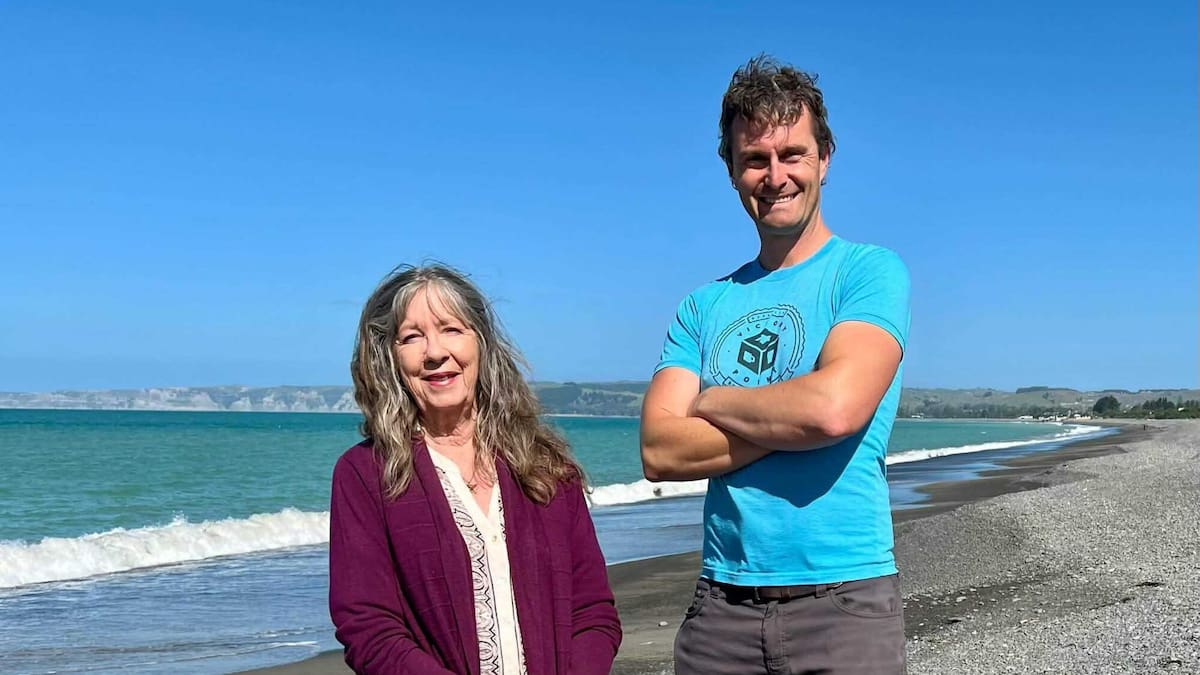
The question wasn’t whether the work was affordable.
“It’s whether coastal communities receive the same consideration as inland communities facing equivalent risk.
“Right now, no governing body is responsible for protecting Te Awanga and Haumoana from coastal erosion and flooding. We just want a fair go.”
Hawke’s Bay Regional Council (HBRC) recently released its draft Clifton to Tangoio Coastal Hazards Strategy, which is giving those on the Cape Coast a chance to plead their case to the council.
HBRC deputy chairman Jerf van Beek said the draft strategy focused on figuring out both funding options and community preferences for dealing with coastal erosion.
“These include a mix of possibilities such as a mix of targeted rates and contributions from general rates, and partnerships with territorial authorities like the Napier City Council and the Hastings District Council.”
In the past five years, Hastings District Council has spent $1.9m on coastal erosion prevention measures in the district.
These include the Waimarama sea wall, the Clifton revetment wall, coastal shingle replacement, the Te Awanga lagoon ecoreef and coastal protection work.
Redstone said the fight for more action from authorities was not new.
Big seas at Haumoana. Photo / Paul Taylor
She initiated Walking on Water (WoW), an incorporated society and charitable trust, in 2009, to help combat coastal erosion in Haumoana, Te Awanga and Clifton.
“That was 17 years ago. Yet here we are having the same discussion.
“This is a pressing day-to-day issue for all residents. When a storm comes up, now it’s not a question of whether we will lose some of the beach, it’s how much we are going to lose this time?”
The average loss of beachfront along the Cape Coast is 0.5 metres a year.
WoW merged with Cape Coast Community Group (CCCG) in 2023, with its core team, including Redstone, active in the new group.
She is also part of Te Awanga and Haumoana Focus Group, which has been working on a statement of advice that it plans to present to HBRC in the next phase of consultation on the draft Clifton to Tangoio Coastal Hazards Strategy.
Arlo Armstrong, of the focus group, said the coastline was a regional asset and a destination for locals and tourists who came to fish, camp, swim, cycle the tracks, walk along the beach, or enjoy the scenery.
“We’ve spent a year talking in depth about the details of the council’s proposal between our committee of 12 locals and council staff.
“So, we are taking a much more detailed approach to the other areas of engagement that have happened around this project.”
The focus group’s main points were urgent protection, risks to the council, the strategy it supported, and equitable funding.
“We are focusing on the next 20 years and have a pretty clear idea of what we want.”
Van Beek said responding well to coastal hazards was complex and came with costs, but the costs and impacts of doing nothing were significant.
The Cape Coast is prone to storm-surge flooding. Photo / Paul Taylor
“We are at an important stage in the process for the strategy that covers Tangoio to Clifton.
“We have a good understanding of the risks our coastline faces, and we have developed a framework and a range of options for responding to them over time.
“The question we are now exploring with communities is how Hawke’s Bay ratepayers want to pay for that work.”
LDR is local body journalism co-funded by RNZ and NZ On Air.