
The direct discharge of wastewater from Queenstown’s Shotover treatment plant into the Kawarau River has been chosen as a ‘‘compromise’’ solution after an extended debate at a Queenstown Lakes District Council meeting yesterday.
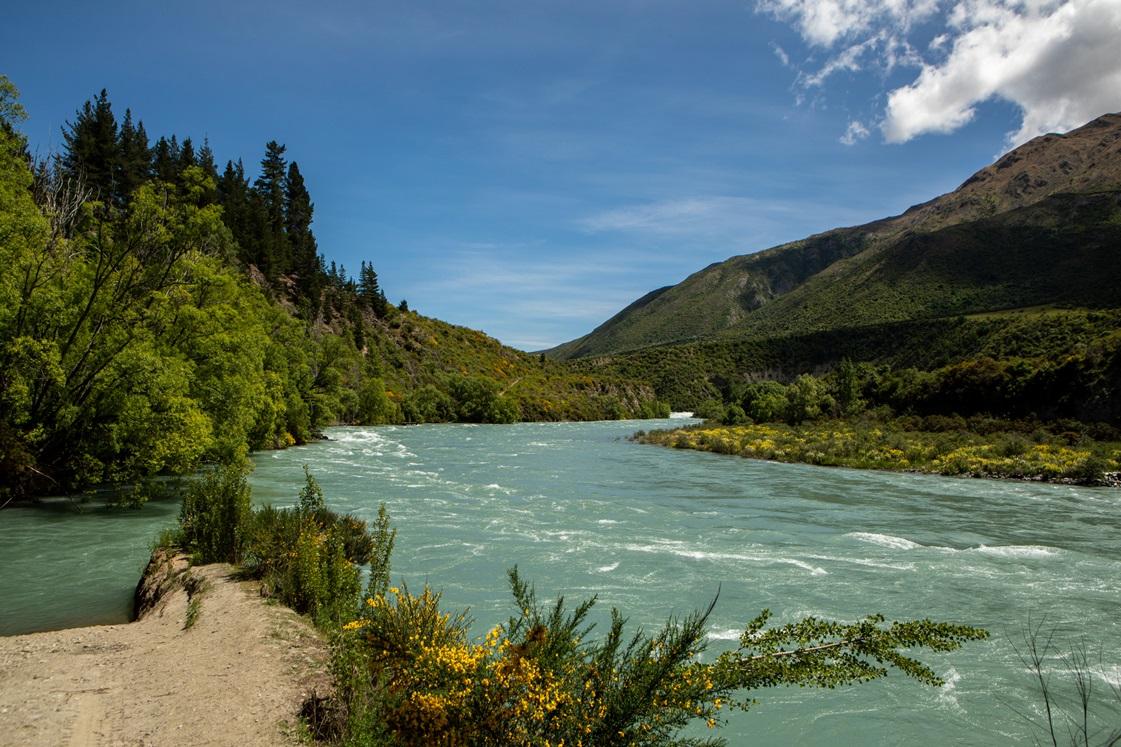
After spending the past five months considering options for replacing the plant’s failed disposal field on the Shotover delta, councillors voted 8-3 to adopt the ‘‘Option 1’’ recommendation of staff, which is to convey the plant’s treated wastewater to the Kawarau River by a pipeline and discharge it via a rock-lined channel.
The decision came after an amended resolution, tabled by Mayor John Glover, failed to win support.
It proposed the council apply to the Environment Court for a 12-month extension to a suite of deadlines the court imposed on the council last June.
It also sought to direct further investigation of land and hybrid land/water disposal options, an expedited and cheaper direct discharge to the Kawarau River and more engagement with iwi and the wider community.
It was supported by only four councillors, including Cr Niki Gladding, who said she feared approving Option 1 could prompt a legal challenge.
Cr Gladding said she was not necessarily opposed to discharging to water, but wanted more time so councillors could consider options that were more than ‘‘conceptual’’.
Cr Gavin Bartlett tabled an alternative amendment to approve Option 1, but continue work on identifying potential alternative long-term disposal options, and keep engaging with iwi and the wider community.
Staff would present a report next March for councillors to make a final decision on the long-term solution, including whether to retain Option 1, shift to an alternative option, or use a combination of both.
It would allow the council to comply with the court’s deadlines, but leave open the possibility to ‘‘change course’’ after more analysis and consultation, he said.
His amendment was supported by Crs Matt Wong, Jon Mitchell, Nicola King, Melissa White, Cody Tucker, Stephen Brent and Heath Copland.
Cr Mitchell said it was a ‘‘compromise’’ solution, but would ‘‘expedite getting out of the situation we’re in … and actively pursuing what other options might be available’’.
Cr King said the ‘‘really hard’’ decision challenged her environmental values, but Option 1 was likely to be part of any future hybrid land/water solution anyway, so there was no point in delaying it for 12 months.
Cr White said it was a ‘‘middle ground’’ option that dealt with the current disposal into the Shotover River, but allowed work to continue on finding a better solution.
Council managers invoked emergency powers last March to begin discharging the plant’s output directly into the Shotover River.
An enforcement order by the Environment Court three months later required the council to lodge a consent application for a long-term disposal option by May 30, and to have the system operating by the end of 2030.
In his report for councillors, infrastructure operations manager Simon Mason said Option 1 would provide the most certainty for dealing with wastewater flows out to 2060, was the cheapest at an estimated $44million, and could be completed by the 2030 deadline.
It included the installation of an additional filtration system before the final UV disinfection stage.
His report included three other disposal options, all in the vicinity of the plant, which it estimated to cost between $80m and $206m.
A fifth option, with a price tag of up to $650m, proposes piping the plant’s wastewater 15km uphill to a 288ha swathe of the Crown Terrace for disposal on land.
It was explicitly ruled out for further consideration by yesterday’s decision.