
By Josh Davis
First published 20 March 2026
A ‘quite rare’ fossil find from South Korea is the nation’s first new dinosaur in 15 years.
Adding to the rich diversity of extinct animals from this region, it has been called Doolysaurus huhmin due to its resemblance to a character in a well-known children’s cartoon.
From pop culture to palaeontology, a new baby dinosaur has been named from Asia.
While the dinosaur fossil record in Korea is incredibly rich when it comes to footprints and eggshells, the remains of dinosaur bones are exceedingly rare. That makes the discovery of a partial dinosaur skeleton from the Aphae Islands of South Korea a hugely significant find.
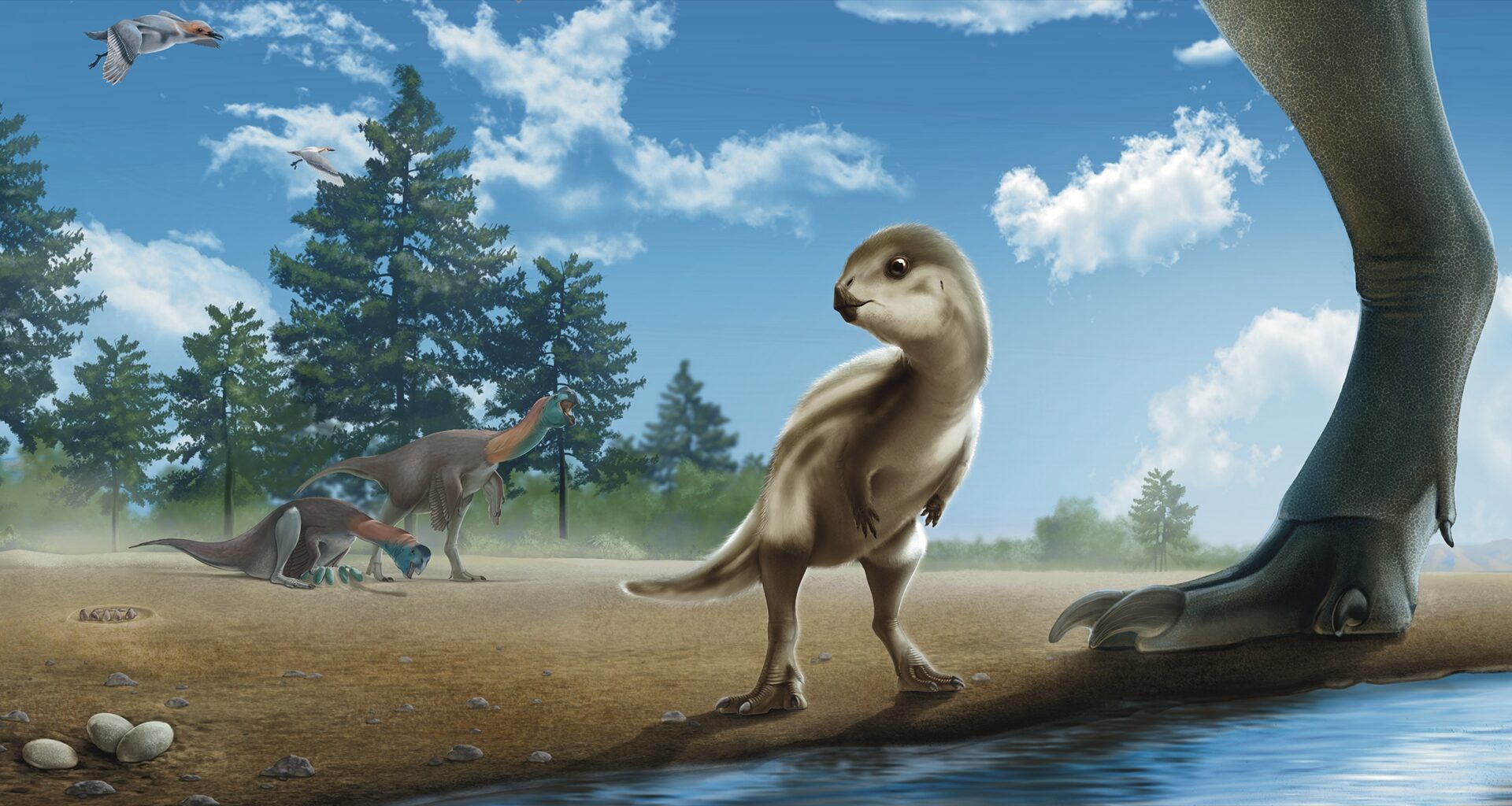
Dating to around 113 million years ago, the youngster would have lived scurrying around the feet of some of the largest land animals to have ever existed. Measuring just a couple of feet in length, this new species was a likely a baby when it died, with the researchers suspecting that it might have been covered in a fuzzy layer of feathers.
Because of this, they have decided to name the dinosaur Doolysaurus huhmin after a well-known South Korean cartoon character Dooly. Created by Kim Soo-jung, Dooly the Little Dinosaur is a baby dinosaur with a couple of tufts sprouting from its head.
“Dooly is one of the very famous, iconic dinosaur characters in Korea,” said Jongyun Jung, the scientist who led this research describing the new species. “Every generation in Korea knows this character. And our specimen is also a juvenile or ‘baby’, so it’s perfect for our dinosaur species name to honour Dooly.”
The new species was described by researchers from The University of Texas at Austin and the Korean Dinosaur Research Center and has been published in the journal Fossil Record.
Dinosaur hotspot
This is only the third named species of dinosaur to have been discovered in South Korea. But the region has a hugely important fossil record.
“Korea has a very rich record of fossil footprints and they’ve been studied extensively for a number of years,” explains Professor Paul Barrett, one of our dinosaur experts. “When we look at those track makers, we can’t really name the exact species, but we do see that there are a lot of different types of dinosaurs.”
“In particular we know we have a large variety of small and large plant eaters and a bunch of meat-eating dinosaurs as well.”
The reason why there are so many footprints from this age is likely because of the environment in which they were formed. This region was probably a tidal mudflat, and while the footprints of dinosaurs wandering across were easy to preserve, it was a lot more difficult for any skeletal remains.
“We know of a lot fewer Korean dinosaurs from their body fossils,” continues Paul. “Over the last 20 to 30 years there has been a lot of work by my Korean colleagues, and now they are finally finding some of these skeletons for the first time.”
“So this is a big addition to what we know about dinosaur fossils from this part of the world. It’s quite a rare find.”
The fossil was found during a dig at a site in the Aphae Islands, off the southwestern coast of South Korea. It is encased in solid rock, but when the researchers noticed a collection of gastroliths, or stomach stones, next to emerging leg bones, they suspected that there might be more fossils preserved within.
By placing the specimen in a micro-CT scanner, they were able to reveal that not only were parts of the rib and arm bones preserved, but even elements of the head. These are now the first pieces of dinosaur skull ever found in South Korea.
The little dinosaur is thought to have been about two years old when it died. The growth markers in the bones suggest that it was still growing, leading to the researchers estimating that as an adult it was perhaps twice as large. The gastroliths suggest that it was omnivorous and so ate a varied diet.
“It’s a small type of dinosaur called a thescelosaurid,” explains Paul. “These were small bipedal animals that were early relatives of larger plant eaters like Iguanodon, although they’re quite a long way further down the evolutionary tree than their more famous relatives.”
“They’re known mainly from North America, but there are other species that are thought to be members, or close relatives of this group, found elsewhere in East Asia.”
Hopefully, having identified one dinosaur fossil within this site the researchers might be able to uncover more about what was once living in ancient Korea over 100 million years ago.