
As a regional councillor during the cyclone, I took to heart the understandable public backlash against a Civil Defence system that set up good people to fail, and simply couldn’t handle what was thrown at it.
Perhaps the most significant failure of the previous more centralised Hawke’s Bay civil defence model was that it fostered a culture of reliance on a council response, which was never going to be able to deliver on expectations for a truly overwhelming event.
A Hikurangi shelf seismic event will in all likelihood be significantly worse than Gabrielle in terms of risk to life, injuries and damage to housing and infrastructure, and at a scale no one organisation would ever be able to deal with.
Devolution to the community – ie putting the “community at the centre” – is a key part of the Hawke’s Bay Civil Defence Transformation Strategy adopted last year, and a key recommendation of the Government’s inquiry into Cyclone Gabrielle.
The inquiry report stated that “local communities should be empowered, educated and supported to build their own emergency readiness, including having suitable plans, supplies and assets”.
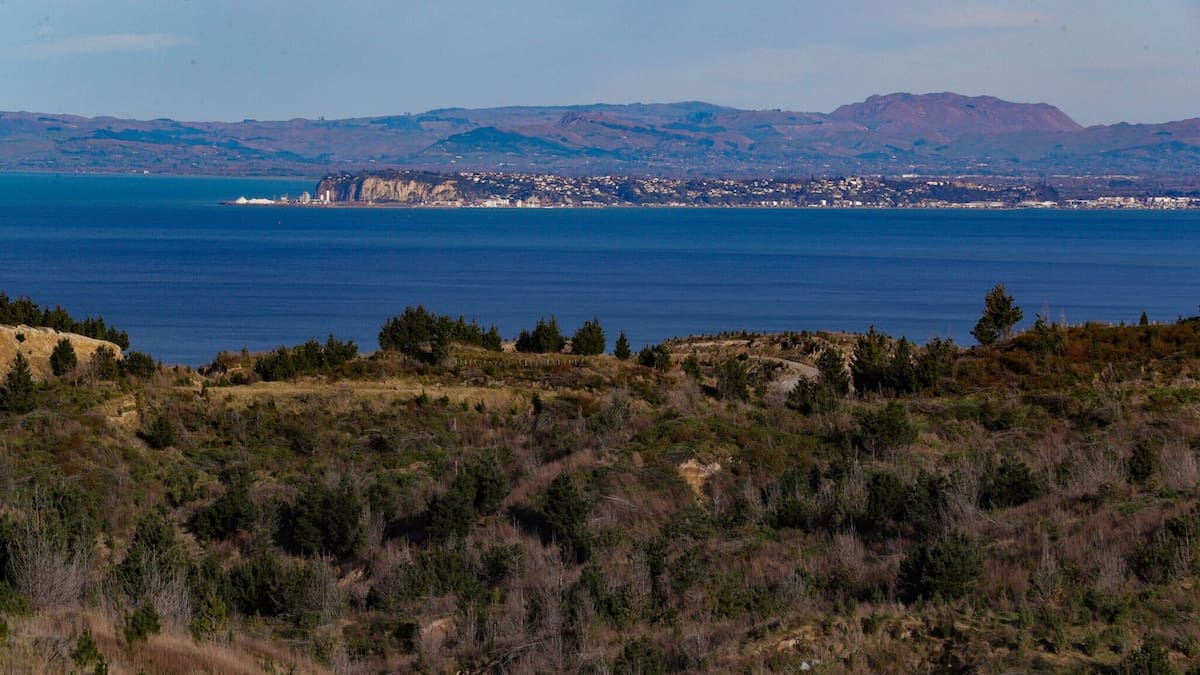
This is laudable and common sense, but as someone who lives on Napier Hill/Mataruahou, I have also been aware just how unprepared the community is to host its role as the principal tsunami evacuation site for large parts of Napier City, as widely promoted by civil defence advice for some time.
It is estimated that following a Hikurangi shelf scale earthquake, up to 8000 people could make their way to our neighbourhood within about 30 minutes of the shaking stopping.
Take a moment to think about what that might look like.
Half of a full-to-capacity McLean Park all arriving on the streets of Napier Hill looking for a place of refuge, with many folk highly distressed, injured, or worse.
Yet until very recently, no publicly available food, water or medical supplies were stationed anywhere on the hill ready to cater for that human tsunami wave of evacuees, all turning up at once.
This scenario, of course, assumes calm considered action by everyone trying to get to Napier Hill, which is most unlikely in the heat of the moment.
It also assumes that the Westshore/ Pandora Rd Bridge is still in place and useable; that people leave their cars behind so the streets don’t all immediately become congested, all have their go bags by the door ready to go, and that Napier Hill is actually accessible, when key roads and pathways may be buried or have collapsed altogether.
With all this in mind, and along with a number of other Hill residents, I have helped establish a community emergency hub at Napier Central School.
It would be stood up after an earthquake/tsunami or any other civil defence event such as a major flood.
The Napier Hill hub is part of a network of similar hubs being rolled out across Hawke’s Bay after Cyclone Gabrielle, with support and coordination from Civil Defence staff at each council in the region.
The Napier Hill Emergency Hub is, by design, very much community led.
Rather than trained and salaried staff, we will need to rely on a group of volunteers who have offered their time to run the hub.
We have secured funding from the Lotteries Board and Civil Defence to be able to provide basic food, communications and medical supplies to those who are most in need of that, and to train our volunteers to be able to respond and care for evacuees from the city as best we can.
Our focus is on the first 72 hours immediately after an earthquake or tsunami, before the regionally or nationally led civil defence support arrives to take over the response and immediate recovery, we hope.
We will not, however, be a hospital. We will not be a supermarket. We will not be able to feed 8000 people.
We will rely on the school pool for water supply, and solar panels installed with financial support from Napier City Council as our main source of electricity.
We very much need more volunteers to help us run what may be the single most important refuge in Hawke’s Bay when the day of reckoning ultimately comes, as it surely will.
The other reality is that rate-capped councils can’t afford to fund the new network of community hubs, and must instead focus on logistical support, advice and coordination.
Even once in place after a major event, the wider national or regional response may well have its hands full dealing with communities more directly in the firing line, including those near the foreshore on lower-lying land.
Napier Hill may actually be the lowest priority for rescue helicopters, or Defence Force Unimogs.
So, what this all boils down to comes back to you, the reader.
At the end of the day, it is up to every one of us to be prepared, being the real point of Tsunami Hīkoi week – as a reminder to have a plan and to put that plan in place.
I also strongly encourage you to get in touch with your local emergency hub, and support it in every way you can.
For more information about the community emergency hubs in your area, visit hbemergency.govt.nz/hub, or to volunteer for the Napier Hill Hub, contact us at hello@napierhillhub.co.nz.