
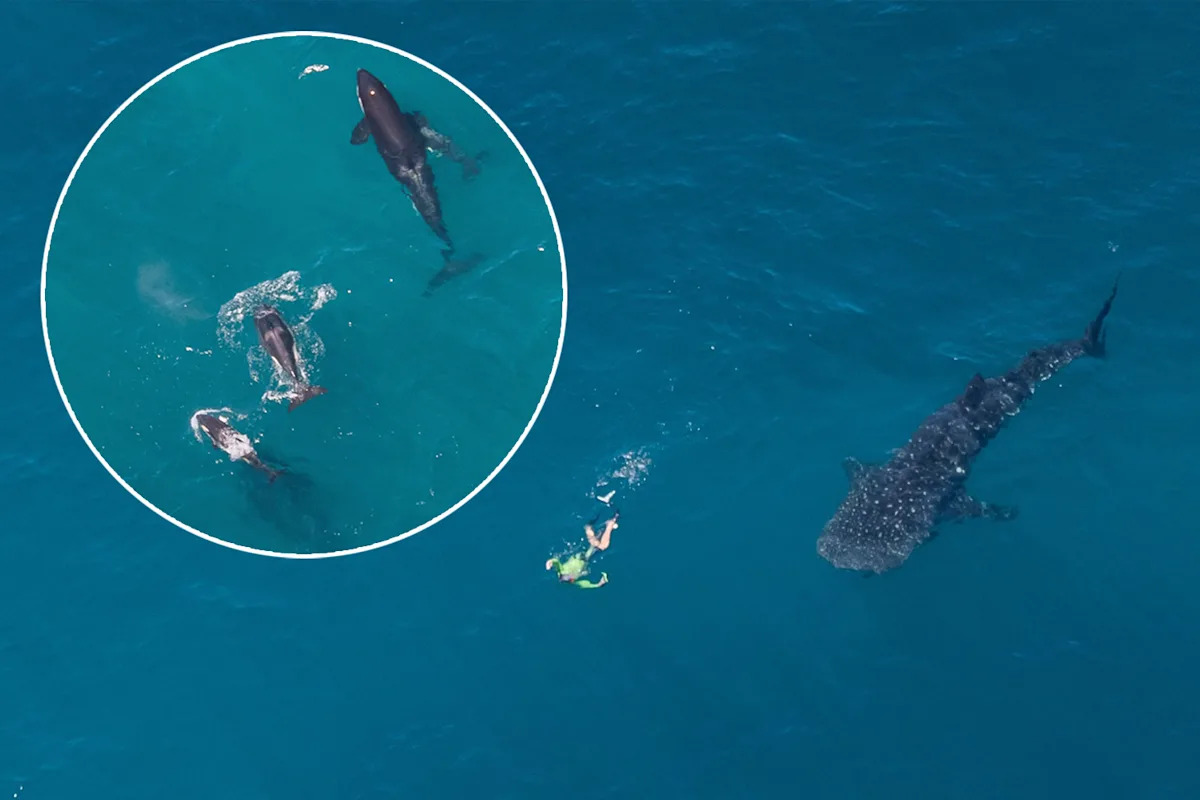
For Australian pilot and wildlife photographer Tiffany Klein, every day at work still feels like magic.
Even after 16 years of tracking some of the ocean’s most impressive and elusive creatures across the Ningaloo Reef in Western Australia, it’s still as exciting as ever.
Last week, while piloting her aircraft over the reef off the Exmouth Coast, Tiffany was not only treated to the resident whale sharks, but also a pod of late-season orcas.
The apex predators are rarely seen in the region as late as March, adding yet another reason to the list of why she loves her job.
In an interview with Yahoo News, Tiffany explained that each day, she takes to the skies to scan for marine life, guiding tour boats below to the animals once they’re spotted.
Last Friday, whale sharks — the world’s largest fish — were in abundance, as well as the orcas, some of which were even travelling with their young.
“I’ve been doing this for 16 years and have flown over Ningaloo Reef for more than 8,000 hours,” she said.
“It’s an incredibly beautiful place, a pretty amazing office.
“The diversity of wildlife is just incredible: whale sharks, humpback whales, orcas, pygmy whales, manta rays. There aren’t many places in the world where you get that kind of marine diversity.”
Do you have a story about an incredible ocean encounter? Contact newsroomau@yahoonews.com
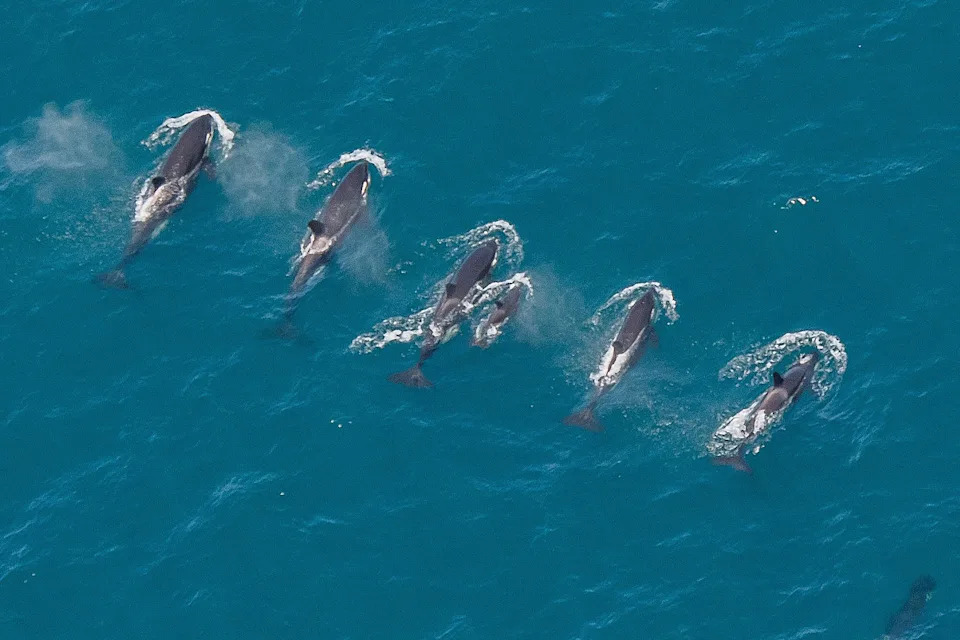
Orcas, or killer whales, are top predators, highly intelligent, and known for their complex social structures. Source: Ningaloo Aviation
Why might orcas be at the Ningaloo right now?
Several factors could be at play, including prey availability, water temperatures and shifting migration patterns, all of which can influence when and where orcas appear.
“We basically have a winter group and a summer group. Normally, the summer group is seen more around the Christmas period, and the winter group from around July onwards, when the humpback whales are here,” Tiffany, from Ningaloo Aviation said.
“The ones in the photo are the summer group, but this is quite late, we’ve been seeing them in March, probably on about six different days. That’s really unusual.”
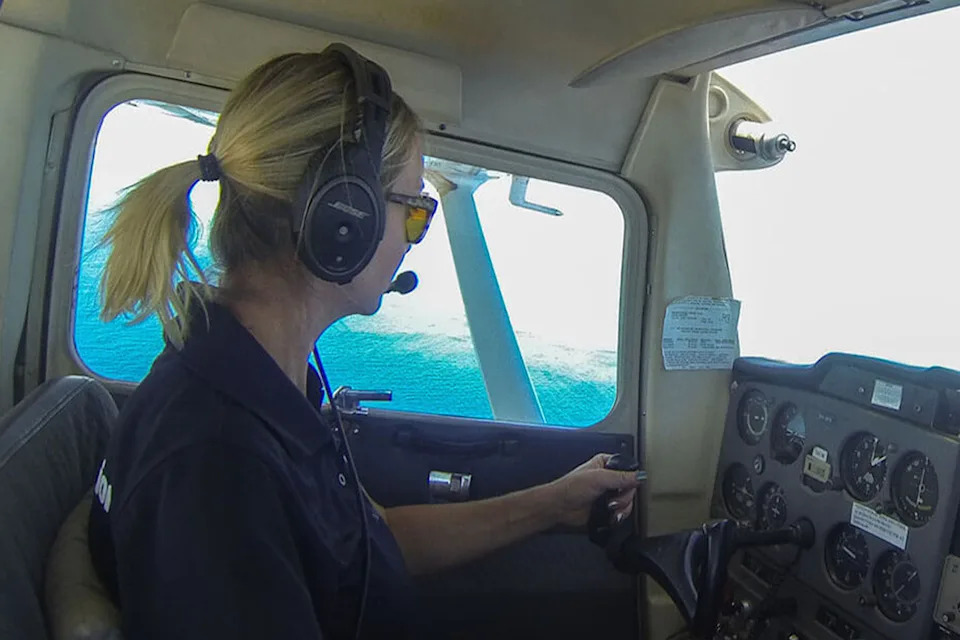
Tiffany Klein has spent the past 16 years tracking some of the ocean’s largest and most elusive creatures across the Ningaloo Reef in Western Australia. Source: Supplied
Though Tiffany isn’t complaining.
“If people are thinking about coming up, they should definitely do it,” she said.
“And it’s not just the whale sharks and orcas — it’s everything. The coral, the fish, the whales.
“It’s the kind of experience you remember forever.”
What makes the Ningaloo Reef so special?
Ningaloo Reef, stretching over 260 kilometres along Western Australia’s north-west coast, is one of the world’s largest fringing reefs and a UNESCO World Heritage site.
Unlike the more famous Great Barrier Reef, Ningaloo sits right at the edge of the coastline, making its coral gardens, lagoons, and abundant marine life remarkably accessible.
Its clear, warm waters create a vibrant underwater world, home to over 500 species of fish, 300 species of coral, and a dazzling array of invertebrates.
One of Ningaloo’s most iconic residents is the whale shark, the world’s largest fish.
These gentle giants can grow up to 18 metres in length, and their slow, graceful movements make swimming alongside them a once-in-a-lifetime experience.
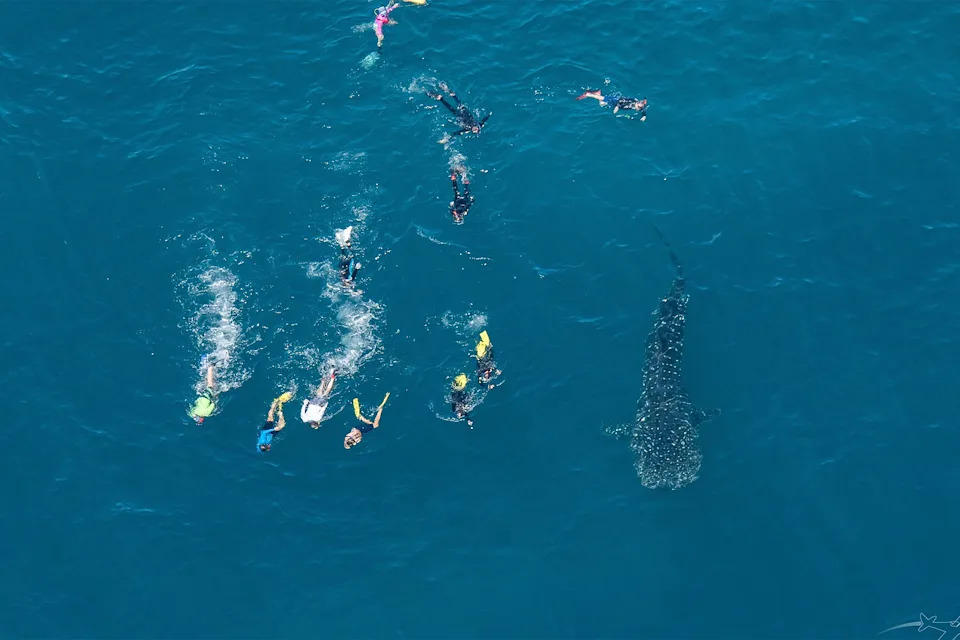
Whale sharks can grow up to 18 metres in length, and their slow, graceful movements make swimming alongside them a once-in-a-lifetime experience. Source: Ningaloo Aviation
Ningaloo is one of the few places on earth where seasonal aggregations of whale sharks occur close to shore, typically between March and July, drawing divers and snorkelers from around the globe.
Adding to the thrill of a day at Ningaloo, of course, the orcas.
While they are less commonly seen than whale sharks, orcas are top predators, highly intelligent, and known for their complex social structures.
Do you have a story tip? Email: newsroomau@yahoonews.com.
You can also follow us on Facebook, Instagram, TikTok, Twitter and YouTube.