
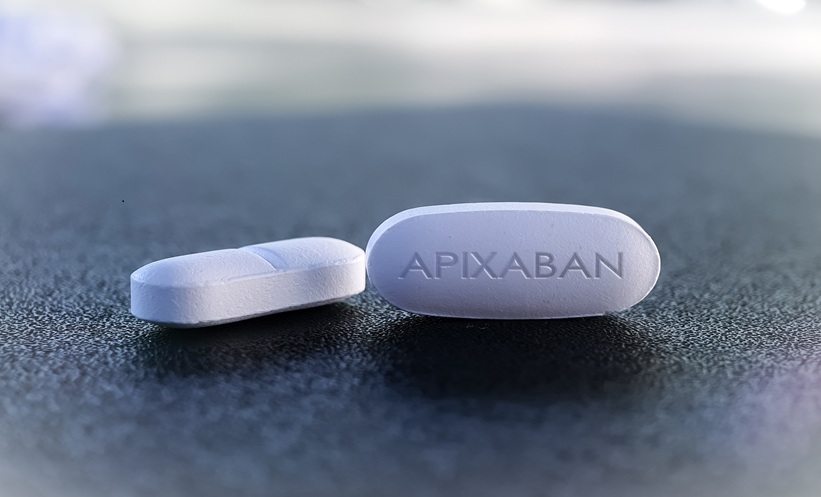
APIXABAN and rivaroxaban are two oral anticoagulants frequently prescribed to treat acute venous thromboembolism, including deep-vein thrombosis and pulmonary embolism. Despite this, questions remain regarding the difference between these medication’s respective bleeding risks.
The COBRRA Study
Lana Castellucci and colleagues set out to investigate this research gap through their international randomised, open-label, blinded end-point trial. In a ratio of 1:1, Castellucci et al. assigned 2,760 eligible patients with acute symptomatic pulmonary embolism or proximal deep-vein thrombosis to receive either apixaban or rivaroxaban over the course of 3 months. It is important to note that, these medications were administered at different doses: the apixaban cohort were given a 10 mg dose twice daily for 7 days, after which the dosage was halved, whilst rivaroxaban was given at a dose of 15 mg twice daily for 21 days and was then reduced to 20 mg daily.
The trial’s primary outcome was clinically relevant bleeding, defined by the International Society on Thrombosis and Haemostasis. Secondary outcomes included death by any cause.
Rivaroxaban and Bleeding Risk
Out of the total 2,760 participants, 1,370 were assigned to the apixaban cohort, whilst 1,390 were allocated to the rivaroxaban group. Following results analysis, Castellucci and colleagues identified that a primary-outcome event had occurred in 44 (3.3%) of the 1,345 patients taking apixaban, compared to 96 (7.1%) of the 1,355 in the rivaroxaban group (relative risk, 0.46; 95% CI: 0.33–0.65; p<0.001). Death from any cause occurred in one patient (0.1%) in the apixaban group, versus four patients (0.3%) of those taking rivaroxaban (relative risk, 0.25; 95% CI: 0.03–2.26). Further to this, serious adverse events, unrelated to bleeding, occurred in 36 patients (2.7%) taking apixaban and in 30 patients (2.2%) of those taking rivaroxaban.
Castellucci’s Assessment
Overall, the COBRRA study found that, amongst patients with acute venous thromboembolism, the risk of clinically relevant bleeding was significantly lower in those taking apixaban compared to rivaroxaban over the course of a 3-month treatment period. Whilst this study has evidenced the difference between respective anticoagulant’s bleeding risks, it is important to note that this assessment is based on differing dosages. Looking forward, clinical practice could be updated following future investigations extending this research, perhaps specifically assessing the bleeding risks of these medications at certain dosages.
Reference
Castellucci et al. Bleeding risk with apixaban vs. rivaroxaban in acute venous thromboembolism. New Eng J Med. 2026;394:1051-60.
Featured image: Soni’s on Adobe Stock.