
The war in Ukraine had begun only a few months earlier, and much of the world was still emerging from the pandemic.
Standing beside the car and watching the numbers on the pump, I remember thinking how strange it felt that a conflict thousands of kilometres away could appear in such an ordinary moment of daily life.
A war on the other side of the world had sent its ripple all the way to a petrol pump in a small town in the South Island.
That is often how global events arrive. Not suddenly, but gradually.
Drop a stone into still water and the splash begins at the centre. The ripples travel outward, touching places that once seemed far removed.
Fuel prices rise. Transport costs follow. Soon the effects appear in grocery bills and household budgets.
Four years after the shocks of 2022, tensions in the Middle East are once again unsettling global energy markets.
When conflict threatens oil supply routes, the reaction is almost immediate.
Markets move. Airlines review their costs. Petrol stations adjust their prices.
Ordinary people soon notice.
Yet rising prices are only part of the story.
Something else travels just as quickly: fear.
During the pandemic, we saw how easily it could spread.
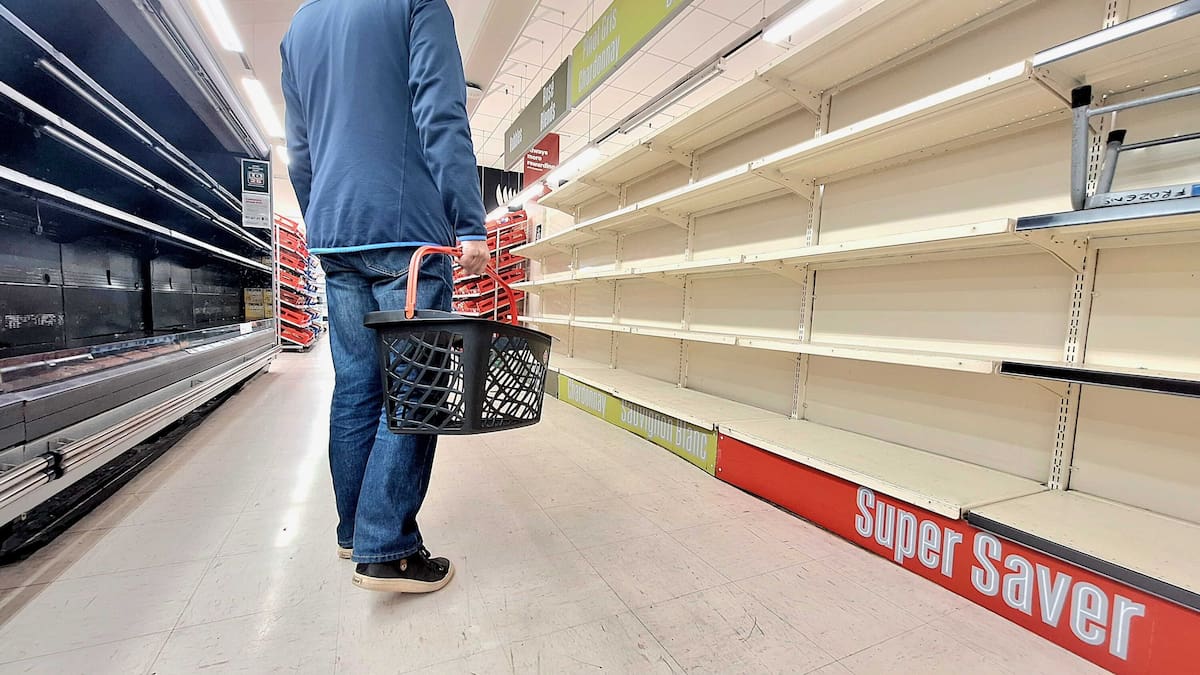
Supermarket shelves emptied almost overnight. Rice disappeared. Flour vanished. Even canned food became difficult to find.
But the strangest shortage of all involved something far less dramatic.
Toilet paper.
For a time, supermarkets across New Zealand and Australia had to limit how many rolls customers could buy. Looking back now, it still feels almost surreal.
The shortage was never really about toilet paper. It was about uncertainty.
When the future feels uncertain, people look for small ways to regain control. Buying extra supplies feels like preparation. Seeing others do the same makes the impulse stronger.
Before long, the crowd is moving, even when no one quite remembers why.
During the pandemic, I was chatting with a friend in Singapore when the strange rush for toilet paper came up.
He sounded genuinely puzzled.
“Stockpiling food I can understand,” he said. “But why toilet paper?”
I paused for a moment.
The truth was, I didn’t really understand it either.
So I laughed and said, “Maybe it’s not so different from the Singaporean instinct of kiasu, the fear of missing out.”
If others were buying, we bought too.
The moment he heard the word kiasu, he laughed.
For a moment the great toilet paper mystery felt slightly less mysterious, though it still did not explain why people needed quite so many rolls.
Fear rarely arrives with clear explanations. It spreads quietly through headlines, rumours and half-formed assumptions. Once it begins to move, it travels remarkably fast.
Perhaps that is why the topic keeps returning to everyday conversations.
A few days ago, during a lunch break at work, we found ourselves talking again about rising petrol prices.
Like many others, we wondered how high they might climb if tensions in the Middle East continue.
Someone joked that if petrol became too expensive, we might all have to start walking or cycling to work.
The comment drew a few laughs.
Then one colleague glanced at the news on his phone and said quietly, “Every time there’s a war somewhere, petrol goes up again.”
Across the table, another colleague shrugged.
“Maybe one day we won’t need petrol anymore.”
For a moment the table fell silent.
Yet the thought stayed with me long after the conversation moved on.
History reminds us that energy does not remain the same forever.
In the early days of motoring, vehicles experimented with many kinds of fuel. Some even ran on gas produced from wood or coal, especially during wartime when petrol was scarce. Others relied on steam engines or mechanical systems that would seem almost unimaginable today.
Those machines now survive mostly in museums and old photographs, quiet reminders of how often the world has had to rethink the way it powers movement.
Lighting tells a similar story.
For thousands of years people lived by candlelight. Then kerosene lamps arrived, and within a few decades electric lights transformed the night.
Today solar lamps are quietly appearing in more places around the world.
Energy systems change slowly, but they do change.
Electric vehicles are becoming an increasingly familiar sight on roads around the world. In recent years, each time I visit family in China, the scale of that shift feels especially striking.
Oil prices rise and fall. They always have.
But if so much of the modern world still depends on a fuel that can be disrupted by conflict thousands of kilometres away, perhaps the real question is no longer simply the next petrol price.
It may be what kind of energy the world will rely on next.
And perhaps one day the rising numbers on petrol pumps will seem as distant as candlelight does today.