


2026 Parliamentary calendar.
Photo: Office of the Clerk
One date to stick on the fridge this year is 7 November, when voters head to the polls.
Since the prime minister confirmed the date, the shift into campaign mode has been slowly picking up, with parties out on the road, the pace of politics quickening and Parliament palpably more lively.
Alongside this political momentum, key milestones signal a general election is approaching. They are not in parliament’s sitting calendar (which shows normal business running until Christmas).
So what are those milestones?
May: Expect resignations
From 7 May – six months out from the election – the pre-election by-election rule kicks in. This means, if a seat in Parliament becomes vacant after this date, MPs can vote (by a 75 percent majority) not to fill it.
The rule avoids the cost and effort of holding a by-election so close to a general election.
National cabinet minister Judith Collins has already signalled an intention to resign once by-elections are not required. Other electorate MPs may decide to join her, if they are looking to retire or an opportunity arises that they don’t want to miss.
August: Early deadlines
Three months out from the election is a busy month for election precursors.
6 August: The deadline for registering political parties and logos, and the final day voters can switch between the general roll and the Māori roll.
7 August: The regulated period begins. This is when strict limits are placed on how much parties and candidates can spend on campaigning.
The aim is to ensure a ‘level playing field’.
Clerk of the House David Wilson said: “It’s really about trying to keep elections fair… ensuring, really, you can’t buy one by simply spending more money than any other candidate.”
The regulated period runs right up until the day before the election, when even tighter rules come into force, including a ban on advertising and the removal of political hoardings.
During this same stretch, pressure often comes on governments to wrap up unfinished business, particularly for those in their first term. Although there can be a late push to pass legislation, most of the programme has been mapped out months in advance.
September: Final business
The final sitting week of Parliament, expected to wrap on 23 September, ends with the traditional Adjournment Debate. Usually a relatively amiable, sometimes even jovial affair, MPs reflect on the year and look ahead.
In an election year, however, the tone can shift.
“There is a lot more at stake in the coming months than there normally is,” Wilson said. “It is up to the members speaking to set the tone, but obviously, they will have a lot on their minds.”
In the days leading up to that final sitting, retiring MPs can deliver valedictory speeches, their last chance to address Parliament, reflect on their careers and say goodbye. Several have already taken that opportunity this year.
If an MP loses their seat at an election, they do not get to come back and ‘have the last word’. If they are pretty sure they will lose, some might opt to go out on their own terms.
MP nominations don’t close until 8 October, so MPs can throw in the towel quite late.
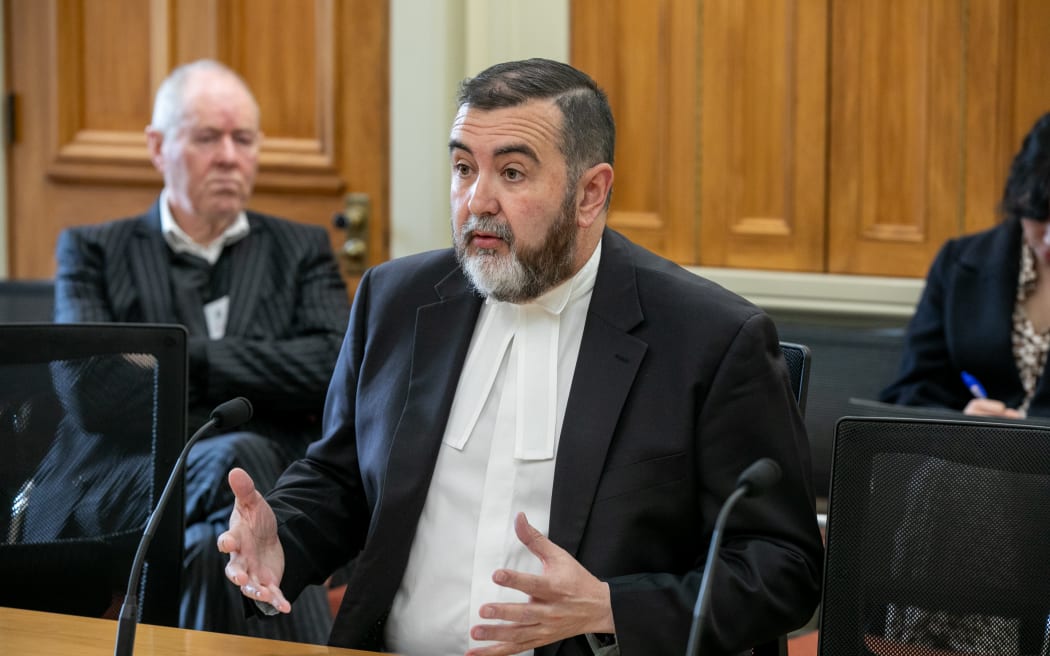
Clerk of the House David Wilson.
Photo: VNP/Louis Collins
1 October: Putting Parliament to sleep
After the House adjourns for the election and MPs shift fully into campaign mode, Parliament continues briefly. Once a Parliament is dissolved, it loses its ability to make laws, so there is a short cooldown period to finalise legislation passed in the final sitting days.
“Any laws passed in those final sitting days can actually be processed by my office and presented to the Governor General for signature,” Wilson said.
After the grace period, Parliament is formally brought to an end through a ceremonial process known as the ‘dissolution’. This short, but significant public ceremony marks the official end of the parliamentary term.
The dissolution is carried out by the Governor-General through a proclamation, which is publicly read on her behalf.
“It’s done out on the steps of Parliament House, and it has to be heard or… read in the presence of the Clerk of the House and two other witnesses, but also has to be done in public,” Wilson said.
“Usually, the Deputy Clerk, the Clerk Assistant [and I] – the three most senior House officers – will be there for that, and the public are invited, because it is a public proclamation.”
Despite being brief, Wilson said the moment carried real democratic significance.
“[Parliaments] can’t go forever and that’s a key part of democracy – that there are regular elections, so this is indicating the Parliament is finished.
“It’s quite short. It is a matter of reading out some words and then the three witnesses signing that they’ve heard it, letting everyone know what’s happened.
“It’s about 10 minutes, but it is significant.”
Left undissolved, the Parliament would automatically expire three years after the return of the previous election writ.
4 October: The King says ‘go’
A few days later, on writ day – 4 October – the Governor General formally instructs the Electoral Commission to conduct the election. This document, known as the writ, is later returned to the Governor General with the names of successful electorate MPs.
Traditionally, electorate winners are written on it, but not list MPs.
“The writ has always existed while we’ve had elections,” Wilson said. “The rules and naming of that needed to change also, once we introduced the MMP, so there’s basically a separate notification for list MPs.”
Even without Parliament sitting, the country is never without a government. A caretaker government remains in place, handling day-to-day matters to keep the lights on, while avoiding major or controversial decisions.
Meanwhile, overseas voting begins (21 October), voter enrollment ends (25 October), advance voting begins (26 October) and party campaigns intensify.
After Election Day
While preliminary results can be indicative on election night, the official process takes longer. Votes must be counted and verified, before final results are confirmed.
“We usually have a pretty good idea on election night, but exactly who’s going to be here and exactly how many seats the parties got might still be a little bit up in the air,” Wilson said.
The official election result is slated for 27 November. The writ must be returned by 3 December this year, marking the official start of the new parliamentary term.
“Occasionally, it’s later than that, if there are recounts that are applied for by candidates, but that is the date that’s set and that’s an important date, because the next parliament lasts for three years from that day,” Wilson said.
Forming the New Parliament
Once results are finalised, the Governor General calls MPs to Wellington for the opening of Parliament, which takes place in two parts – the Commission Opening and the State Opening.
Of all the Westminster traditions combining pageantry and constitutional procedure, this is perhaps the most prominent.
The Governor-General does not attend the Commission Opening. Instead, Wilson said: “They send commissioners, who are senior judges, to open the Parliament and to ask the Parliament to elect a Speaker.
“I swear in all of the members [present]. They can take an oath or an affirmation in English or te reo Māori.
“Then, once they are all sworn in, they are able to elect a speaker and that’s all that happens on that Commission Opening day.”
The following day is the State Opening of Parliament, when the Governor-General delivers the government’s plans for the next three years in the Speech from the Throne.
The ceremony begins with the Westminster-inherited tradition of the Usher of the Black Rod “rapping” (knocking) on the doors of the Debating Chamber to summon MPs to the Legislative Council Chamber next door.
Parliament must meet by 14 January at the latest, even if coalition negotiations are still ongoing.
To listen to the audio version of this story, click the link near the top of the page.
You can find out more about some of the key dates in the lead-up to the general election by visiting the Electoral Commission website.
RNZ’s The House, with insights into Parliament, legislation and issues, is made with funding from Parliament’s Office of the Clerk.
Sign up for Ngā Pitopito Kōrero, a daily newsletter curated by our editors and delivered straight to your inbox every weekday.