
The world is changing but New Zealand’s reputation for trustworthiness must remain constant Graye Shattky writes.
The words in the headline capture something important about New Zealand’s place in the world. Our influence has rarely come from size or power, but from the trust we have built with partners and from our unique position within the Pacific community.
For much of the past 70 years New Zealand has operated within a relatively stable international system in which trade flowed freely, and alliances were largely underwritten by larger powers. That environment now appears to be changing.
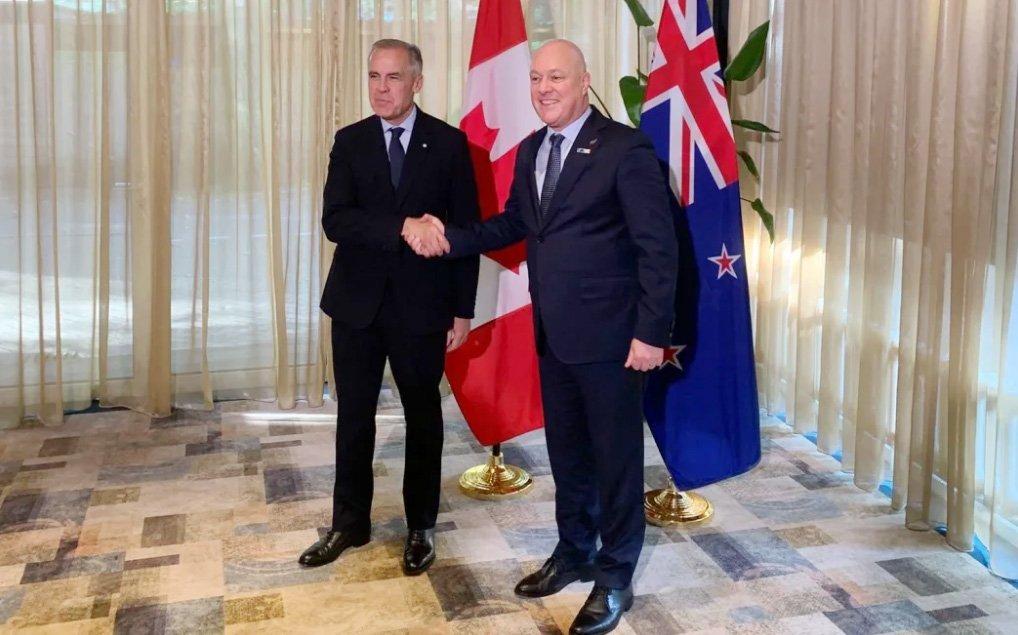
Recent developments involving Canada and Australia provide an interesting example. Canadian Prime Minister Mark Carney has been exploring closer co-operation among several middle-sized countries in areas such as critical minerals, advanced technology and defence industry supply chains.
Australia has responded positively, seeing such relationships as one way to strengthen economic and strategic resilience in an increasingly uncertain world.
No criticism can be directed at Australia for taking this course. Canberra is doing what responsible governments must do: considering carefully how best to safeguard national interests in a changing strategic environment.
Australia remains New Zealand’s closest partner and friend, and the two countries have long worked together across defence, intelligence and regional diplomacy.
Yet these developments naturally raise a question closer to home. If conversations of this kind are beginning among several of our closest partners, how does New Zealand see its own place in this evolving landscape?
Recent debate about New Zealand’s future defence capabilities and possible participation in aspects of the Aukus technology partnership only reinforces the importance of this question.
Decisions of that kind inevitably shape the technological and industrial ecosystems within which a country operates. It would therefore be helpful for the public to understand more clearly how such choices fit within New Zealand’s wider strategic relationships across the Pacific and among other like-minded partners.
Earlier this year I suggested in these pages that strategic independence is not achieved simply by declaring it. Independence carries obligations. It is sustained by the capabilities and contributions a country brings to its partnerships.
New Zealand has several such strengths. Our geographic position, our long experience in the South Pacific, and our shared Polynesian heritage give this country relationships across the Pacific that larger powers cannot easily replicate.
Through decades of migration, cultural connection and practical co-operation, New Zealand has developed genuine and enduring ties with many Pacific societies. If carefully nurtured, those relationships provide this country with a form of influence that extends well beyond its size.
Alongside these ties, New Zealand contributes a professional defence force, a respected diplomatic service, a long-standing presence in Antarctica and the Southern Ocean, and recognised expertise in maritime and environmental stewardship.
Those serving in the New Zealand Defence Force carry responsibilities on behalf of all New Zealanders. They cannot speak publicly on questions of national policy, but they are entitled to the reassurance that clear strategic thinking lies behind the decisions that shape their future capabilities.
None of these attributes make New Zealand a great power. Yet, together, they offer a strategic contribution that can carry influence beyond our size.
A professional defence force, respected diplomacy, Antarctic stewardship and maritime expertise.
As other middle-sized nations prepare for more uncertainty, New Zealanders may reasonably ask how we will navigate these waters?
Strategic independence isn’t free; it is earned by the contributions we bring to our partnerships in a changing world.
Graye Shattky is a retired New Zealand Army officer and former instructor at the Australian Officer Cadet School.