
There has been little fanfare about New Zealand’s decision to formally reject amendments to international health regulations (IHR) drawn up after the Covid-19 pandemic.
That is possibly because it is baffling and an action which seems designed to appeal to some New Zealand First voters, and to suck up to the United States.
The decision conveyed to the World Health Organisation (WHO) overnight last Monday means New Zealand becomes one of five nations (US, Italy, Israel and Argentina) to reject the amendments outright.
As Newsroom reported, another seven said they had rejected the amendments as they needed more time to finally implement them.
But our Ministry of Health has provided no justification for New Zealand’s rejection.
There have been no official ministerial statements issued on last week’s action by either Health Minister Simeon Brown or Foreign Affairs Minister Winston Peters.
When Newsroom tried to get information from either of the relevant ministries, it got the ping-pong treatment and was told questions were best directed to the two ministers.
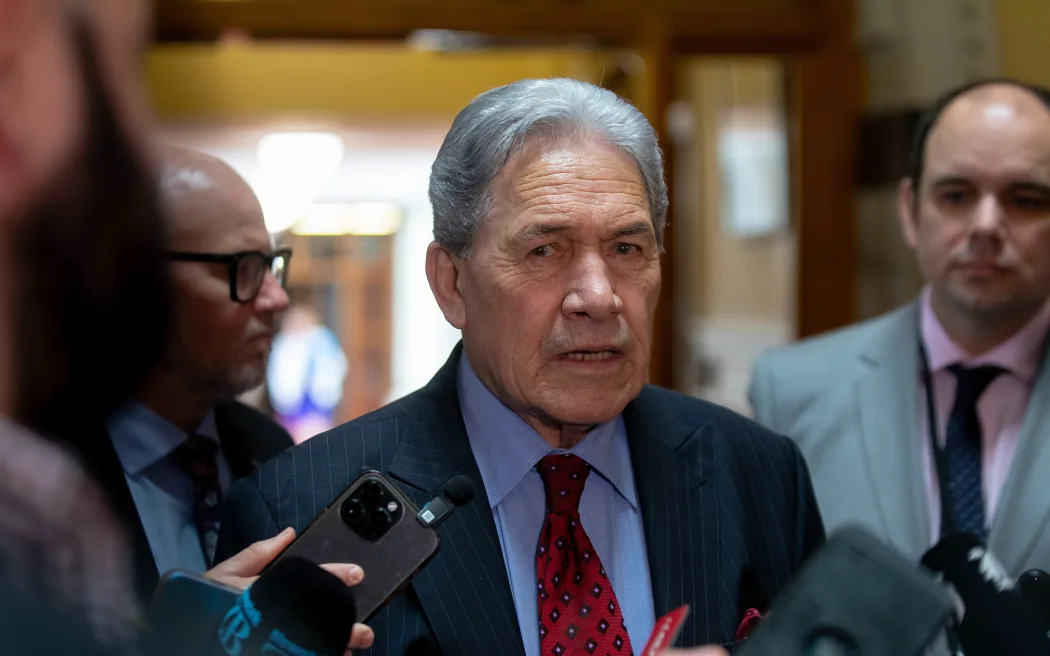
Mr Peters did post something on social media which said New Zealand First had always said any decisions about the health of kiwis should be made from Wellington, not Geneva.
‘‘We have fought on your behalf for these IHR amendments to be fully rejected, we made a promise to put the national interests of New Zealanders first, to maintain our sovereign decision making, and to push back on globalist bureaucrats — and we have kept that promise.’’
We are assuming that means something to his supporters but it reeks of fear-mongering nonsense from Mr Peters who is on an anti WHO crusade.
What makes it particularly embarrassing is that New Zealand’s Sir Ashley Bloomfield, the former director-general of health, was the co-chair of the working group on the IHR amendments, and of the drafting group that guided the negotiations of the amendments during the World Health Assembly after the pandemic.
The aim of the amendments was to strengthen global preparedness, health surveillance, and responses to public health emergencies, including pandemics.
They would introduce a definition of a pandemic emergency to trigger more effective international collaboration, offer a commitment to solidarity and equity on strengthening access to medical products and financing, and would involve setting up oversight bodies to support co-operation and improve implementation of the IHR.
As Sir Ashley said in 2024 when the proposed amendments were announced, the experience of epidemics and pandemics, from Ebola and Zika to Covid-19 and mpox, showed where better public health surveillance, response and preparedness mechanisms were required around the world.
‘‘Countries knew what had to be done and we did it. I am so proud to be a part of this.’’
But that is not how New Zealand First, and now apparently the rest of the government which has quietly gone along with it on this, sees it.
Mr Peters is peddling the view these amendments are a threat to our sovereignty even though Cabinet has been told otherwise.
As Associate Professor in Vaccinology at the University of Auckland Helen Petousis-Harris pointed out earlier this year, the WHO is a global advisory body and no WHO instrument had any legal force in New Zealand unless it passed through a domestic implementation process like any other international treaty.
This was clearly illustrated during New Zealand’s Covid-19 response because countries took their own line on advice they received from the WHO.
Prof Petousis-Harris said in New Zealand’s case, it chose to adopt measures in its elimination strategy which were stricter than the WHO advice, thereby exercising our sovereignty.
This idea we are somehow puppets of faceless health bureaucrats in Geneva is fanciful.
Co-chair of the international Independent Panel for Pandemic Preparedness and Response during the Covid-19 pandemic, and former prime minister Helen Clark has described the decision as leaving New Zealand exposed in a future global health emergency, making us and the rest of the world less safe.
If Mr Peters wants us to believe his longevity in politics makes him wiser than everybody else about this matter, and that this is not just a cheap attempt to rustle up a few votes in an election year, he has some explaining to do.