
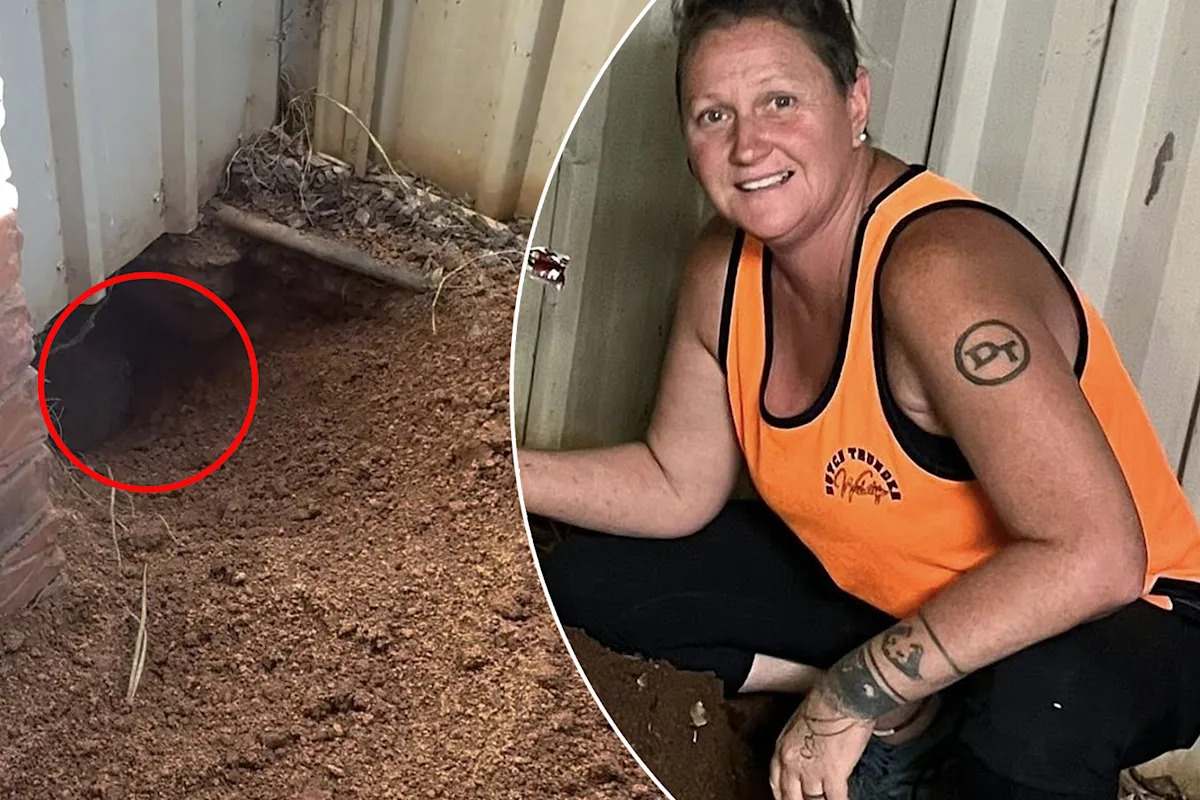
A resident’s startling find along the side of their regional home has prompted a warning to all Australians about the dangers of poking around mysterious burrows.
Victorian wildlife rescuer Kylie Donkers told Yahoo News she received a “very distressed call” from a resident in Cobram, on the New South Wales border, last week after they noticed a “huge hole” near their driveway.
While she was attending the site, she also received a call from the property owner’s real estate agent, who had been contacted by the resident worried about electrical wiring dangling into the burrow.
Thankfully, Kylie said, it turned out to be part of an old, non-functioning sprinkler system, so there was no danger to the unexpected visitor.
At first, it was thought “it might be an echidna”.
But quickly it was discovered that “the mystery digger was actually a very large wombat” who had “decided the carport was prime real estate”.
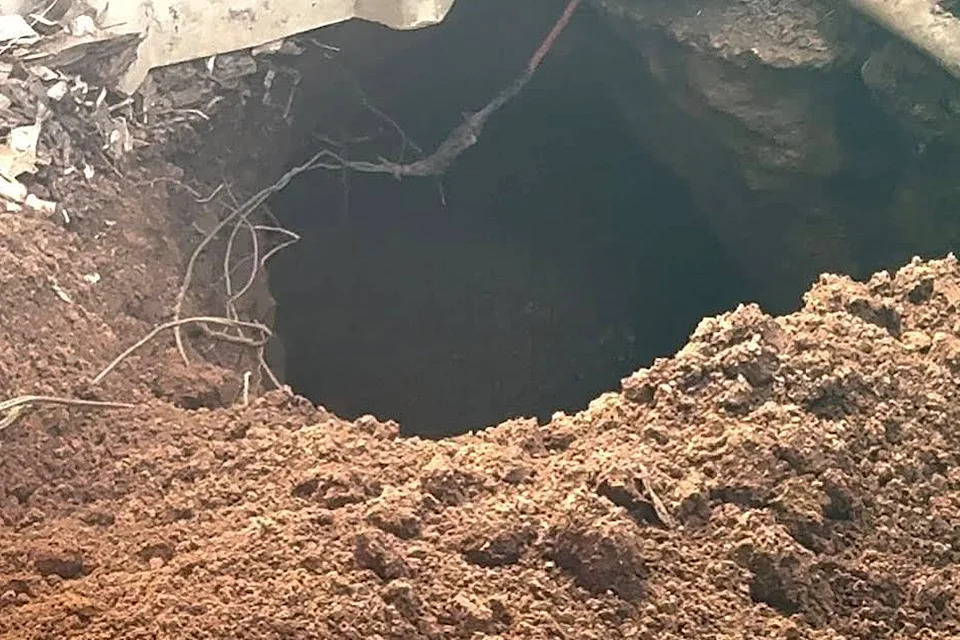
The critter was almost camouflaged in its impressive burrow. Source: Dutch Thunder Wildlife Shelter
After checking the situation, Kylie and her team — from the Dutch Thunder Wildlife Shelter — advised the resident to leave the wombat alone for the day and wait until nightfall.
Then, they were able to safely access the marsupial.
“We were just lucky that it was in an exposed area that we could actually get to it,” she said.
“If they’re under a house, we don’t even attempt a rescue; it’s almost impossible.”
By nightfall, after a lot of digging from both the animal and fellow rescuer James, they finally managed to extract one very solid wombat from its freshly excavated burrow.
This was accomplished by encouraging it to make its own way into a cage.
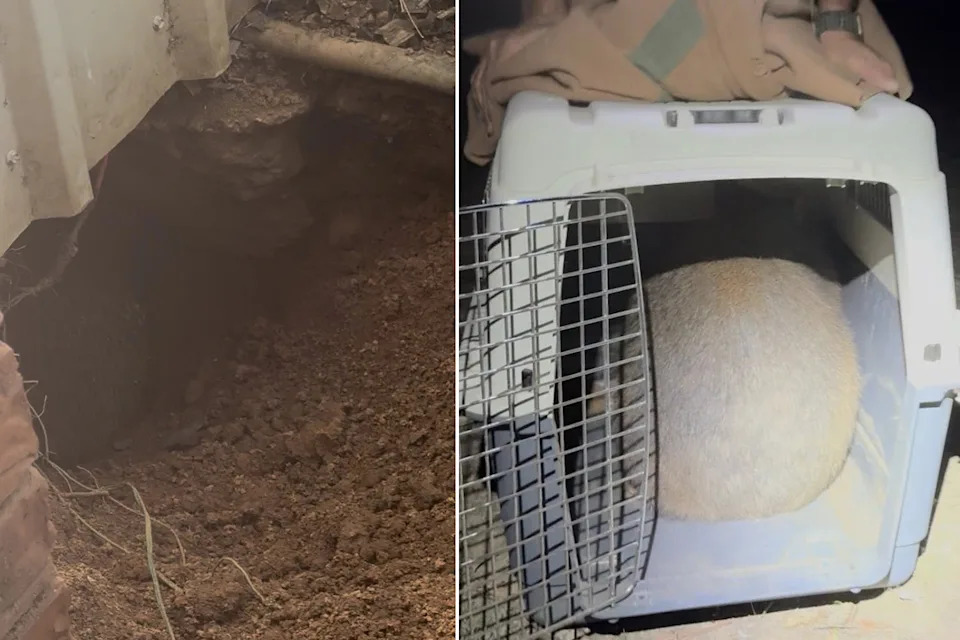
The ordeal has prompted a warning to Australian residents to avoid wombat interactions at all costs. Source: Dutch Thunder Wildlife Shelter
Why should you avoid handling wild wombats?
Kylie, who has 20 years of experience in the field, warned Australians never to attempt to handle wombats on their own.
“Whatever you do, don’t try to corner them or remove them yourself,” the veteran rehabilitator said.
“Wombats can be extremely dangerous.
“We did not have to physically touch that animal to catch it, and that’s the way you do it.”
The protected animals can be notoriously vicious — and they bite.
“We never, ever put our hands down there to try and pull them out, because they can actually kick quite hard with their back legs too,” Kylie said.
“I’ve known rescuers to have broken wrists from being kicked. They are a ball of muscle. They are incredibly strong.”
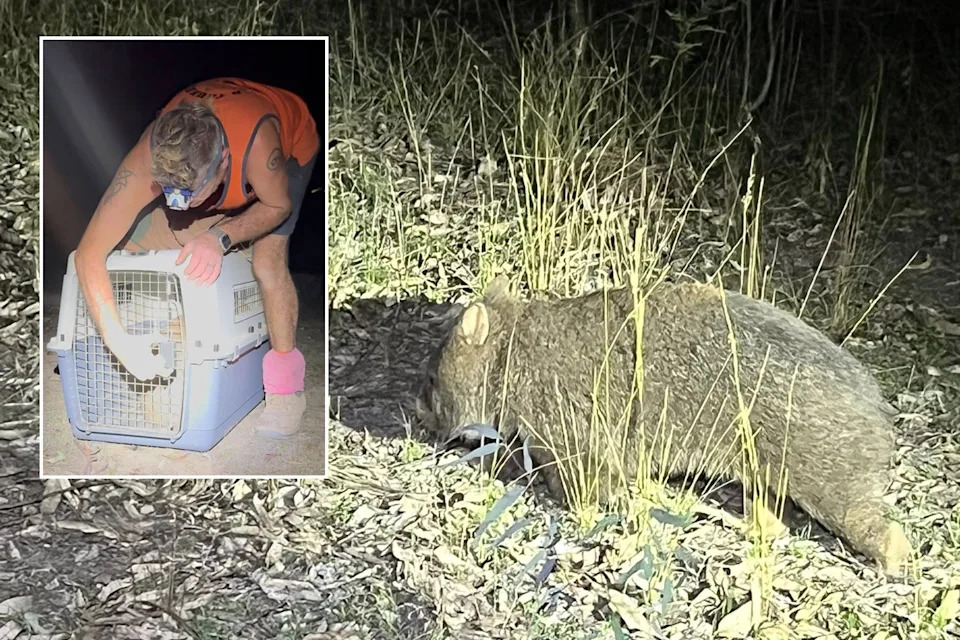
It was eventually relocated to a safer location away from people and cars. Source: Dutch Thunder Wildlife Shelter
How should residents respond if they stumble across a wombat?
The residents were left with the task of filling in the hole, but Kylie and her team left them some Blood and Bone to spread around as a deterrent, in the hope of preventing any future wombat squatters.
Ever since the floods a few years ago, Kylie’s started to see both wombats and deer appearing in higher numbers.
“We’re assuming they’re coming down from the high country and following the rivers and creeks,” she said. “So we’re seeing more and more wombats around this area.”
So what’s her advice if the members of the public come across one?
“If you have a problem with a wombat or any wildlife, ring a wildlife rescue group to get advice,” she said.
“They will send out a volunteer to then assess the situation.”
The marsupial was safely relocated to a more suitable spot, where it can dig to its heart’s content, far from carports, cars, and humans.
Do you have a story tip? Email: newsroomau@yahoonews.com.
You can also follow us on Facebook, Instagram, TikTok, Twitter and YouTube.