
 Image: ©stefanamer | iStock
Duke Health researchers say a nasal swab may detect Alzheimer’s signals long before symptoms appear, offering hope for earlier intervention
This new test analyses nasal cells to detect subtle changes associated with the condition, potentially giving doctors a head start in diagnosis and treatment. Experts say this could transform detection, providing a faster, less invasive alternative to current methods.
The findings are highlighted in a newly published study in Nature Communications.
Nasal swab collects nerve and immune cells to detect early alzheimer’s
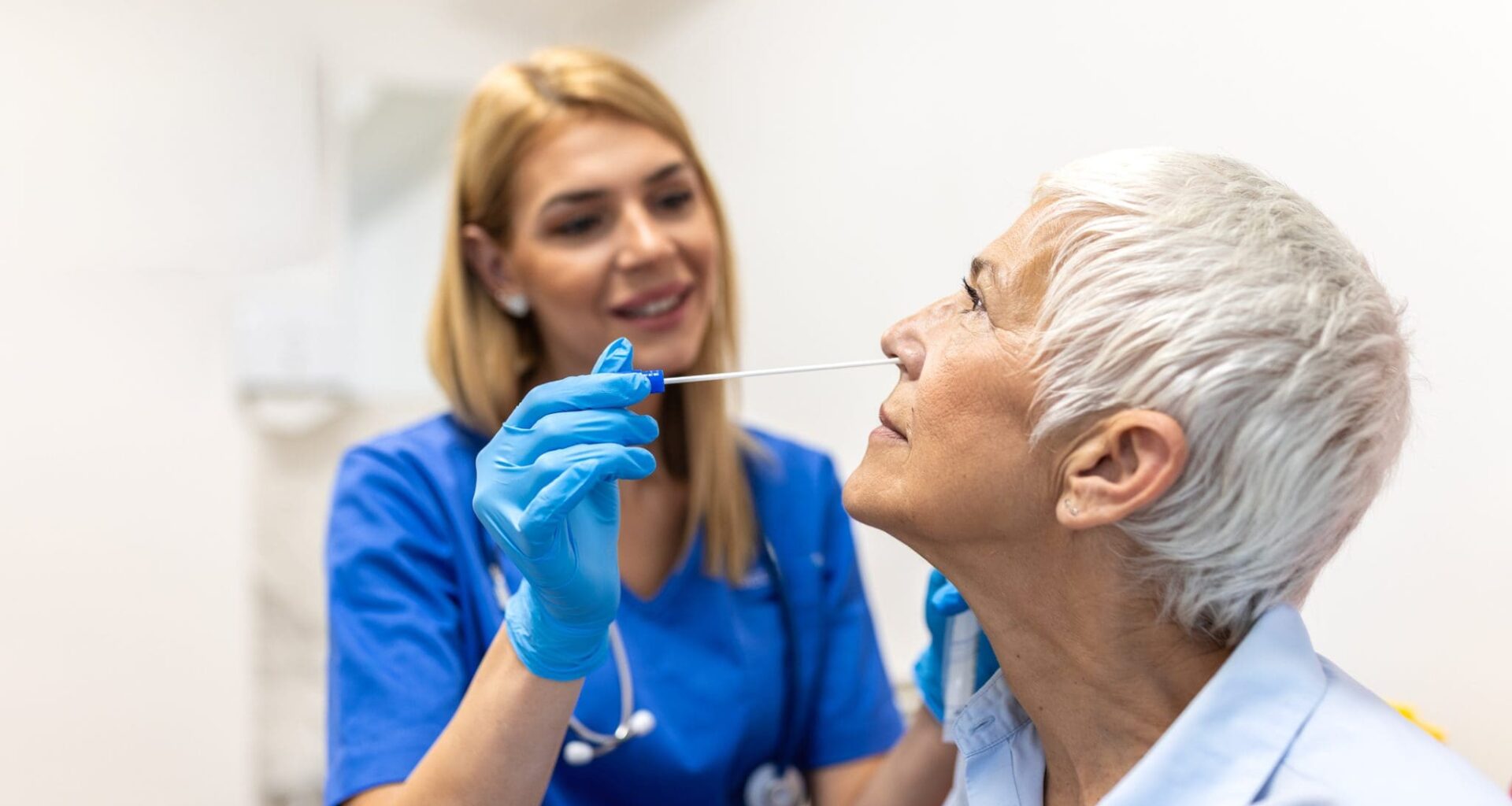
To conduct the study, the researchers used a gentle swab inserted deep into the nose to collect nerve and immune cells. Analysis of the cells revealed clear patterns that separated people with early or diagnosed Alzheimer’s from those without the disease.
“We want to be able to confirm Alzheimer’s very early, before damage has a chance to build up in the brain,” said Bradley J. Goldstein, M.D., PhD, corresponding author and professor in the departments of Head and Neck Surgery & Communication Sciences, Cell Biology and Neurobiology at Duke University School of Medicine.
“If we can diagnose people early enough, we might be able to start therapies that prevent them from ever developing clinical Alzheimer’s,” Goldstein said.
Collecting the nasal cells took a few minutes. After applying a numbing spray, a clinician guides a tiny brush into the upper nose, where smell-detecting nerve cells reside. The collected cells are then studied by researchers to see which genes are active, a sign of what’s happening inside the brain.
How does the nasal swab test work?
The researchers compared gene activity across thousands of individual cells from 22 participants, yielding millions of data points. The swab detected early shifts in nerve and immune cells. This includes people who showed lab-based signs of Alzheimer’s but had no symptoms yet.
A combined nose tissue gene score, an overall measurement summarising gene activity in nasal tissue, correctly separated early and clinical Alzheimer’s from healthy controls about 81% of the time.
For context, current blood tests for Alzheimer’s detect markers that appear later in the disease process. In contrast, this nasal swab captures living nerve and immune activity, potentially providing an earlier, more direct look at disease-related changes and helping identify people at risk sooner.
“Much of what we know about Alzheimer’s comes from autopsy tissue,” said Vincent M. D’Anniballe, the study’s first author and a student in the Medical Scientist Training Program at Duke. “Now we can study living neural tissue, opening new possibilities for diagnosis and treatment.”