
Coroner Robb’s findings said Pincott and her son Bryden Frizell, 25, had booked the rafting trip with River Rats the night before.
On arrival at the Kaituna River, they received safety instructions, lifejackets and helmets, and signed a waiver before setting off with two experienced instructors for the Grade 5 rapid.
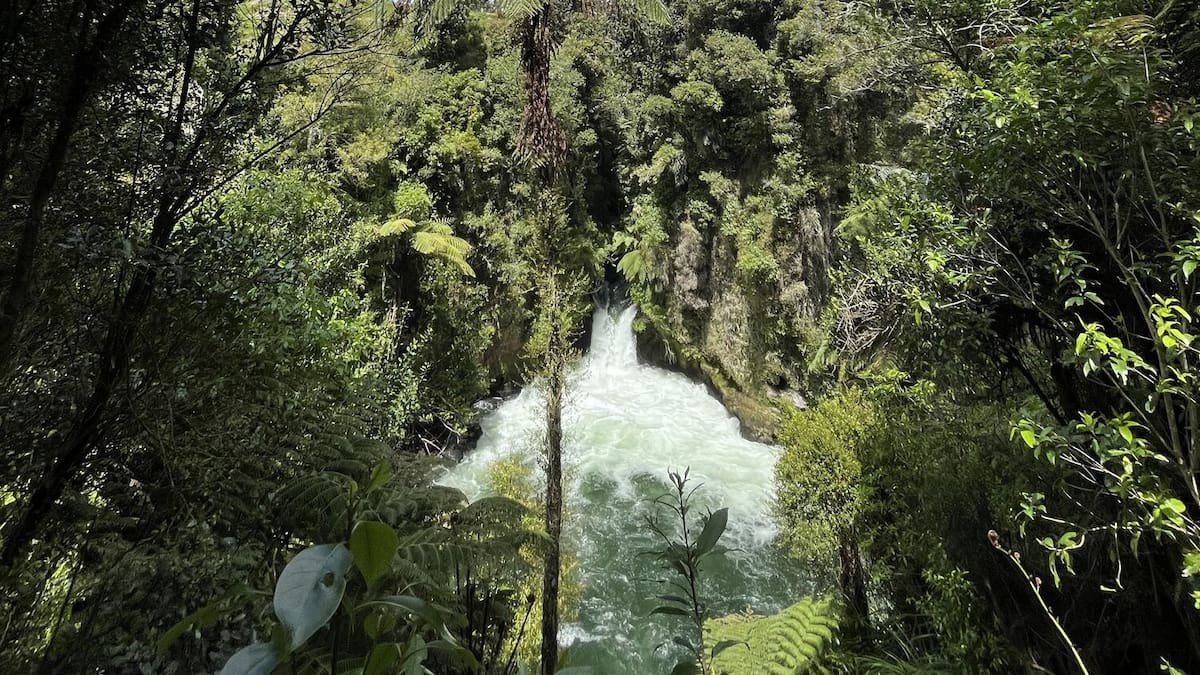
They were headed for the Tutea Falls, advertised online as the highest commercially rafted waterfall in the world.
About one million people have “navigated the fall without incident”, the Coroner found.
The raft navigated several drops without incident, and the pair was “keen to continue” when guides checked in.
Coroner Robb reviewed photos and video of the raft going over the final drop.
The raft became submerged and full of water before resurfacing with three on board.
Pincott surfaced behind the raft within 10-15 seconds. She was heard saying “help”, and her head kept going under the whitewater.
Her lifejacket appeared loose and it was unclear if she was wearing her helmet.
A guide swam her to a rock. She did not appear to have ingested or inhaled water.
The guides believed she may have suffered a complication of her heart condition, so administered the angina spray she had provided.
She was taken to shore “very pale” but was conscious when emergency services arrived.
She complained of something “tight around her neck” and her lifejacket was cut off.
Pincott said; “It doesn’t feel like my last heart attack 10 years ago”, before losing consciousness. She could not be revived.
A pathologist found her death was caused by chest injuries with “fractured thoracic spine and torn inferior vena cava” from “high-energy impact”.
Falls from rafts ‘common’
River Rats’ long-time owner Justin Hutton provided evidence to the coroner.
His report said he believed Pincott was washed from the raft when it hit the pool at the bottom of the waterfall.
Her injuries may be from “potentially being driven to the bottom of the river by the power of the water”.
Customers falling from rafts was “extremely common” at Tutea Falls but this “seldom” resulted in injury, he said.
Robb found the river level and nature of the falls was the same as on “thousands of other rafting tours” and the raft was correctly guided to reduce the risk of flipping.
The Kaituna River near Okere Falls. Photo / Andrew Warner
Maritime New Zealand found no other record of a death or significant injury at that location, but Hutton told the coroner a rafter died at Tutea Falls in 2008.
Hutton sold the rafting side of the business in November 2025.
He told the coroner he “put a lot of thought” into continuing rafting after Pincott’s accident.
Losing his passion for higher-grade rafting trips was a factor in the decision to sell.
“I don’t believe there was anything we could do different (other than not rafting) that would stop the incident happening again.”
He could not think of any past instances when a customer decided not to go rafting after learning of the one commercial rafting death on the river. He believed they saw it as “a statistically acceptable risk”.
The company reduced the risk with good practices and declared it by saying “anything could happen from a scratch to serious injury or drowning”.
Robb found nothing in Pincott’s medical history, the pathologist’s report or other advice to indicate any health condition that made her injuries more likely.
He considered it “unlikely” the loose lifejacket had “any direct bearing on her death”.
“What occurred to Vivienne was a wholly unexpected and tragic outcome.”
Robb considered she most likely was injured from being “washed from the raft”, then “forced either into rocks or onto the floor of the river”.
Agency apologises for delay
Robb said the greatest delay in the coronial process was Maritime New Zealand not providing its report to Rotorua police until May 2024.
Police then took almost a year to send the investigation file to the coroner. Coroner Robb took over the case in December.
In a statement, a Maritime New Zealand spokesperson said the agency unreservedly apologised to the coroner and Pincott’s family for the delay, resulting from an “administrative error”.
The agency had improved its system for managing coronial requests and tracking cases since 2021 and it was “sure a delay of this nature will not happen again”.
In a statement, Rotorua area commander Inspector Herby Ngawhika said police accepted its part in the “unnecessary delay”.
He said the “unprecedented” national Covid-19 level four lockdown ordered shortly after Pincott’s death consumed most police resources and led to a backlog of coronial files.
Both organisations acknowledged the delay’s impact on Pincott’s family and friends and offered condolences.
A WorkSafe New Zealand spokesperson said it did not take any action in relation to Pincott’s death.
River Rats’ routine audits had shown its compliance with the safety audit standard for adventure activities.
Approached for comment on the report, Hutton said he wanted to express his condolences to Pincott’s family and friends.
Megan Wilson is a health and general news reporter for the Bay of Plenty Times and the Rotorua Daily Post. She has been a journalist since 2021.