
With the help of artificial intelligence, a coalition of Bay Area institutions identified 18 FDA-approved drugs that could improve the lives of those suffering from amyotrophic lateral sclerosis, commonly known as ALS, according to a new study published in the medical journal The Lancet.
For a community that has witnessed countless failed clinical trials, the study is a promising breakthrough that could eventually prove key to understanding the disease’s mysterious origins, its debilitating mechanisms and a pathway toward a cure.
“Drug repurposing has the upside of identifying existing FDA-approved drugs that can help slow the rate of decline of people who have ALS,” said Mike Piscotty, founder of the ALS Cure Project, which helped secure a trove of Veterans Affairs health records for the study. “But it’s now all coming together and the compute is there. All those together are the target: Creating a biomarker, knowing the trigger, knowing why the disease progresses after it starts.”
Also known as Lou Gehrig’s disease, the neurological disorder attacks motor neurons in the brain and spinal cord. When these neurons die, the brain loses control of muscle movement and, eventually, core bodily functions like breathing. People diagnosed with ALS typically survive three to five years after the onset of symptoms; however, some cases are more aggressive, according to the ALS Association.
Such was the case for Piscotty’s wife, Gretchen, who died at 55 just more than a year after her diagnosis. In his wife’s honor, Piscotty founded the ALS Cure Project, a nonprofit volunteer network that raises funds for research.
About 30,000 people in the United States have the disease, with approximately 5,000 new diagnoses annually, according to the American Medical Association.
Its rarity among the general public has provided limited volunteers for clinical studies, and a poor understanding of its mechanisms makes it a difficult and costly topic to research, according to the study’s authors. Researchers have found that approximately 10% of patients have a genetic mutation. The other 90% are “sporadic,” seemingly random instances of the disease without explanation, Piscotty said.
“And that’s been one of the reasons why ALS has been so hard — we don’t know the mechanism,” Piscotty said.
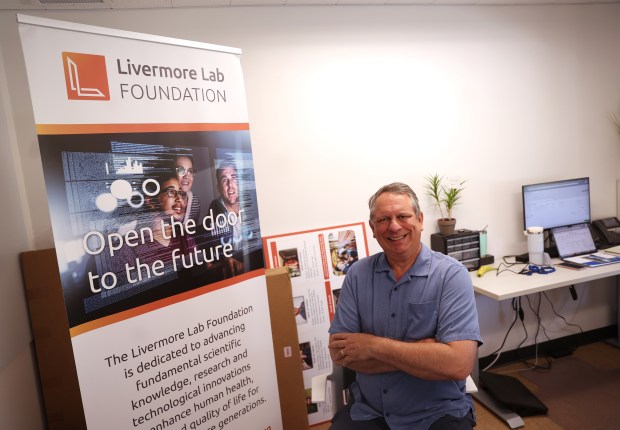 ALS Cure Project founder Mike Piscotty at the Livermore Lab Foundation office in Livermore, Calif., on Thursday, March 19, 2026. Piscotty’s wife Gretchen died of ALS in 2018. (Jane Tyska/Bay Area News Group)
The newly published study, in collaboration with Lawrence Livermore National Laboratory, Stanford University, UCLA, and Palo Alto Veterans Affairs Health Care System, avoided the obstacles facing ALS drug trials by utilizing the rare convergence of new access to thousands of health records and the emergence of artificial intelligence in medical research.
Veterans Affairs recognized ALS as a service-connected disease in 2008 because it is 50% more common among veterans than in the general population, according to Veterans Affairs.
Through financial assistance from the ALS Cure Project, researchers gained access to the health records of 20,000 VA patients between 2009 and 2020, including 11,003 patients who were diagnosed with ALS, according to Priyadip Ray, a Lawrence Livermore National Laboratory scientist and co-author of the study.
The VA’s health data is expansive and detailed, just waiting to be used, Ray said. That aggregate data can then be fully processed by AI, noting patterns, creating hypotheses and building more targeted experiments.
Like sifting dirt through a pan to look for gold, the trove of veterans’ health records was uploaded to Lawrence Livermore National Laboratory’s supercomputer to review 168 medications for “off-target effects” that had an unintended benefit.
“We don’t know whether this will succeed in a clinical trial. But can you do a clinical trial for 5,000 drugs? You cannot,” Ray said. “But if you can narrow down and have high confidence in a few, then you can do some small, more targeted clinical trials to tease those out.”
Researchers used a subset of AI known as machine learning to analyze data using “causal inference,” a framework that isolates treatment effects while accounting for bias and extraneous factors, according to Ray. By comparing health records against medications, researchers can essentially simulate treatment under individual drugs.
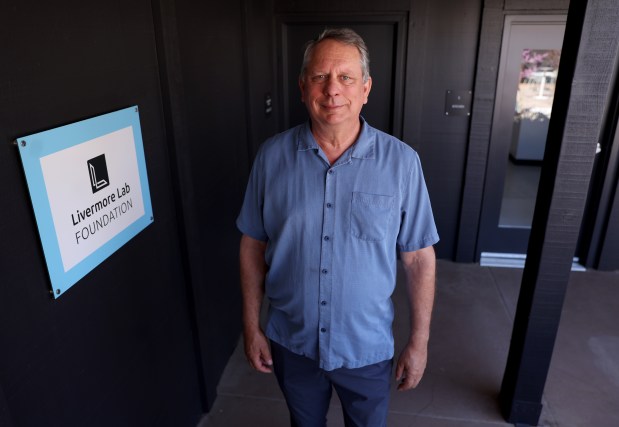 ALS Cure Project founder Mike Piscotty at the Livermore Lab Foundation office in Livermore, Calif., on Thursday, March 19, 2026. Piscotty’s wife Gretchen died of ALS in 2018. (Jane Tyska/Bay Area News Group)
The algorithm identified three classes of drugs that showed a positive association with longer survival in ALS: statins, which control cholesterol; type-5 phosphodiesterases, which treat erectile dysfunction; and alpha-blockers, which treat high blood pressure, according to the study. With the study’s findings, doctors will be able to prescribe FDA-approved drugs that may benefit the lives of ALS patients, said Richard Reimer, a co-author of the study and a professor of neurology at Stanford University.
“A lot of times, people will stop the statin medications as they get a diagnosis of ALS … because one of the side effects that are often noted for statins is that it may cause muscle pain or weakness,” Reimer said. “With this study, it allows us to say … it’s safe to continue them on their statin medication.”
Still, researchers stressed that the study only shows a correlation between the medication and longevity with ALS, not causation. Further testing on a broader data set that is more representative of the general population — veterans’ data is overwhelmingly white and male — will be necessary to make findings more concrete, Reimer said.
Meanwhile, patients and their families are often flying blind when it comes to diagnostics and treatment. There is no singular, objective test to diagnose ALS. There is no understanding of its cause, and there is no cure.
That unknowing gave Piscotty a “sense of doom” for his wife during treatments at Stanford. After her diagnosis, she participated in a study on a repurposed drug from Japan that was originally designed to treat strokes. She was only the second person in the U.S. to take it. The drug treatment cost $150,000, but didn’t really help his wife, Piscotty said.
The study, however, shows how pre-approved drugs may be able to be repurposed for ALS to slow down the disease and give patients and their families more time.
“It gives you a lead,” Piscotty said about the study’s findings. “Imagine going through 25 million gene mutations in ALS patients. Without machine learning, it’s just not feasible for the human brain to be able to look for correlations in just this sea of data.”