
Blink and you’d miss it. On Friday, Variety dropped a bombshell report suggesting Row K Entertainment — the buzzy new indie distributor that seemed to materialize overnight — is already facing serious financial problems since launching just last summer.
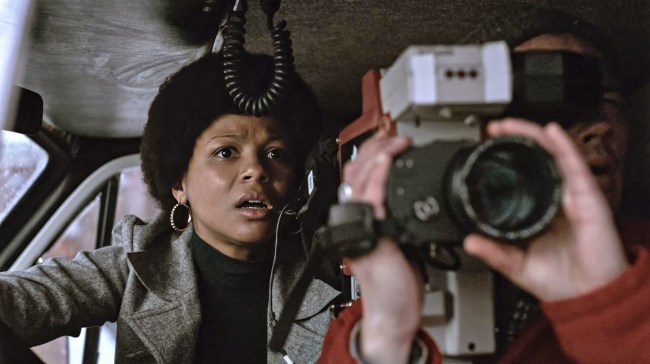
In its report, Variety detailed mounting unpaid bills, strained vendor relationships, and internal turmoil at Row K that’s left employees and clients hanging in the balance after only eight months. The speed of the unraveling is as startling as the news itself. Just weeks ago, Row K was still being positioned as a fresh answer to the indie market’s distribution drought. That endeavor was legitimized by the acquisition of several high-profile projects, including the label’s first release, Gus Van Sant’s “Dead Man’s Wire.”


Back in January, Row K president Megan Colligan and head of acquisitions and distribution Steve Garrett spoke with IndieWire about their plans to make a splash at Sundance and beyond, framing their company as a “theatrical-first” operation built on decades of studio experience. And as recently as February, Row K was announced as part of CinemaCon’s first-ever “Film Showcase,” an opportunity that set up them up to present their slate to thousands of industry professionals in Vegas this April.
How did such a buzzy distributor seemingly hit a wall so fast?
What Is Row K Entertainment?
Row K Entertainment was conceived as a niche solution to a specific problem: too many indie movies, not enough indie buyers. Launched in August 2025 (as an offshoot of financier Media Capital Technologies), the fledgling label entered the movie market with a clear pitch. Row K would be a nimble, acquisitions-driven distributor focused on mid-budget, commercially viable indie films. At a time when many traditional buyers are either scaling back or chasing bigger bets, Row K positioned itself as a middleman.
The company’s leadership reflected that ambition. As president, Colligan brought along her extensive history in marketing from Paramount, IMAX, and Searchlight. And spearheading purchases, tastemaker Garrett touted experience that spanned distribution roles, also at Paramount and IMAX. Together, they pitched an artist-friendly distro shop rooted in theatrical releases and hard-won industry relationships. Ostensibly, Row K promised an experienced team that could reassure artists in an uncertain market.
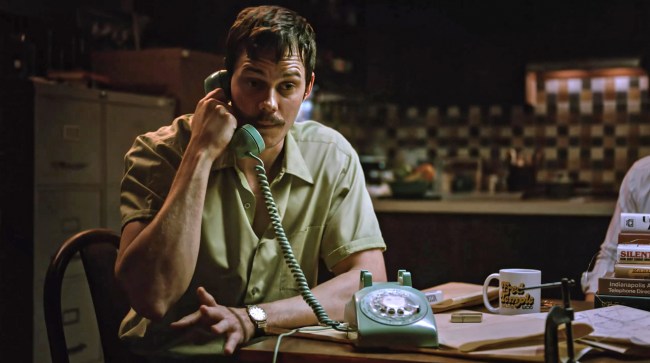 Bill Skarsgård in ‘Dad Man’s Wire’Courtesy Everett Collection
Which Films Are Impacted?
At the 2025 Toronto International Film Festival, Row K acquired four titles, including Gus Van Sant’s “Dead Man’s Wire,” Maude Apatow’s directorial debut “Poetic License,” Mac Eldridge and Tom Dean’s coming-of-age romance “Charlie Harper,” and a reboot of the 1993 Sylvester Stallone action classic “Cliffhanger.”
As one sales agent explained to IndieWire’s Brian Welk at the time, the company was willing to pay a premium to establish itself quickly. That’s a common enough strategy for newbies trying to signal seriousness in a crowded field. What’s more, both internally and publicly, the messaging was consistent. Row K would (1) prioritize theatrical releases, (2) build a curated slate, and (3) capitalize on what Colligan described as a “white space” in the market for original, mid-budget films.
In their January interview with IndieWire, Colligan and Garrett spoke optimistically about their business plan — but did not immediately respond to our request for comment. According to Variety’s reporting, Row K’s model is now under serious strain and the consequences are rippling through its slate. Eight sources cited by the outlet describe ongoing cash flow issues dating back to the company’s earliest days, with vendors and consultants allegedly going unpaid for months. The result is reported work stoppages, legal threats, and a growing sense of instability around the company’s operations.
What Happens Next?
The most high-profile casualty if these deals combust is “Poetic License,” Maude Apatow’s well-reviewed directorial debut — which has been pulled from upcoming festival berths and pushed back from May to September. That move reportedly blindsided key stakeholders, including producer Judd Apatow and star Leslie Mann. Per Variety, Apatow has also yet to receive payment following delivery of the film, raising concerns about whether Row K can fulfill its contractual obligations. (Representatives for Apatow and Mann did not immediately respond to a request for comment.)
 Andrew Barth Feldman, Cooper Hoffman, and Leslie Mann in ‘Poetic License’
Other titles face different forms of uncertainty. “Dead Man’s Wire” grossed just $2.5 million domestically. That disappointment could translate into millions in losses. Meanwhile, the status of “Cliffhanger,” starring Lily James and Pierce Brosnan, appears especially uncertain. Despite public announcements, Variety reports that the deal may not have formally closed.
Only “Charlie Harper,” a romantic indie starring Emilia Jones and Nick Robinson also slated for September, is currently expected to move forward as planned. Although, even that seems contingent on the company stabilizing its finances. Key leadership, including Colligan and other senior staff, have reportedly retained legal counsel amid mounting financial and operational concerns.
Row K, for its part, disputes the severity of the situation. In a statement to Variety, founders Christopher Woodrow and Raj Singh described the company as “well-capitalized” and framed the current moment as a strategic recalibration following the release of “Dead Man’s Wire.” (Row K did not immediately respond to IndieWire’s request for comment.) This past week, Row K also announced the purchase of action-comedy “Mister,” starring Walton Goggins and Chloë Grace Moretz.
“This film exemplifies the kind of star-driven, big-screen entertainment we’re building Row K around,” said Woodrow and Singh of the acquisition, per Variety. “It’s a powerful addition to our growing slate.”
Tracking a Classic Collapse in Record Time
If any of this sounds familiar, it’s because Hollywood has seen versions of this story countless times before. The rise-and-stumble of a new distributor, especially one fueled by aggressive acquisitions strategies, is practically a genre unto itself. But what makes Row K notable isn’t the pattern, so much as the speed. What once might have taken years has seemingly played out in a matter of months.
Part of that acceleration reflects the current state of the indie film and broader entertainment economy. In a post-pandemic landscape defined by consolidation and shifting buyer priorities, new entrants like Row K and Black Bear have rushed in to fill a perceived gap. Financiers are becoming distributors, distributors are becoming producers, and the traditional pathways for independent films are being rewritten in real time. That environment rewards boldness, but it also magnifies risk.
 Nick Robinson and Emilia Jones in ‘Charlie Harper’
Overpaying for early acquisitions, misjudging theatrical performance, or relying on complex financing structures can all compound quickly in a market with thin margins and unpredictable returns. As one sales agent noted to IndieWire’s Brian Welk last fall, the upside for these companies lies in spotting opportunities before others do. The downside is what happens when those bets don’t pay off fast enough.
Structural questions hang over Row K’s predicament, too. Variety reports that Media Capital Technologies’ relationship with insurance company MassMutual may function more as a credit facility than traditional equity investment. That raises the possibility that the capital available to Row K and their slate is more constrained, or more conditional, than it initially appeared.
At the same time, the distributor’s own ambitions could have contributed to the strain. Moving quickly to acquire a slate, positioning itself as a theatrical-first distributor, and preparing for high-profile industry showcases like CinemaCon all require significant upfront investment. In a market where even established players struggle to turn a profit, that kind of expansion leaves little room for error.
Of course, it’s still too early to call this a definitive “collapse.” For now, Row K stands as a cautionary tale of classic indie film churn — and an unfinished story the industry will be watching closely as it unfolds.