
Reading Time: 2 minutes
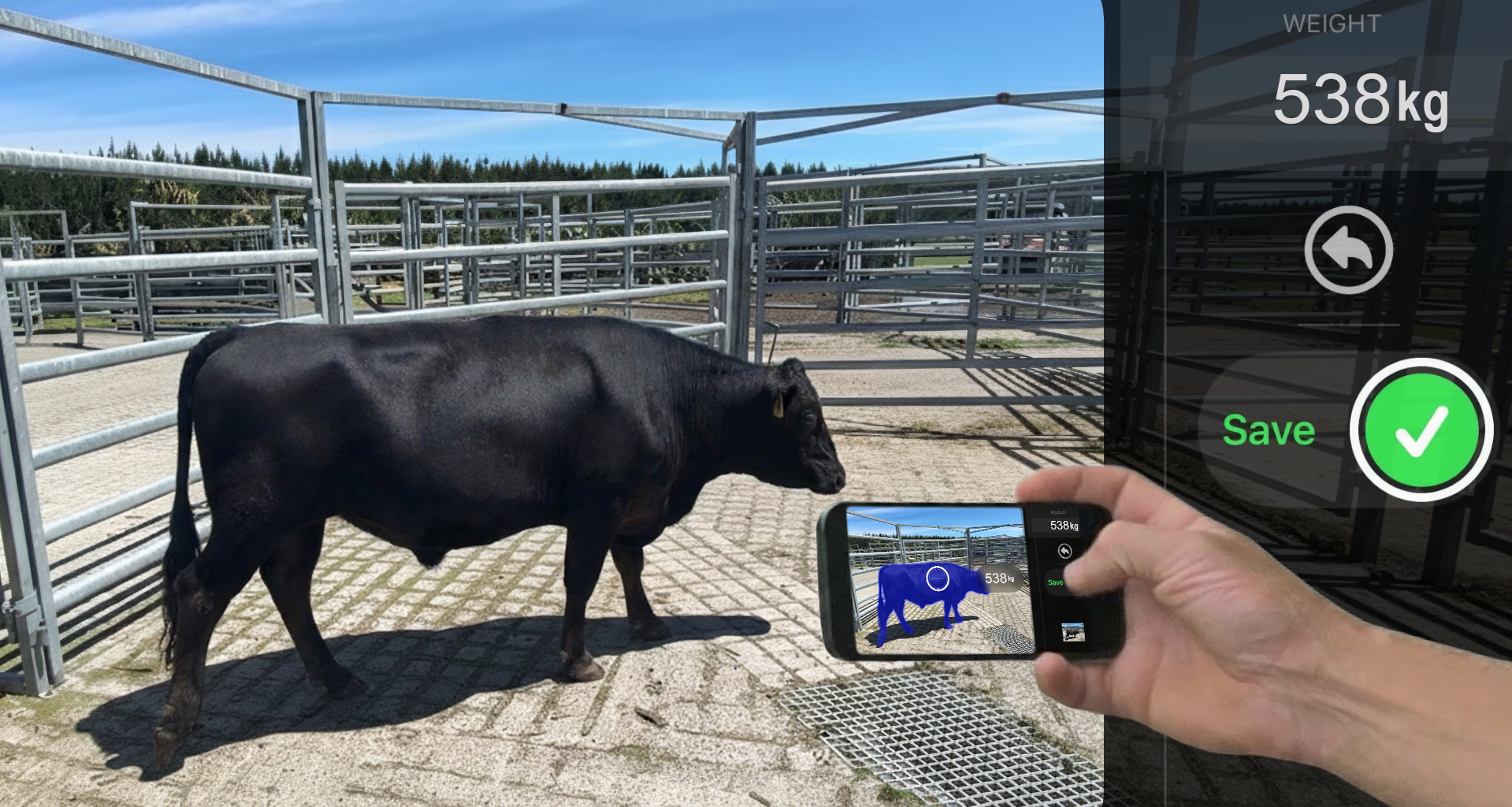
Agritech start-up Scanabull has developed a system that estimates cattle weight using a 3D camera on a phone and AI processing.
Scanabull co-founder and CEO Dan Bull said the app means there’s no need for a crush or guesswork, with the technology providing meat processors and farmers with accurate real-time data about on-farm production.
The company just raised $1.1 million after a bid led by Sprout Agritech, with support from Enterprise Angels and Callaghan Innovation’s Deep Tech Incubator programme.
The tech uses the LiDAR sensor on an iPhone.
It captures a 3D scan of the animal and processes it using proprietary neural networks run directly on the device.
Scanabull has two systems, a phone app that works on an iPhone Pro and a custom camera called the Scanabull Weigh Point that weighs animals automatically in the paddock.
The phone app allows a quick measure of animal weight, whereas Weigh Point allows better measurement of growth trends.
The technology generates a detailed 3D point cloud of an animal and processes the data using a deep neural network that analyses the animal’s shape and structure to accurately estimate its live weight.
The model processes spatial data around 30 times per second, allowing the system to deliver a weight estimate in roughly one second.
The system is currently over 93% accurate on individuals, and much more accurate at the mob level.
The technology has been trained using over 100,000 animal data points, enabling it to continuously improve as more livestock scans are captured.
Bull said Scanabull is working with industry partners including Silver Fern Farms, with trials underway across New Zealand. The company will explore opportunities in Australia and other major beef-producing regions by year-end.
Unlike dairy farming, where real-time data is widely used to manage production, much of the beef industry still relies on estimation when assessing livestock weight, Bull said.
This lack of accurate data can create costly inefficiencies across the supply chain.
“Many animals are bought and sold based on visual estimates rather than objective measurements.
“When those estimates are wrong, it can result in significant financial differences for farmers, traders and processors,” Bull said.