
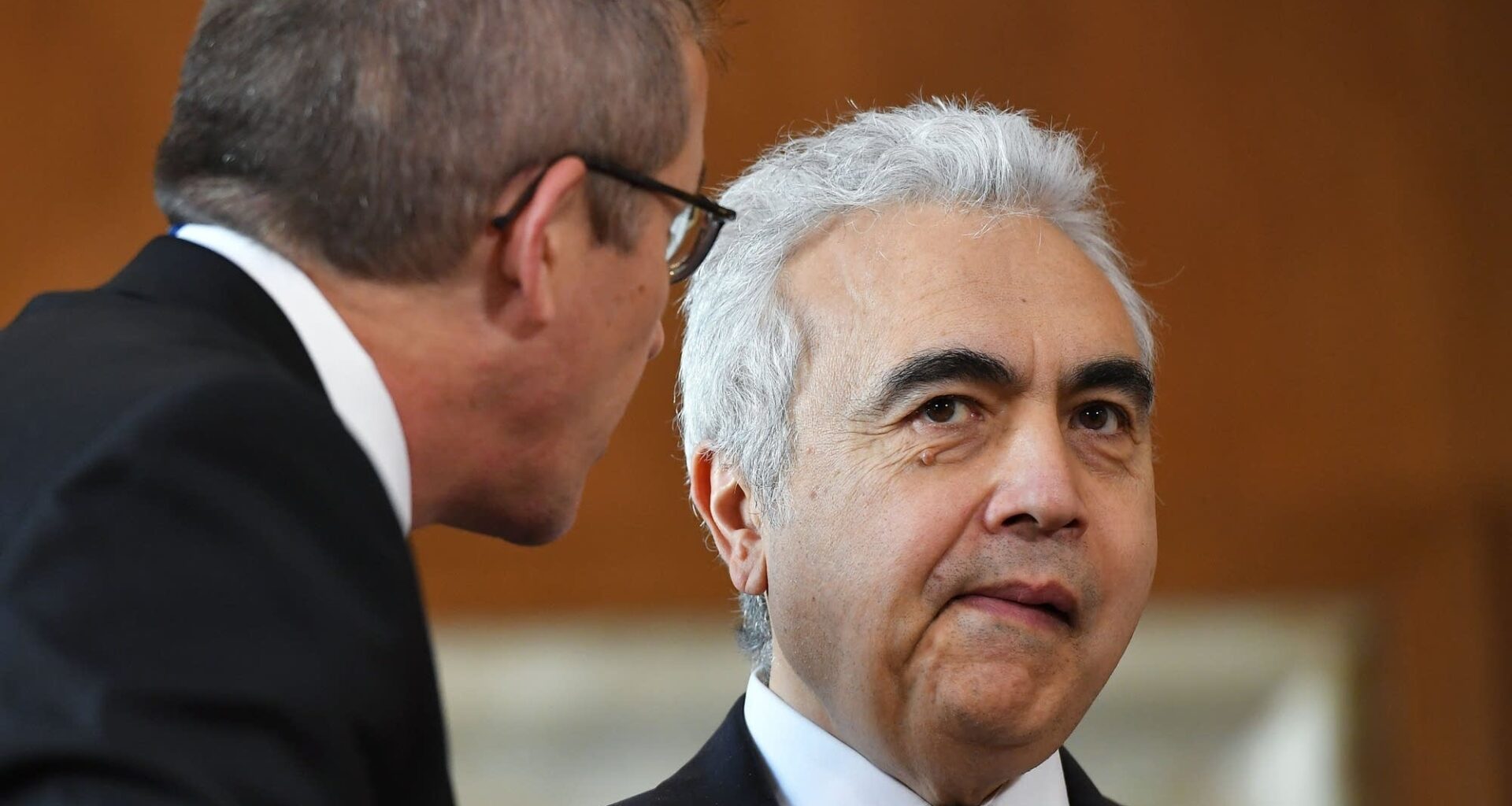
On Monday, the 24th day of the U.S. and Israel’s war in Iran, International Energy Agency executive director Fatih Birol said the war is posing a “major, major threat” to the global economy, and that “no country will be immune” if it continues much longer.
And the war continuing longer appears likely. Already, Birol said its impact on oil is worse than the two oil shocks of the 1970s, combined. The impact on natural gas is worse than when Russia invaded Ukraine, he said.
Those who were old enough to drive in 1973 — during the OPEC oil embargo — or during the Iranian Revolution in 1979 might remember gas shortages and long lines to fill up their tanks.
“Each of those took about 5 million barrels a day of oil supply off of the market,” said Samantha Gross, director of the Energy Security and Climate Initiative at the Brookings Institution.
But now, with the Strait of Hormuz largely closed, she said the impact is larger.
“We’ve lost maybe 15 million barrels a day, or 15% of supply,” Gross said. “So this supply shock is three times bigger than the ones that we saw in the 1970s.”
This is also not the 1970s.
“The United States now is less dependent on oil imports than we were 50 years ago,” said Hugh Daigle, a professor at the University of Texas at Austin who studies petroleum.
Daigle said that’s why gas prices in the U.S. are spiking, but we’re not seeing shortages.
“But countries like Pakistan, India, Thailand, China, Japan — they are really being hurt by this,” he said.
That’s because they are more dependent on oil from the Persian Gulf. Many Asian and Western European countries also now rely heavily on liquefied natural gas, or LNG, from the region.
“This goes back to what happened in 2022 with Russia invading Ukraine,” Daigle said. “Western Europe said, ‘hey, we can’t be so dependent on Russian gas anymore.’ And so they started importing a lot more LNG, and now that infrastructure has been damaged.”
Some of that damage to gas and oil infrastructure could take years to repair.
Clayton Seigle, senior fellow for energy security at the Center for Strategic and International Studies, said how deep and lasting the global economic damage will be depends on how long the war lasts.
“You could be looking at a return of a very negative theme that we had from back in the 1970s, which is the so-called stagflation,” he said. “A perfect storm of lower economic activity and higher general prices.”
That can last for a long time.
Related Topics