
archigram’s architecture of the imagination
In 1961, six young architects in London banded together to create the radical, small-format magazine, Archigram, which became among the most legendary design movements of the sixties. It’s important to note that as a group they never built anything — Peter Cook, Michael Webb, Warren Chalk, Dennis Crompton, David Greene, and Ron Herron instead designed an architecture of the imagination, and a vision of optimism. The magazine allowed ideas to circulate faster than buildings could be constructed — even as they were circulated by hand around the globe.
Their radical concepts often centered on the idea of flexible structures designed to adapt rather than endure, unchanging, through an ever-changing world. For the group, built space should be mobile, expandable, and easily discarded as needed — recognizing that humanity evolves and the needs of a community will never be static.
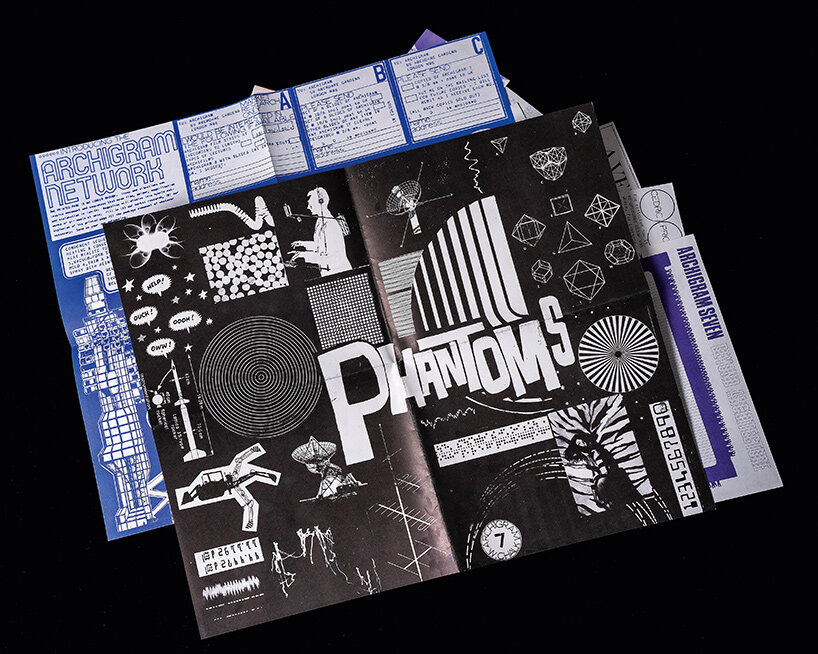
The magazine’s illustrations were rendered in striking graphics, as the group gathered influences from comic books, psychedelia, pop graphics, and space race imagery. It folded, expanded, and tucked in inserts. Pages opened into diagrams, pockets held loose sheets, and drawings spilled across formats that resisted a fixed reading order. It was an ongoing conversation, left intentionally unfinished, about how architecture could be tested in fragments.
Michael Sorkin says: ‘Archigram was to architecture what the Beatles was to rock and roll. No less.‘
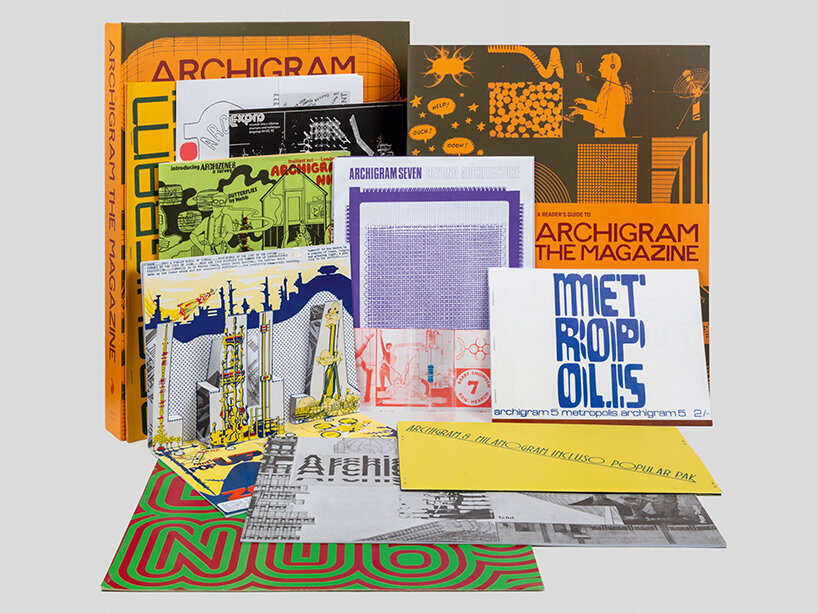
Archigram: The Magazine, images courtesy D.A.P. and Designers & Books, 2025
toward a radical ‘plug-in’ logic
From the outset, the team behind Archigram positioned itself against the expectation that architecture should settle into permanence. Housing appeared as capsules and cities appeared as frameworks. This position aligned with broader cultural shifts of the sixties, where technology and consumer culture introduced new expectations around speed and obsolescence.
Rather than stabilizing form, their projects emphasized change. ‘Plug-in’ systems allowed units to be added or removed. Mobile structures suggested that location itself could become temporary. Even the idea of the home was reconsidered as something portable or adjustable. Across these proposals, architecture moved toward a condition of continuous update shaped by use.
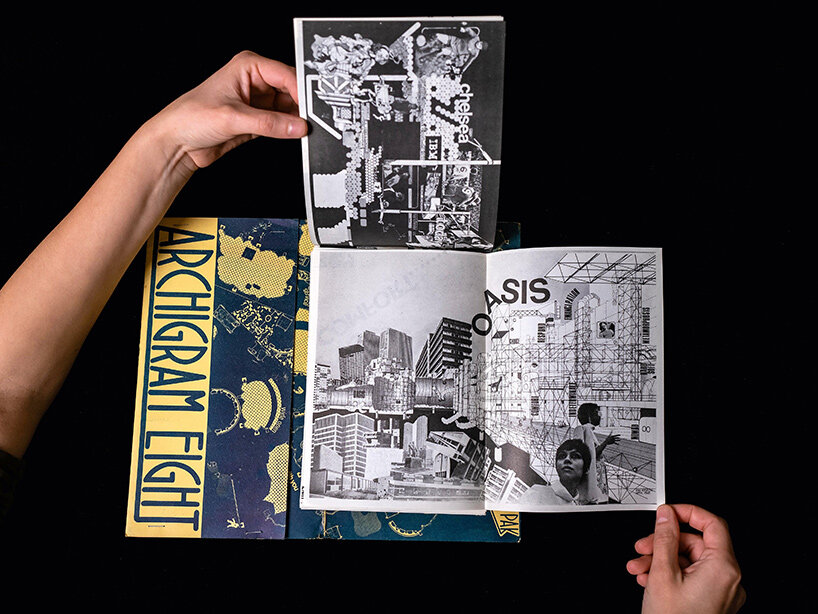
inside Archigram: The Magazine
incomplete visions: how does architecture respond to change?
Archigram rarely embraced the label of utopian, even as its work was frequently described that way. As Sir Peter Cook told designboom during a live conversation in 2025: ‘I don’t really agree with the idea of utopianism.‘
The term carried associations with idealized end states and totalizing visions, which ran counter to the group’s approach. Even while their projects were speculative, they avoided presenting a finished model of a perfect city. Instead, they proposed systems that could remain open, incomplete, and responsive.
This is where the idea of Utopia as Method becomes useful. Archigram’s work does not point toward a single destination. It operates through iteration, testing how architecture might respond to changing conditions in real time. Their drawings function less as blueprints and more as prompts, suggesting behaviors, relationships, and possibilities. In this sense, the work sits between imagination and application, closer to a toolkit than a plan.
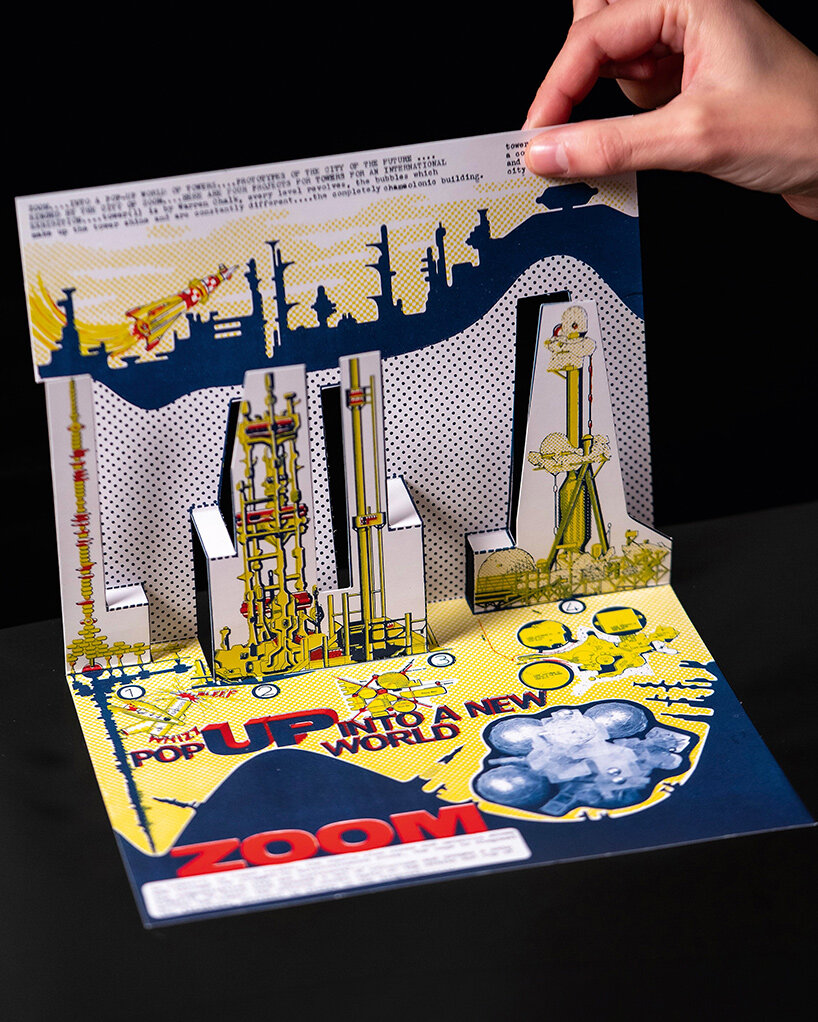
inside Archigram: The Magazine
mobility: learning from futurism
Archigram’s evolving projects imagine urban environments composed of interconnected systems, where circulation, communication, and infrastructure take precedence — they are not designed with a finished ‘form’ in mind. Buildings attach, detach, and reorganize within larger frameworks which allow the city to continuously adapt.
This approach draws on earlier Futurist ideas while shifting their emphasis. Where Futurist architecture often remained at the level of manifesto, Archigram translated similar interests in mobility and technology into more developed scenarios.
Mobility appears repeatedly in Archigram’s work, extending beyond transportation into the organization of everyday life. Environments adjust to different contexts, while housing units become portable — much like the iconic Nakagin Capsule Tower born from Japan’s Metabolism movement (see here). This reflects a broader rethinking of how people relate to place through flexibility.
In concepts exploring domestic space, the house shifts from a static container to an adaptable device. Units can fold, expand, or travel, aligning with changing patterns of living. This idea builds on earlier visions of ‘mechanical nomadism,’ where architecture supports movement.
inside Archigram: The Magazine
drawings as a form of practice
If Archigram’s projects were rarely built, their drawings were treated as a form of action. Collage, color, and graphic overlays allowed them to construct complex scenarios that felt immediate and accessible. These images borrowed from advertising, comics, and industrial diagrams, creating a visual language that communicated ideas quickly.
The drawings carry a specific precision. Instead of detailing construction, they graphically map systems and relationships. In this way, representation becomes a method of design. It allows architecture to operate at the level of speculation while still engaging with practical questions about use, infrastructure, and experience. Even when it appears improbable, the work still remains grounded.
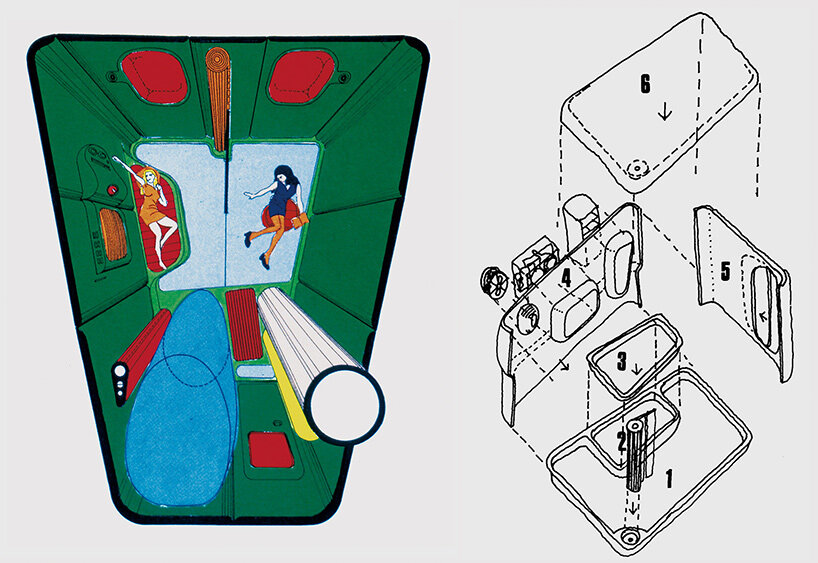
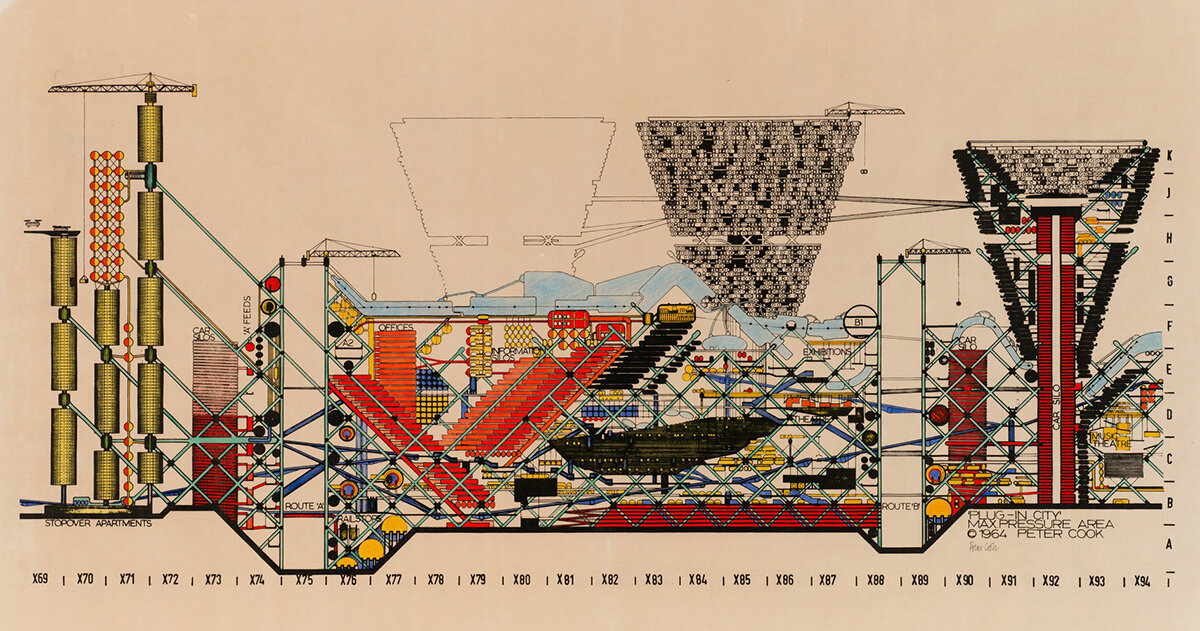
Plug-In City, portable housing unit, 1964
plug-in city
Plug-In City, developed by Peter Cook with Dennis Crompton in the mid-1960s, organizes the city as a permanent mega-structure carrying circulation, cranes, and service networks. Within this frame, housing units are treated as disposable components. Apartments arrive prefabricated, are slotted into place by gantry cranes, and are removed when they wear out.
Different elements operate on different lifespans, with infrastructure lasting decades and living units replaced much sooner. The project describes a city maintained through continuous assembly and disassembly, where growth happens by plugging new parts into an existing system rather than extending outward.