
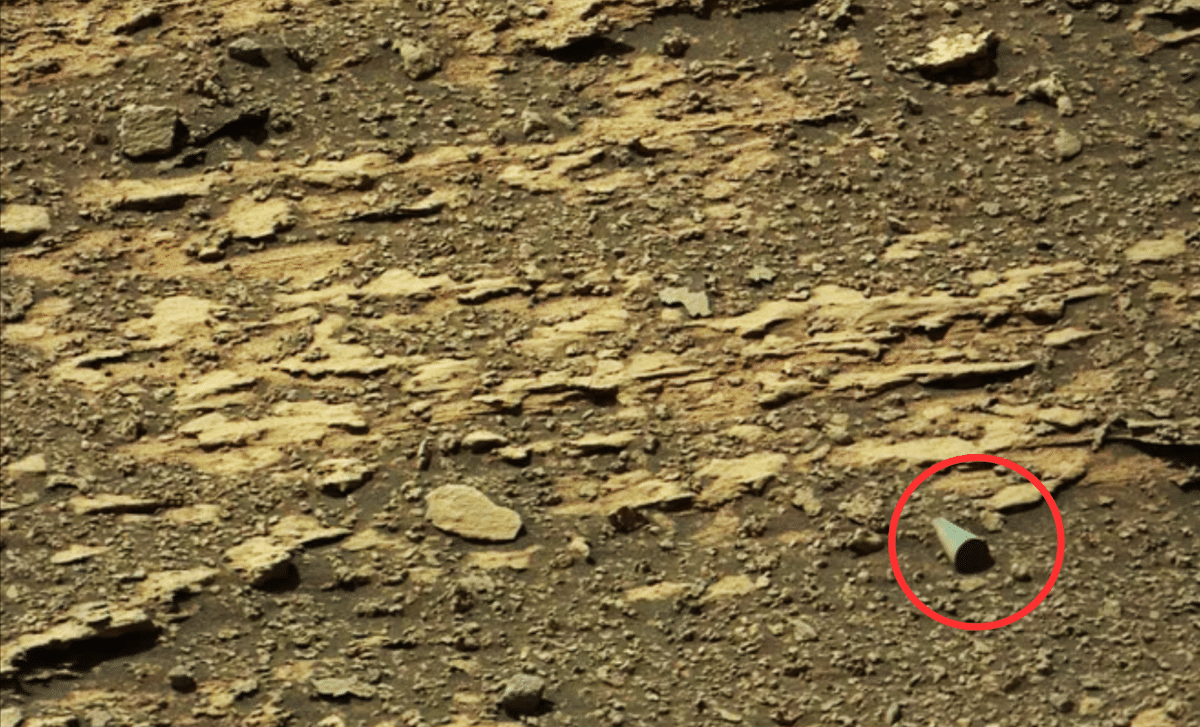
NASA’s Curiosity rover has captured an image of a mysterious shiny cylinder, sparking widespread curiosity and debate among scientists. The object’s unusual shape and appearance have raised questions about whether it’s just debris from the rover’s past missions, or something far more extraordinary. The discovery, made in August 2022, could potentially shed new light on Mars’ history or even challenge our understanding of space exploration.
The Mysterious Cylinder: What Did Curiosity Find?
On August 7, 2022, NASA’s Curiosity rover sent back a series of images showing a puzzling cylindrical object partially buried in the Martian soil. The shiny object, measuring about 20 centimeters in length, immediately caught the attention of the scientific community. Its perfectly round shape and gleaming surface were unlike typical Martian features, prompting questions about its origin.
This discovery comes as part of Curiosity’s ongoing mission to explore Gale Crater, a region believed to once contain water. Over the years, the rover has uncovered many intriguing geological formations, but this new object is different, its shape and material seem out of place for something naturally occurring on Mars.
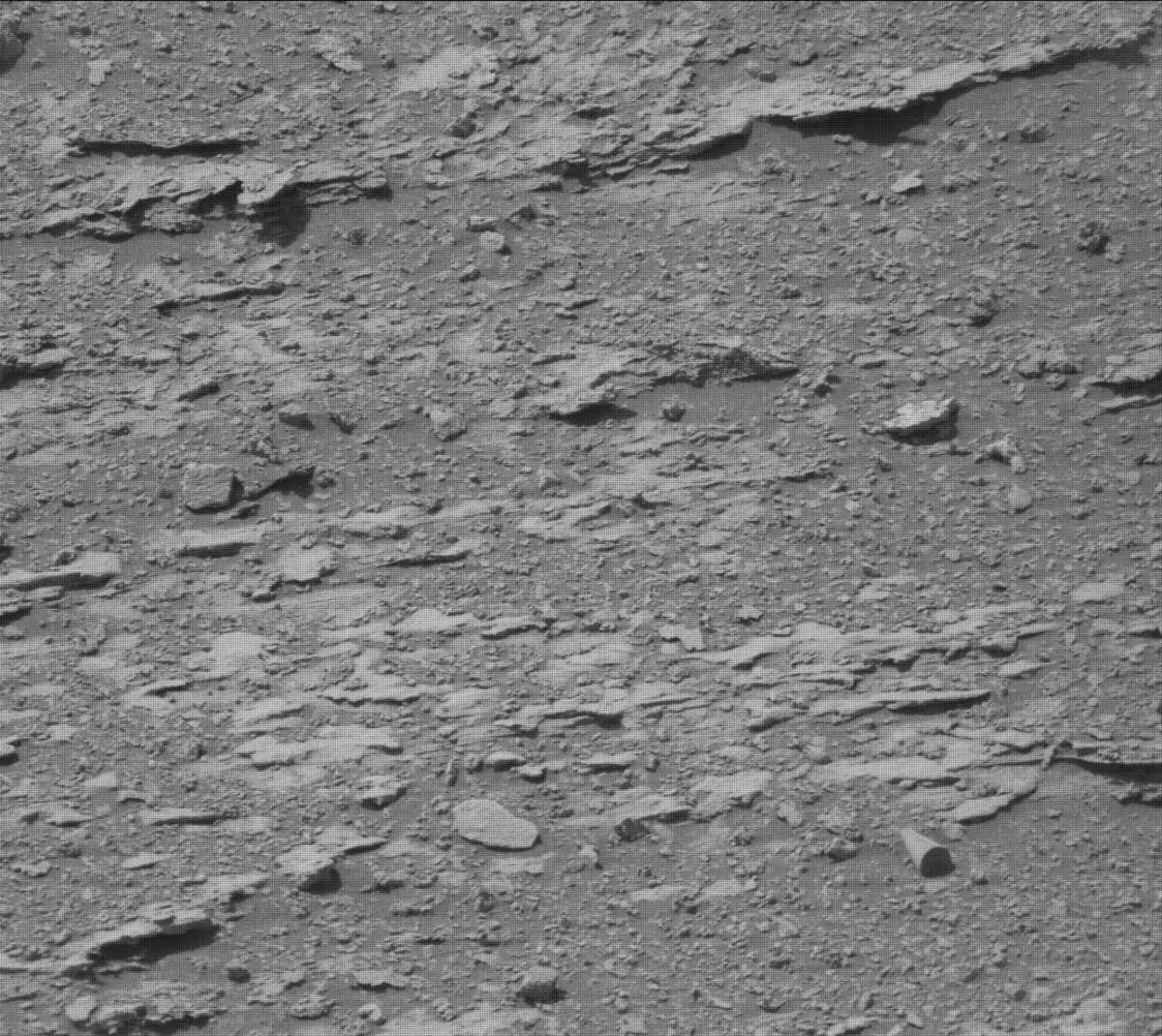 This image was taken by Mast Camera (Mastcam) onboard NASA’s Mars rover Curiosity on Sol 3556 (2022-08-07 20:58:23 UTC)
Credits: NASA/JPL-Caltech/MSSS
Could It Be Human-Made Debris?
One prevailing theory is that the cylinder is debris from Curiosity’s landing system, which scattered small pieces during the rover’s descent to the Martian surface in 2012. Similar objects, such as parts from the Sky Crane or heat shield, have been found in earlier rover images. The harsh Martian winds may have carried the debris to this location, where it became buried by the surrounding soil.
However, Avi Loeb, a prominent astrophysicist, points out that it’s still too early to make assumptions. As he writes in a post for Medium, “This puzzling object was discovered in NASA’s database by Rami Bar Ilan and brought to my attention by Dr. Jan Špaček — who studies signatures of life on Mars and Professor Carol Cleland — who studies anomalies from a philosophical perspective.” Loeb’s involvement highlights the significance of the discovery, urging further investigation into the object’s true origin.
The Possibility of an Alien Artifact
Although the idea that this object is merely rover debris is the most likely explanation, Loeb and other scientists have not ruled out more extraordinary possibilities. Could the cylinder be a remnant of a previous Martian civilization or even an alien artifact? While such a claim might seem far-fetched, the discovery of unusual objects like this one often leads to new lines of scientific inquiry.
The object’s shiny appearance and unusual shape could suggest that it was manufactured, which opens the door to the possibility that it could be evidence of extraterrestrial activity. While it’s important to remain cautious and follow the scientific method, researchers like Loeb argue that exploring all possibilities, no matter how unconventional, is vital to our understanding of Mars.
The Case for a Closer Look
Loeb advocates for revisiting the site where the cylinder was found in order to obtain more data. He believes that Curiosity should return to the location and investigate the object more closely to determine whether it’s truly human-made debris or something more mysterious. This kind of thorough exploration could provide the clarity needed to resolve the mystery once and for all.
Despite Curiosity’s slow pace, traveling at a maximum speed of 0.16 kilometers per hour, Loeb suggests that it would only take a few days for the rover to return to the site. With the possibility of a major discovery on the horizon, it seems worth the effort to investigate further.