
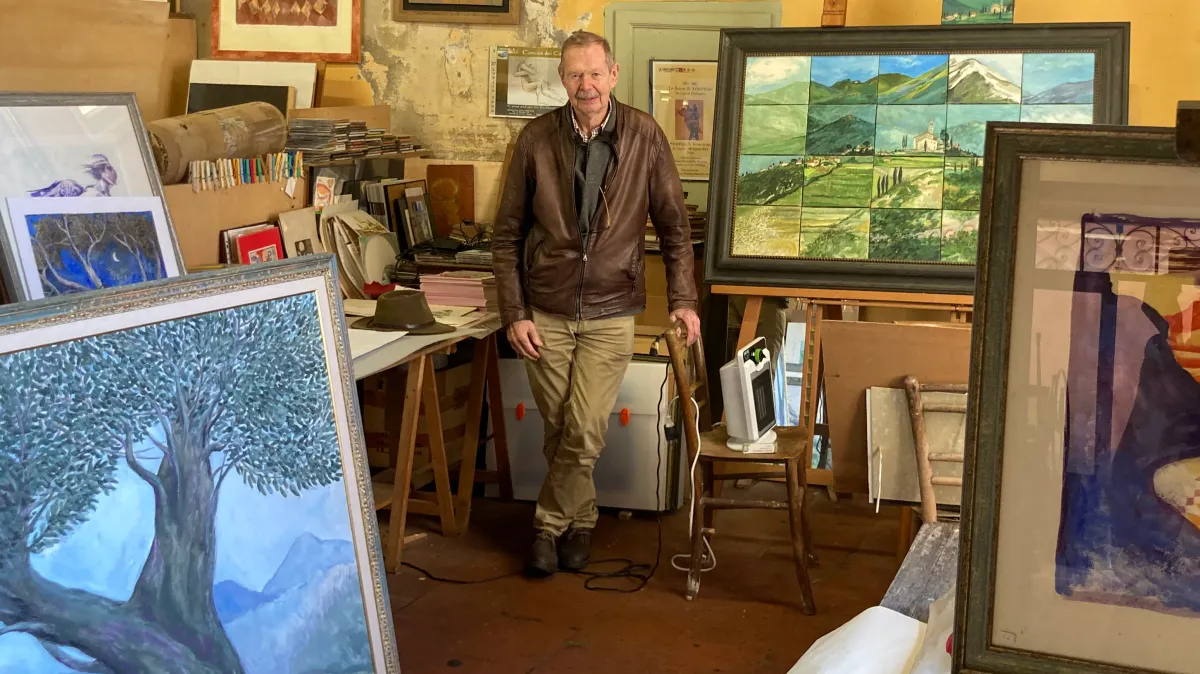
On the morning of November 4, 1966, Nick Kraczyna, a young American artist living in Florence, woke up promptly. The city was preparing to celebrate a national holiday, the shops would shut early, and he needed to buy food for the family to eat. When he looked out, however, from his apartment in Via Santo Spirito, close to the River Arno, he got a shock.
During the night, a vast mass of water had reached Florence after a prolonged period of heavy rain in the Apennines. There was little warning and its volume had been further increased when a dam was opened to prevent it from bursting. The cradle of the Renaissance was about to experience its worst flood since 1557.
Pouring down to the city at almost 40mph, debris and fallen trees soon clogged the arches of the bridges, including the Ponte Vecchio. Trunks smashed through the windows of its jewellery shops, whose rings and necklaces would soon be whirled away by the torrent.
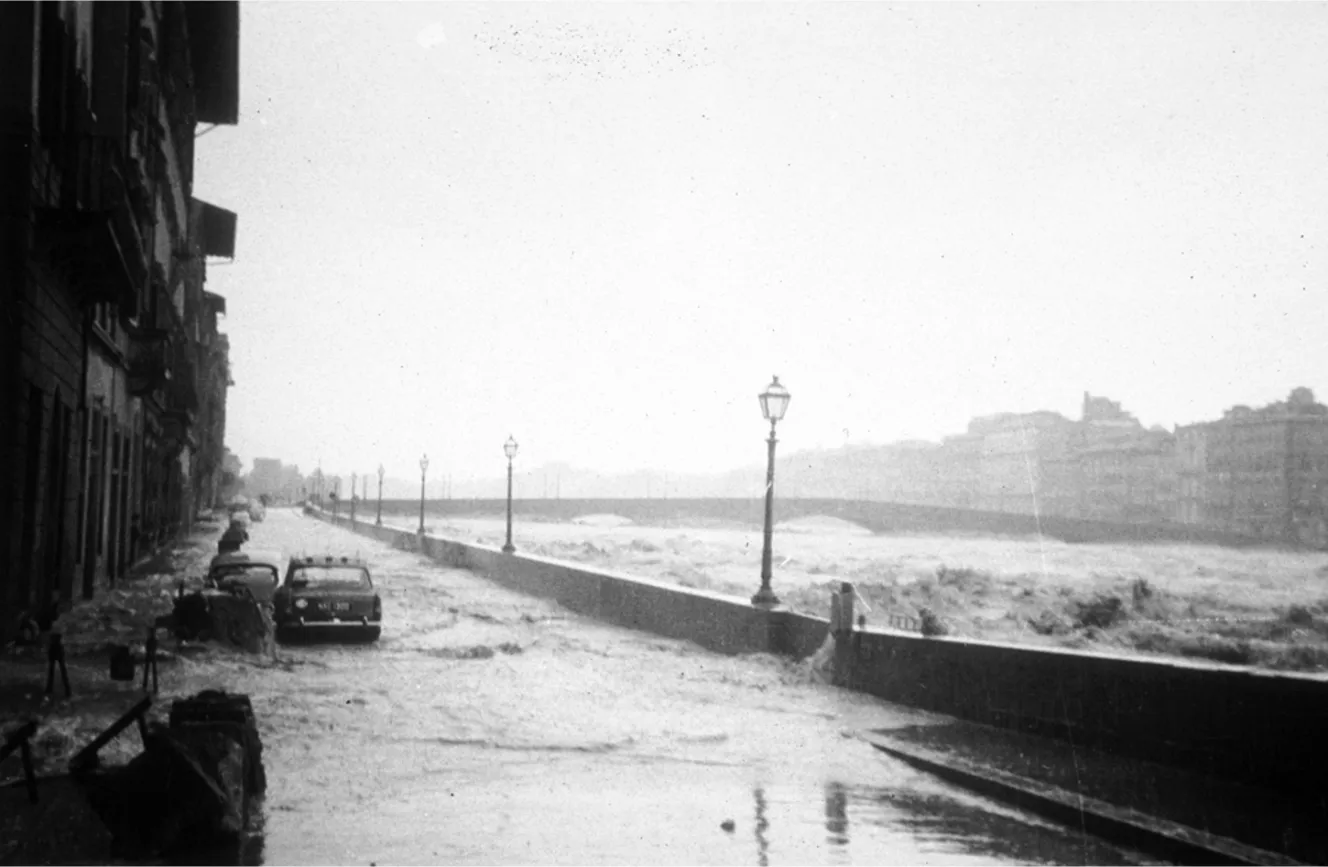 Scenes from Florence’s worst flood since 1557Swietlan Kraczyna
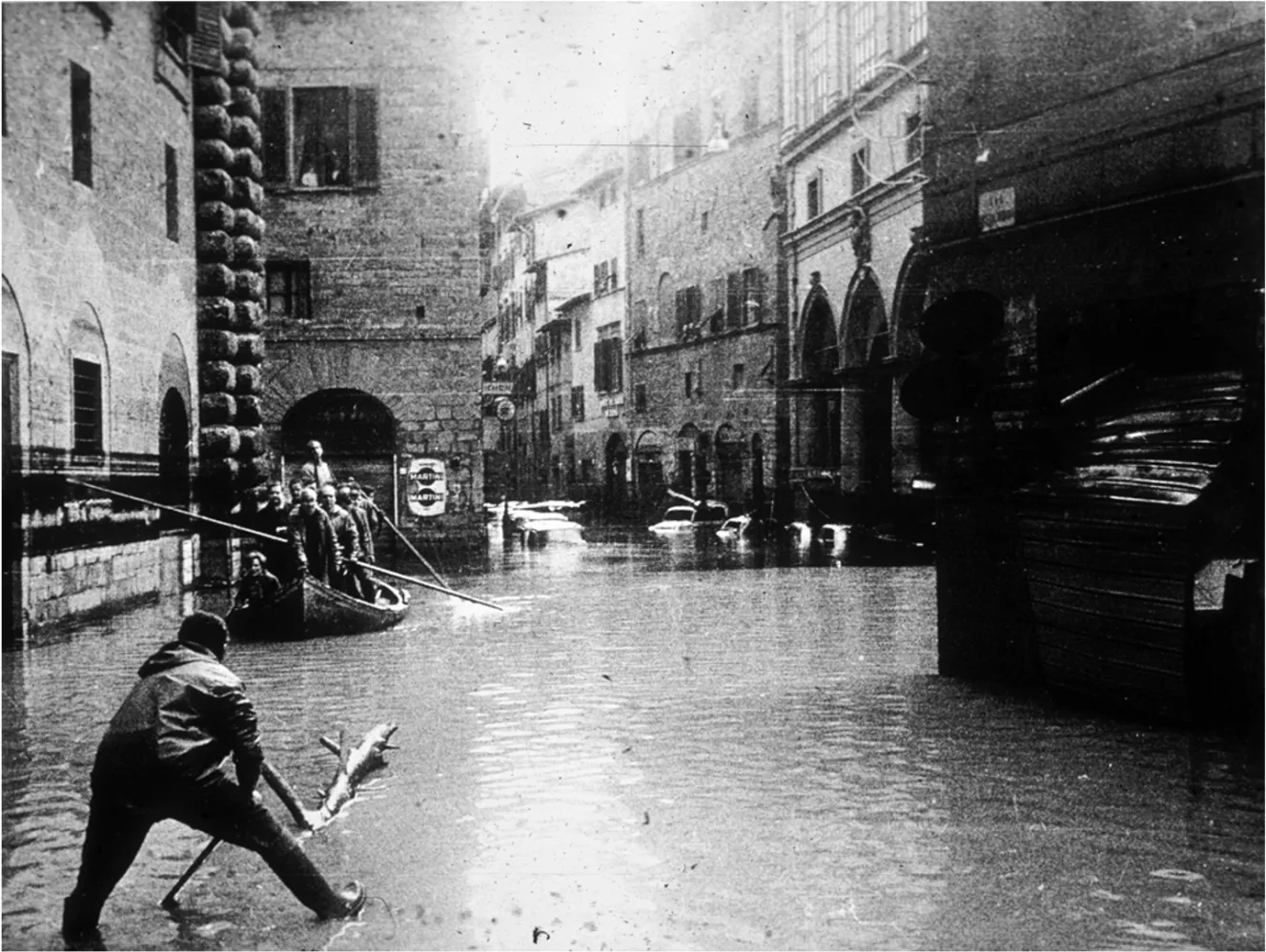 Swietlan Kraczyna
Kraczyna snatched up his camera and the single roll of film he could afford and ran into the streets. Few others recorded the flood that morning, and the photographs he took became some of the best-known images of the catastrophe. They included pictures of his fellow citizens crowding into boats near the Uffizi as the water spilled over the embankment and raced towards the Duomo, submerging the low-lying city centre by mid-morning.
At the deluge’s peak, some areas were under 22ft of water. At least 35 people lost their lives, mainly the elderly and housebound trapped in ground-floor flats as water came under doors and through windows.
It mixed with fuel oil and sewage, leaving behind 600,000 tonnes of sludge when it eventually receded. Five thousand families were made homeless and countless works of art and historic books left sodden and damaged.
By the time that Kraczyna turned for home, he was wading in waist-high water. Antique furniture from restorers’ workshops was being borne along his street, and he only reached home by walking on the few centimetres of retaining parapet that still overtopped the flood. The next morning, it had been swept away.
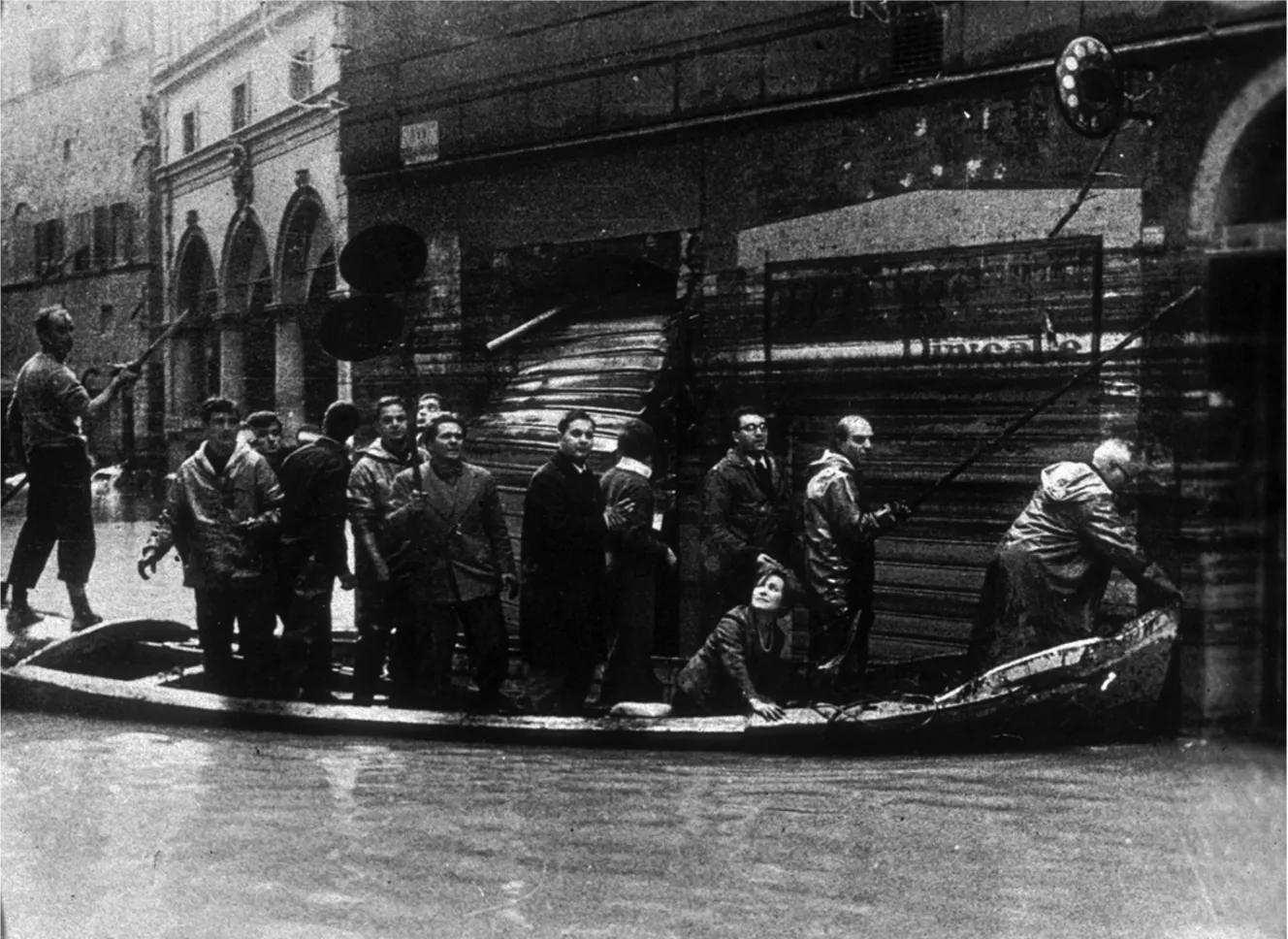 Swietlan Kraczyna
 Swietlan Kraczyna
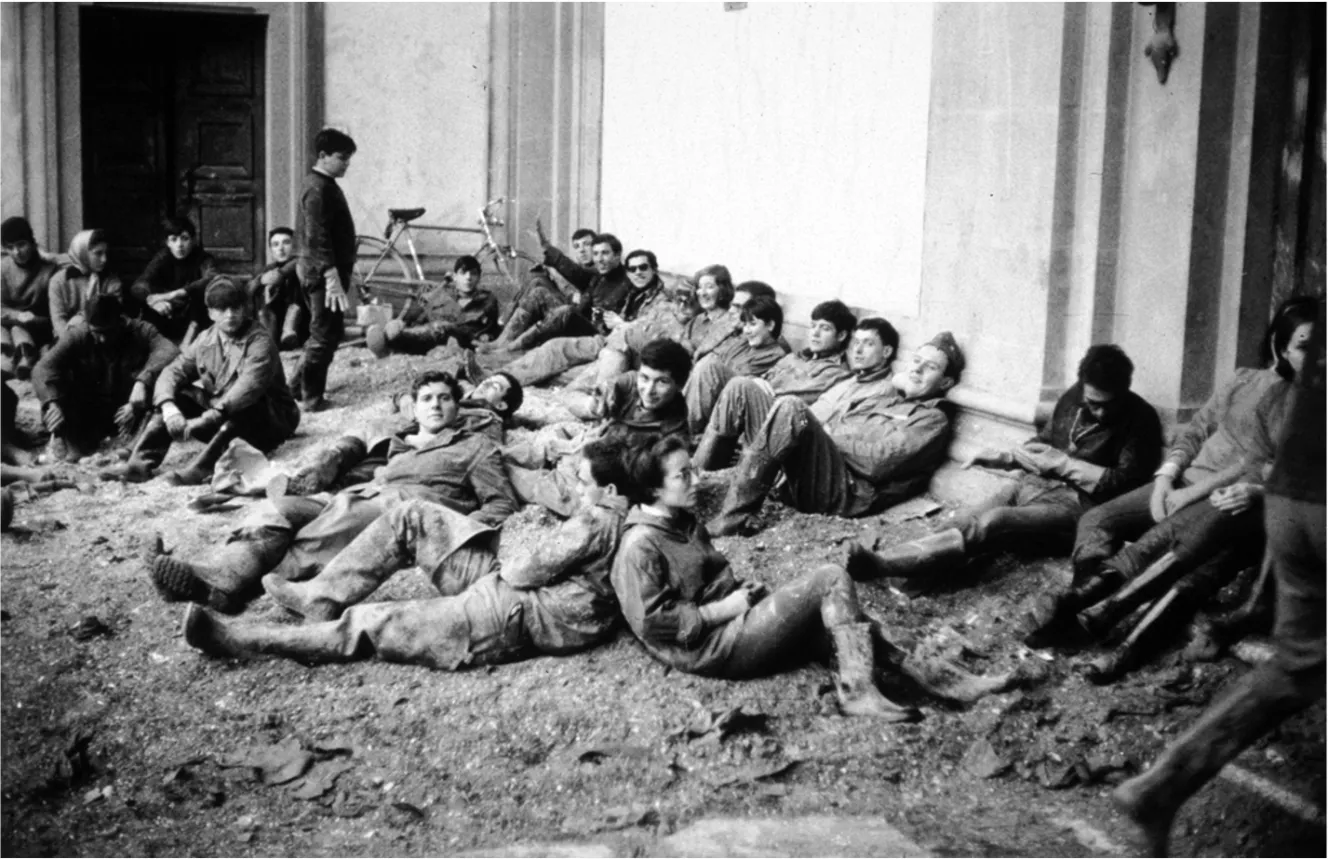
Kraczyna subsequently documented the clean-up efforts, not least by the international team of volunteers who became known as the “Angels of the Flood”. His images were widely used by newspapers.
In 2006, on the 40th anniversary of the disaster, he published The Great Flood of Florence, which contained 85 of his photographs, and on its 50th anniversary his recollections were the centrepiece of a Sky Arte documentary in Italy. He was also awarded Florence’s highest civic honour, the Golden Florin.
A natural empathy with the dispossessed may have been behind his bond with the victims of the flood. Swietlan Nikolai Kraczyna was born in Kamin-Kashyrskyi, eastern Poland (now Ukraine), in 1940. His father’s family, who were landowners, had fled Russia during the revolution and had changed their surname to a more Polish-seeming one.
Nick could recall his father, an engineer, coming home one day in 1944 and saying that they must all leave at once. The Soviets were near and the family fled westwards. Nick remembered being shot at by soldiers, and how the bullets flicked up the snow as he sheltered behind their wagon. He had nightmares for years after.
Daily Briefing newsletter
Get our top stories and exclusive analysis sent straight to your inbox every morning.
Sign up with one click
In Germany, they came across a train, only to find it crowded to the point of suffocation. Instead, the family sat on the flat trolley placed in front of the engine in case the track was exploded by a mine. One day, all was eerily still. The war had ended. Nick and his family were only a few miles beyond the new border with the Soviet zone.
 Kraczyna became known principally as a printmaker
They spent the next six years in a refugee camp in Bavaria, where his sister was born. Nick would come to speak Russian, Polish, German and French, as well as English and Italian. Then, when he was 11, a religious charity sponsored the family’s resettlement in Connecticut. There he began to use his middle rather than his little-recognised first name.
He won a painting scholarship to the Rhode Island School of Design, first coming to Florence for research and being inspired by the art of Masaccio in the Brancacci chapel. Kraczyna went on to study and then teach at Southern Illinois University. There, three weeks after meeting 19-year-old Amy Luckenbach, he married her.
They moved to Florence two years later, where he was so poor that he used the paper that wrapped fish to draw on. One of Kraczyna’s photographs during the flood shows Amy standing on the Ponte Santa Trinita with the water lapping at her.
She was holding their son Anatol, who works as a digital artist for Italy’s railways, and was pregnant with their daughter Anna, who was a model, lecturer in literature and now a business coach. With John Hooper, Anna also co-translated Carlo Collodi’s The Adventures of Pinocchio for Penguin, emphasising its satirical intent. Their younger daughter, Emma, has children of her own.
The family subsequently moved to a hamlet outside the city where they lived in a house that had belonged to Domenico Ghirlandaio, the painter, whose apprentices included Michelangelo. His studio became their living room.
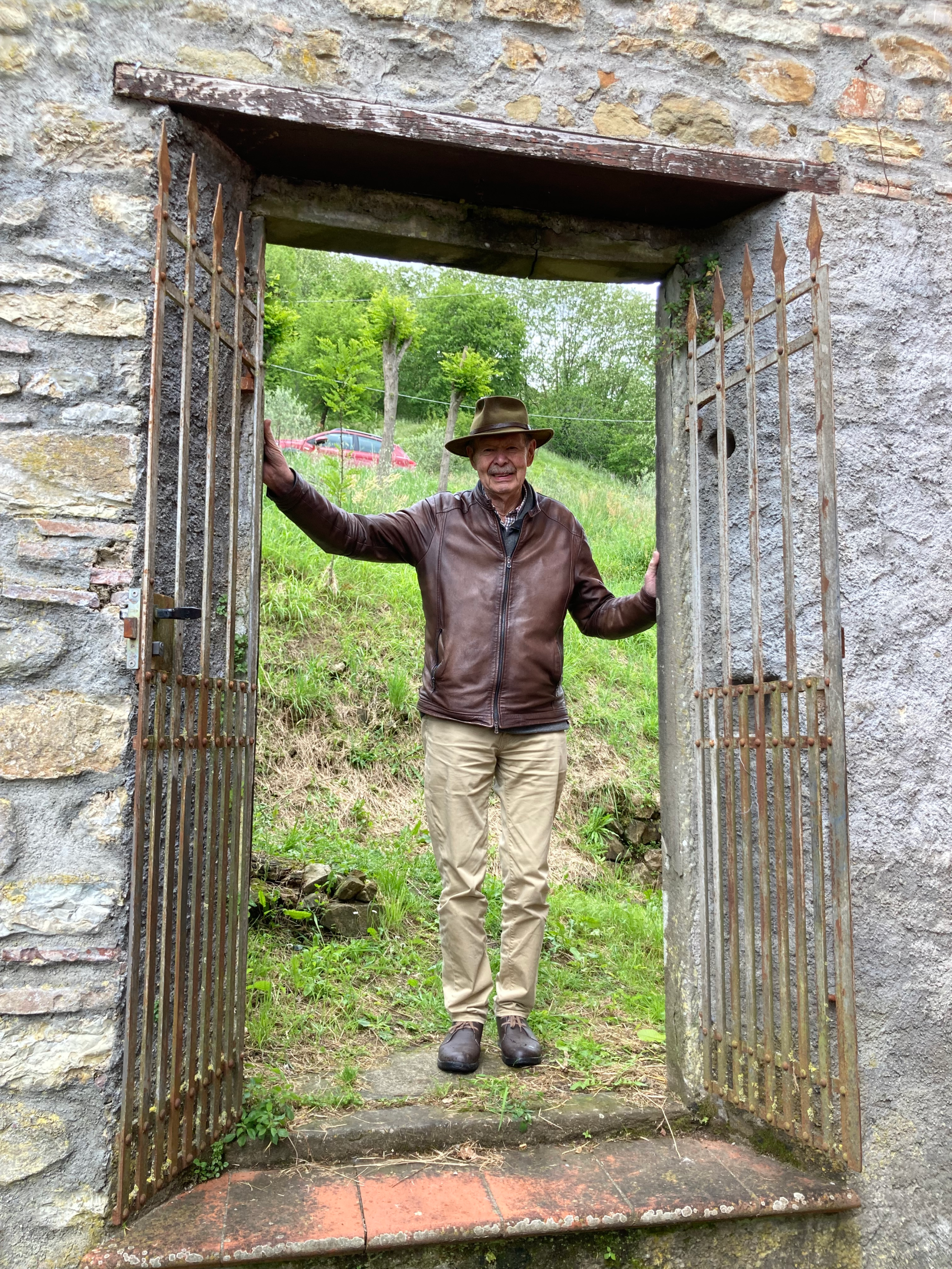
Good-humoured and modest, Kraczyna became known principally as a printmaker, developing a new technique for multiple-plate colour etchings. In 1970, he was one of ten American artists selected to show in Florence’s Biennale di Grafica, and from 1973 until 1980 he was printmaking technician to the sculptor Marino Marini.
He also taught for many years at universities in Italy, England and America. In 1982, he co-founded the Florentine International School of Advanced Printmaking in Bisonte and for ten years was its artistic director. He co-authored I Segni Incisi, the first comprehensive textbook in Italian on the history and techniques of etching.
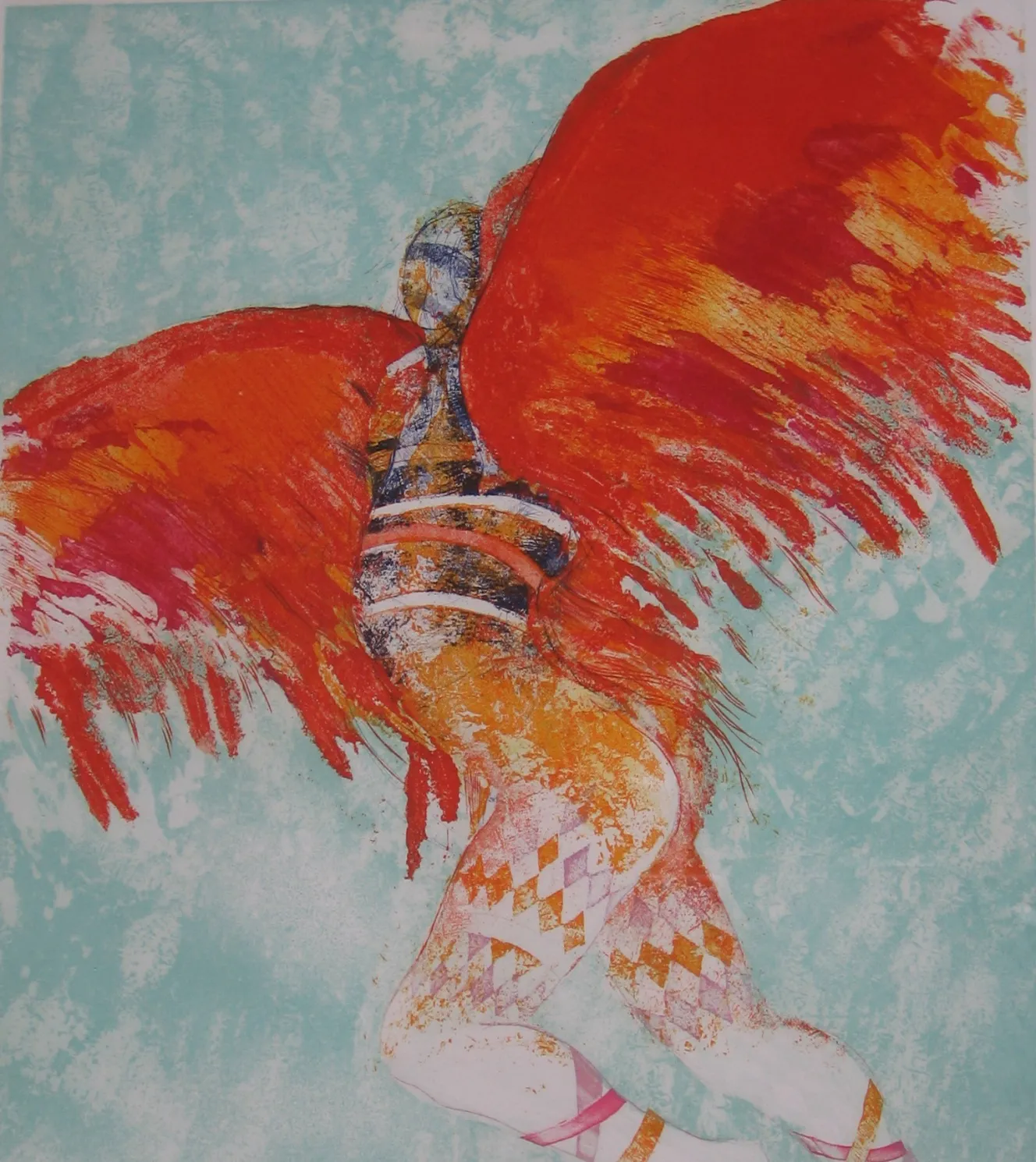
As an artist himself, he had more than 150 solo exhibitions. His principal theme was the flight of Icarus, which represented for him the need for escape from restrictions using one’s own ingenuity. Other inspirations included the Chinese divination text I Ching and Stravinsky’s Rite of Spring.
 Kraczyna’s 1986 Flight of Icarus
For half a century, Kraczyna had a summer house and ran courses at Barga, the town near Lucca known for having historically sent many migrants to Scotland. An etching that he made of Barga became a representation of their borgo particularly dear to its inhabitants. After an encounter there, his wife Amy became a renowned puppeteer, collaborating with the likes of Maurice Sendak and Philip Glass. She died in 2009, and two years ago he married Sylvia Hetzel. She survives him with his children.
“One of the questions that people often ask me is if I was afraid during the flood,” he reflected. “Not at all: it was so stimulating. Nature, when it presents itself in such a forceful way, is not frightening; it’s exuberating. The only thing that I thought about when I was trying to make my way back home was that my personal history and the history of Florence were coinciding at that moment.”
Swietlan “Nick” Kraczyna, artist, was born on March 24, 1940. He died on February 1, 2026, aged 85