
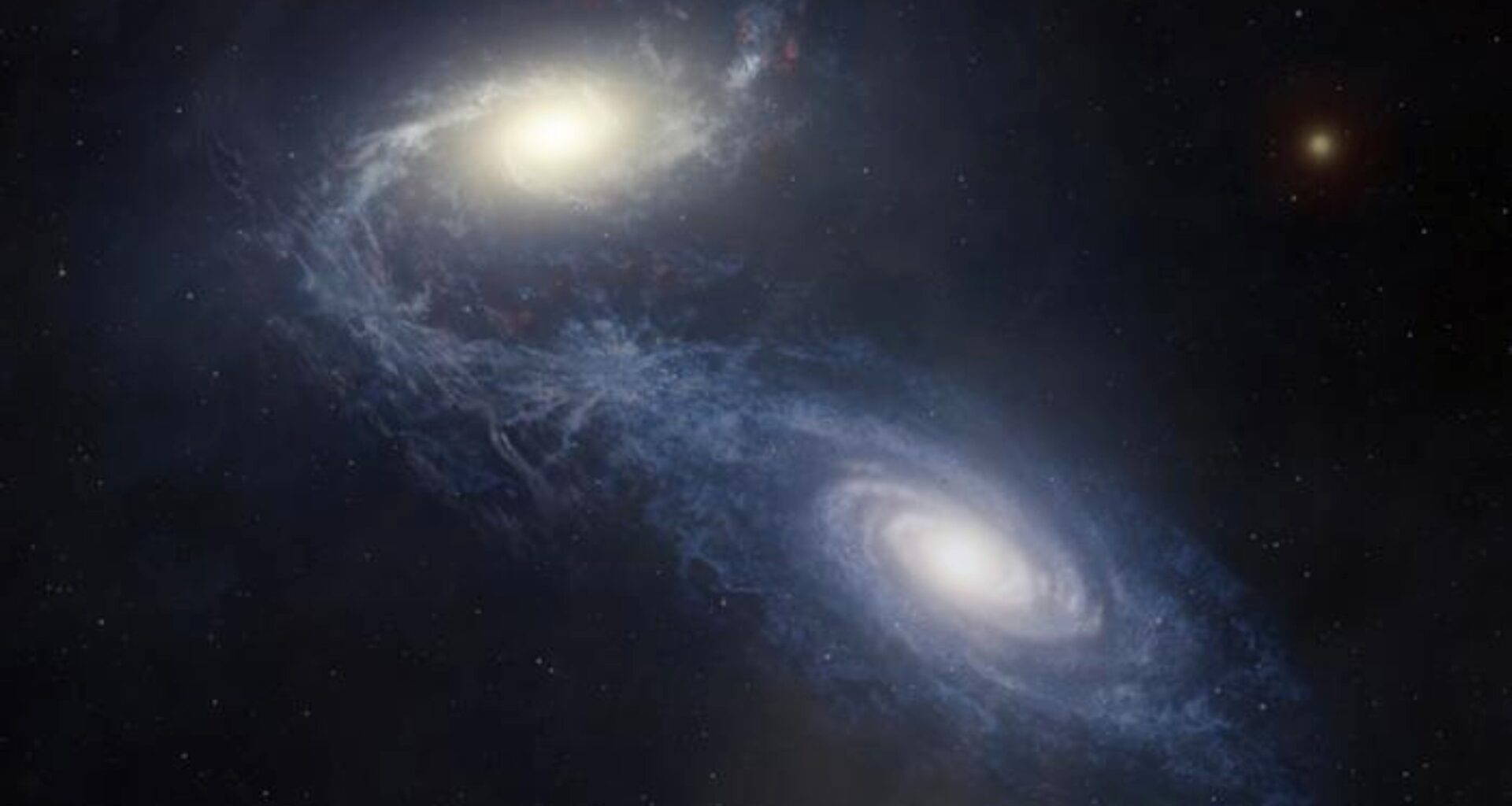
Space does not just look beautiful, it also holds a long and detailed history.
Every galaxy carries clues about how it formed and changed over billions of years. Scientists have tried for years to read this history, but most methods worked only for the Milky Way.

A new study now changes that. The research, led by the Center for Astrophysics | Harvard and Smithsonian, shows how researchers can study the past of distant galaxies in a much clearer way.
A new method to study galaxies
The study shows how chemical fingerprints can reveal the history of a galaxy outside the Milky Way. This method is called galactic archaeology. Until now, scientists could only use it within our own galaxy.
This work introduces extragalactic archaeology, which allows researchers to study distant galaxies in detail and understand how they evolved over time.
This approach gives a clearer picture of how galaxies grow and change across the universe.
Oxygen helps trace galaxy history
“This is the first time that a chemical archaeology method has been used with such fine detail outside our own galaxy,” noted Lisa Kewley, a professor at Harvard University.
“We want to understand how we got here. How did our own Milky Way form, and how did we end up breathing the oxygen that we’re breathing right now?”
Young, hot stars produce strong ultraviolet light. This light excites nearby gas, causing it to glow. Each element creates a unique pattern of light.
Oxygen, in particular, becomes an important marker. By studying where oxygen is found, scientists can understand how a galaxy developed over time.
A clear view of NGC 1365
The team used data from the TYPHOON survey with the Irénée du Pont telescope at the Las Campanas Observatory. The focus was on a spiral galaxy called NGC 1365.
This galaxy faces Earth directly, which makes it easier to observe. Scientists could clearly study individual star-forming clouds within it.
In most galaxies, the center has more oxygen, while the outer areas have less. This happens because of star formation, explosions, and gas movement.
By studying this pattern, scientists can understand how different parts of the galaxy formed.
Observations match galaxy simulations
To go deeper, the team compared real data with computer simulations from the Illustris Project.
These simulations track how galaxies evolve from shortly after the Big Bang to today. They include details about gas flow, star formation, black holes, and chemical changes.
Scientists searched through about 20,000 simulated galaxies to find one that closely matched NGC 1365.
This match helped reveal the galaxy’s likely history. It showed how the galaxy grew and merged with others over 12 billion years.
The galaxy grew through small mergers
The findings show that NGC 1365 began as a small galaxy. Its central region formed early and became rich in oxygen.
Over time, the galaxy grew larger through mergers with smaller dwarf galaxies. These events added gas and stars to the outer regions.
The outer spiral arms formed later, over the last few billion years. These areas also gained material from merging galaxies.
This slow and steady growth shaped NGC 1365 into the large spiral galaxy seen today.
Theory and data work together
“It’s very exciting to see our simulations matched so closely by data from another galaxy,” said study co-author Lars Hernquist.
“This study shows that the astronomical processes we model on computers are shaping galaxies like NGC 1365 over billions of years.”
Professor Kewley emphasized the importance of teamwork between theory and observation.
“This study shows really well how you can produce observations to be directly aided by theory,” she added..
“I think it’s also going to impact how we work together as theorists and observers, because this project was 50 percent theory and 50 percent observations, and you couldn’t do one without the other. You need both to come to these conclusions.”
Extragalactic archaeology helps scientists compare other galaxies with our own Milky Way. By studying galaxies like NGC 1365, researchers can explore how typical or unique our galaxy might be.
“Do all spiral galaxies form in a similar way?” asked Kewley. “Are there differences between their formation? Where is their oxygen distributed now? Is our Milky Way different or unique in any way? Those are the questions we want to answer.”
Extragalactic archaeology now gives scientists a powerful way to answer these questions. It helps uncover the past of distant galaxies and brings us closer to understanding how the universe formed over time.
The study is published in the journal Nature Astronomy.
Image Credit: Melissa Weiss/CfA
—–
Like what you read? Subscribe to our newsletter for engaging articles, exclusive content, and the latest updates.
Check us out on EarthSnap, a free app brought to you by Eric Ralls and Earth.com.
—–