
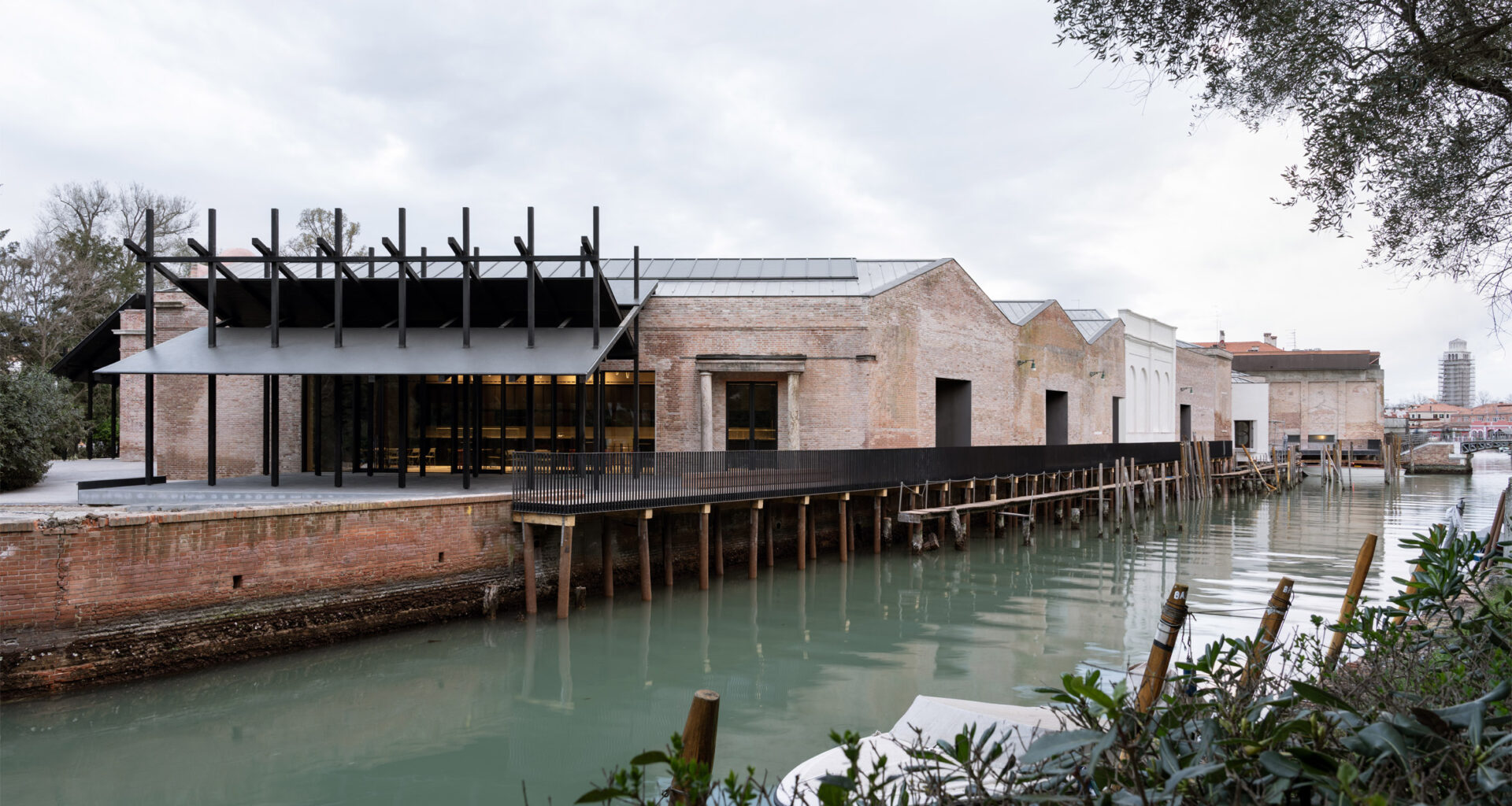
The Central Pavilion at the Giardini della Biennale is set to reopen for this year’s Venice Art Biennale, following a restoration by Italian architecture studio Labics and architect Fabio Fumagalli.
Overseen by the Venice Biennale‘s Special Projects team, led by architect Arianna Laurenzi and engineer Cristiano Frizzele, the revamp has reorganised exhibition spaces at the Central Pavilion, which hosts events for the Venice Art Biennale and Venice Architecture Biennale on alternating years.
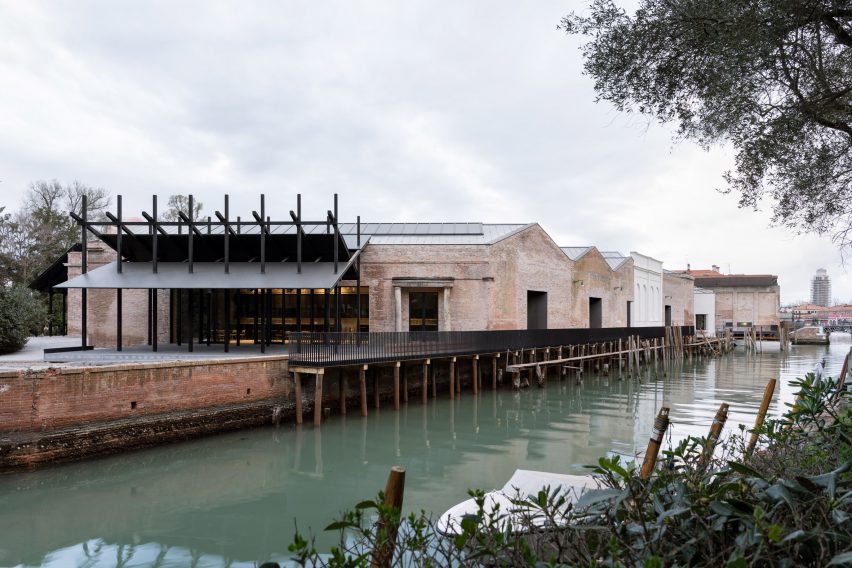 The Central Pavilion will reopen for Venice Art Biennale following its restoration
Labics and Fumagalli began the restoration of the 1895 brick building in Venice‘s Giardini della Biennale in December 2024, working with engineering firms Buromilan and ia2 Studio Associato, and geologist Francesco Aucone.
Completed in time to host the Venice Art Biennale in May 2026, the team overhauled the building’s exhibition spaces by creating a spatial hierarchy, aiming to celebrate the building’s history while making it easier to navigate for visitors.
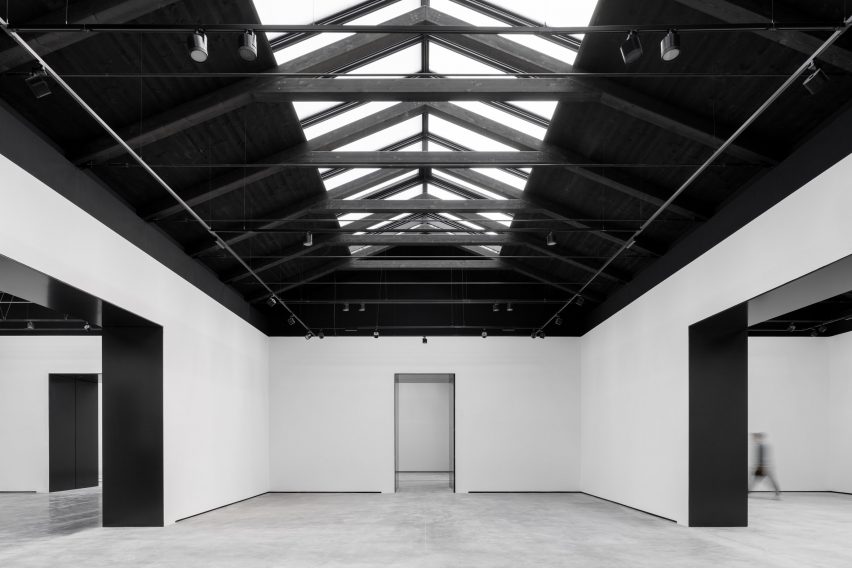 White walls divide the exhibition spaces
“The renovation of the pavilion goes beyond a mere functional update,” said the Venice Biennale. “It rewrites the entire architectural organism, redefining relationships, sequences and connections.”
“Relying on a stratigraphic approach to the building’s history, the project enhanced the serial and essential nature of the architecture, preserving the memory of the different phases of construction but stripping it of all accretions and incongruous elements,” it continued.
“The project demonstrates how reuse can be a creative act, not a nostalgic one: it selects, orders and interprets the different phases in the history of the pavilion to build a new architectural unity that can fulfil the contemporary needs of La Biennale.”
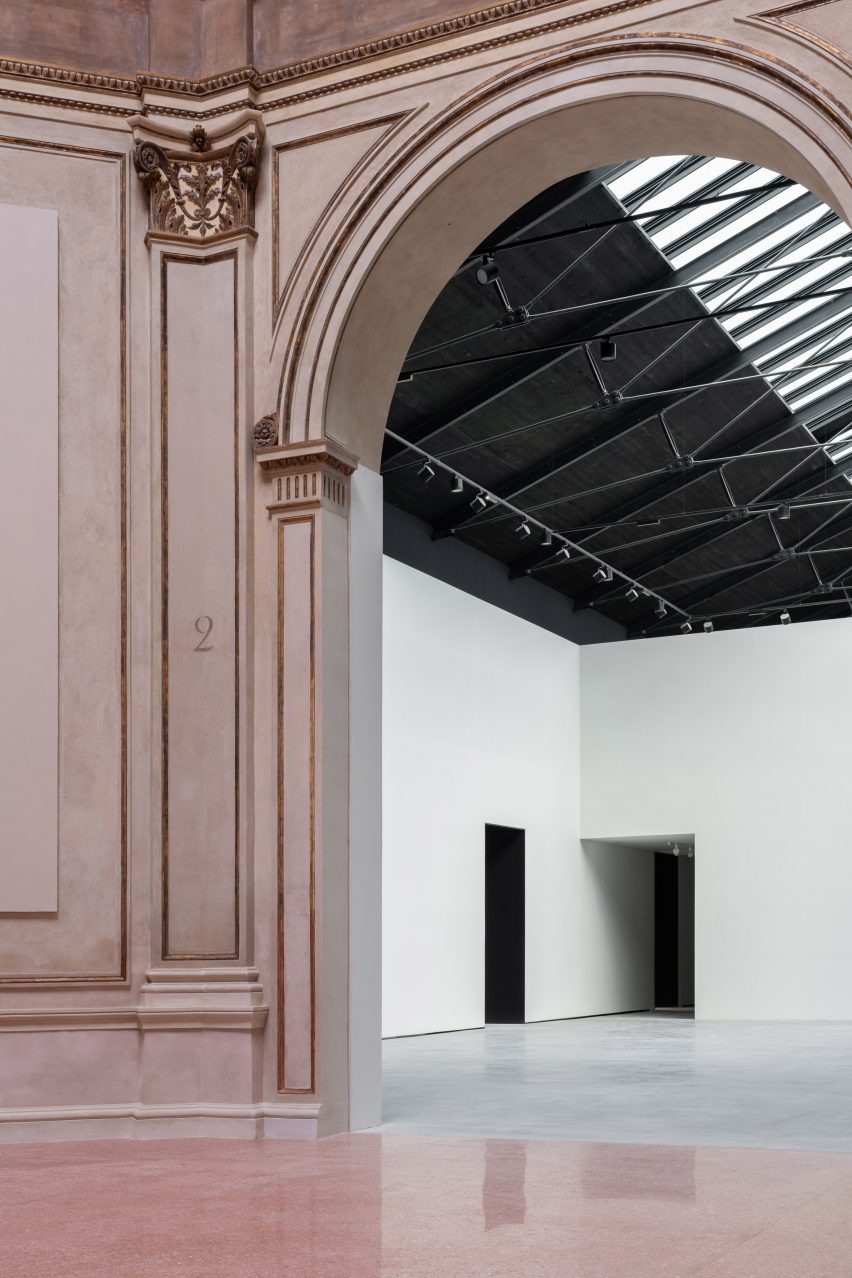 The interiors were designed to be more legible
The Central Pavilion’s Sala Chini gallery was transformed into a distribution space that leads to the building’s centre, which is encircled by public service spaces, including a bookshop, cafe and educational room.
Under the building’s pitched roofs, rectangular exhibition spaces have been divided by white walls, designed to host a range of temporary installations.
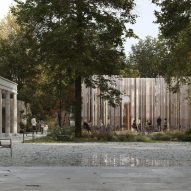
First image of Lina Ghotmeh’s permanent Qatar pavilion for Venice biennale revealed
Window fixtures originally designed by Italian architect Carlo Scarpa were restored and reinstalled, and skylights with photovoltaic and light-diffusing glass were added to the roof.
A cafe features glass doors that open onto a canal-side terrace, where canopies made from charred laminated wood and cross-laminated panels were added.
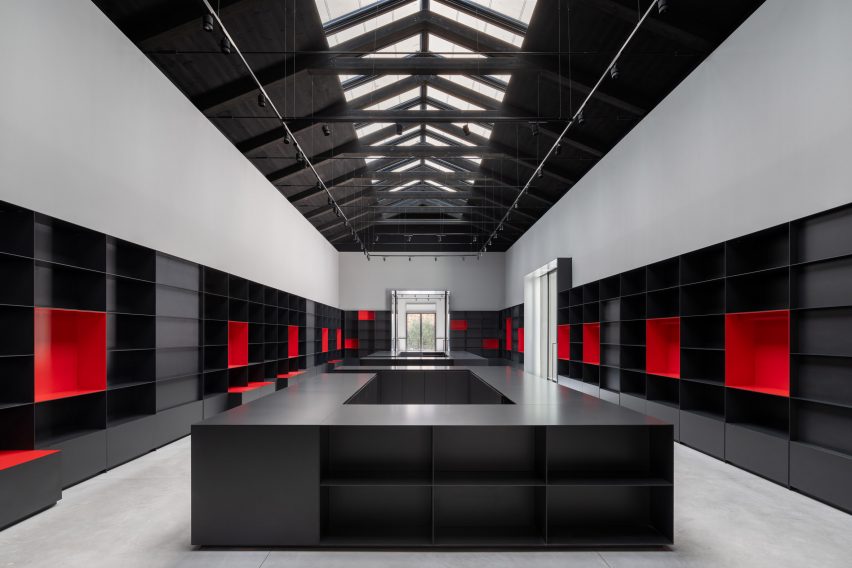 A bookshop has been added
Drawing upon Venetian wooden roof terraces, known as altane, the canopies were designed to connect the Central Pavilion with the surrounding landscape.
“These slender structures introduce an element of openness that connects the pavilion to the landscape of the Giardini, without competing with the existing masonry mass,” said the Venice Biennale.
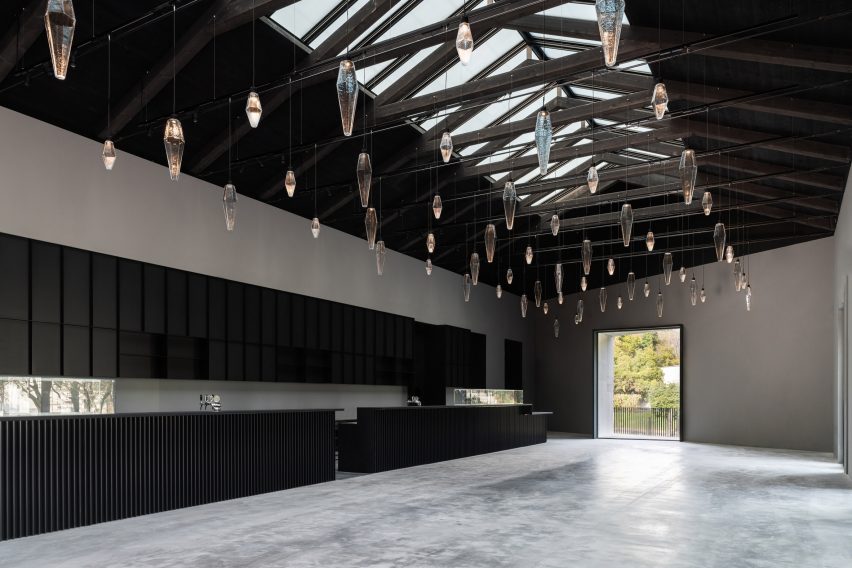 A cafe opens onto an outdoor terrace
Technical systems were hidden behind walls to keep the interiors free from clutter, and motorised shades were added to blackout the interior when necessary.
Funded by the Italian government, the restoration was carried out as part of the country’s National Plan for Complementary Investments (PNC) of the National Recovery and Resilience Plan (PNRR).
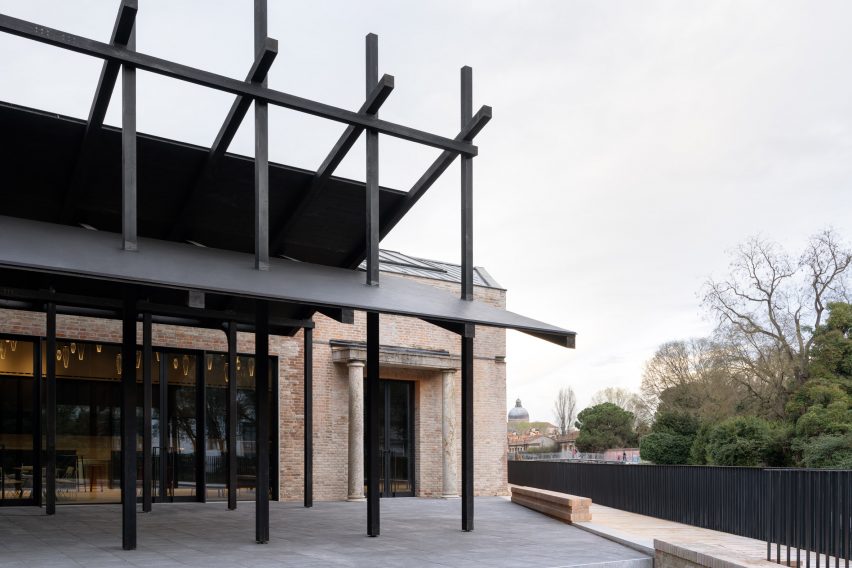 Canopies informed by Venetian roof terraces shade the outdoor space
Elsewhere in the Giardini della Biennale, Linah Ghotmeh is designing the permanent Qatar pavilion, which will be the first national pavilion on the site since 1995.
Next year’s Venice Architecture Biennale will be curated by Amateur Architecture Studio founders Wang Shu and Lu Wenyu, who intend to combat “the death of architecture”.
The photography is by Marco Cappelletti courtesy of the Venice Biennale.