
Building “tens of thousands” of public homes, capping rents, ending homelessness and removing interest deductibility for landlords are all on the agenda of a Green Party housing campaign.
The Green Party’s campaign, called A Home for Everybody, was released on Wednesday afternoon.
It includes reversing the Coalition Government’s $2.9 billion interest deductibility on residential investment property for landlords. It also includes capping rent increases to no more than 2% per year and creating a national register for landlords, property managers and boarding houses “to ensure professional accreditation, transparency, and regulatory compliance across the rental property sector.”
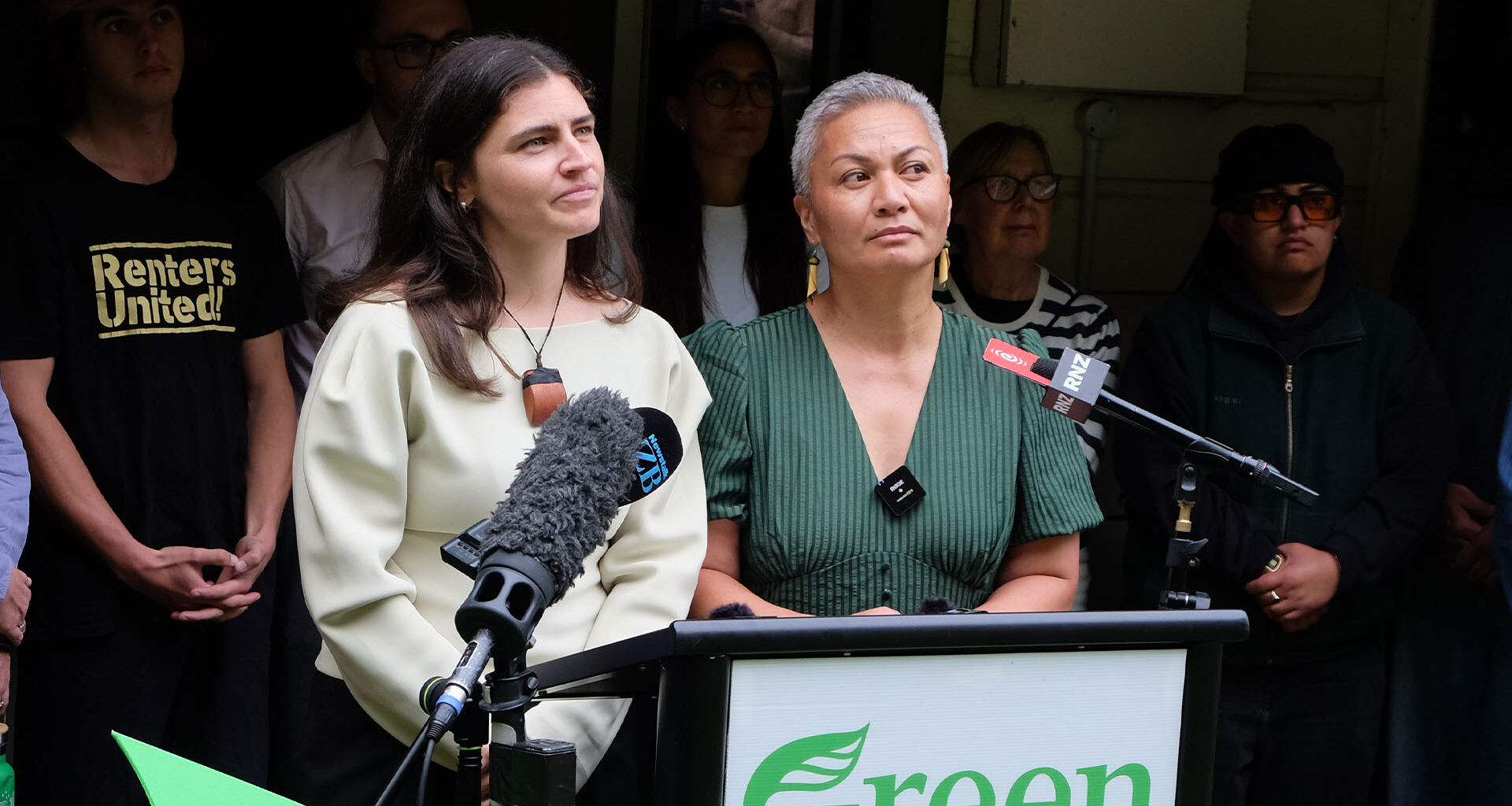
At the announcement, when asked if this was a 2026 election policy, Greens co-leader, Marama Davidson said: “We’ve got an assortment of packages that are our election campaign policies to come down the line but this is something that we have stood behind for at least the past three elections.”
And when asked about whether they had done any costings for the entire proposal, the Greens other co-leader Chlöe Swarbrick said this was a campaign they were running alongside a range of people from the community.
“This does not represent one of the fully costed policies that we’ll be putting out at election time, but it is reflective of a lot of the work that we’ve done over the last 18 months, which has shown, for example, how we could fund these things.”
Making their announcement outside a rental home in the Wellington suburb of Te Aro, Davidson said: “In a country like Aotearoa, with our wealth of resources and skills, there is no excuse for people to go without a decent home, let alone any home at all.”
“The idea that housing is a human right should not even be controversial. Yet, successive governments have allowed housing to be treated as an investment asset first, and a human necessity second.”
In a statement, Swarbrick said this isn’t rocket science. “Mass building of public housing almost 100 years ago led to decades of stable, affordable homes for New Zealanders,” she said.
“Other countries have shown how sensible, practical policies to strengthen renter’s rights and common sense tax settings, to stop housing being treated as a state-sanctioned casino, means more affordable homes.”
Asked about the tens of thousands of public homes, Davidson said; “we’re putting on the table the sorts of ideas that we’ve stood by for successive terms of government. For at least the last six year, we’ve said we could end the public housing waiting list in five years if we were to scale up public housing 35 – 45,000 houses, as a starting point”.
When it came to who they envisaged as building these public houses, Davidson said; “we also would offer more security for development, so offering for example, 10-year contracts to provide security for developments, with the incentive build in for the right kind of housing to be build, including accessible housing”.
“We do see a place for community housing as well to be able to provide … That would also include iwi, Pasifika-led housing to be able to provide the specific needs that they are accountable to as well.”
The Greens would continue to support the current community housing network and system but there also has to be a role for Government, Davidson said.
“Government is able to build at scale that community housing providers may not be.”
Asked how they expected to get cross party support for their proposal, Swarbrick said they expect to build support in the community.
“Renters right now, who are paying an arm and a leg for a house that might send them to hospital need to understand that that is not an individual responsibility issue, that is a systemic issue which one and a half million New Zealanders currently face.”
Swarbrick said if renters across the country understood that is something that unifies them “then they can unify in building consensus towards the solutions, which means that they can hold every single political party in Parliament accountable to fixing them.”
Here’s a breakdown of the Green Party’s housing campaign:
Making homes more affordable
Build more affordable homes by making sure planning law allow more homes to be built in towns and cities connected to public transport, shops and community facilities
Requiring councils to enable at least as much development capacity as required by long-term population growth – even in existing urban areas
Remove regulatory and financial barriers for Māori to build on their own land
Scale up the Whai Kāinga Whai Oranga programme to fund more Māori housing initiatives
Reverse National’s $2.9 billion tax deductions for landlords and property speculators
Ensure accessible housing is affordable by providing funding for housing modifications so disabled people can afford housing that is for for purpose, and strengthen regulations and incentives for the construction of universally designed housing
Renting
Cap rent increases at no more than 2% per year
Get rid of no cause evictions, so tenants have longer term security
Implement an independently certified Rental Warrant of Fitness
Create a national register of all landlords, property managers and boarding houses
Build more public housing
Build tens of thousands of new, affordable, and accessible public homes across Aotearoa
Increase long-term funding and financing for councils and community housing providers so they can provide more public housing in their communities
Invest in domestic prefabrication and off-site manufacturing to make building public homes easier and cheaper
Making sure Kāinga Ora and community housing providers are funded to build enough accessible housing to meet the needs of disabled people – instead of leaving it to the market
Homelessness
Creating a ‘Duty to Assist’ law which would put legal duty on agencies to ensure people have the housing they need
Reverse the Government’s changes to emergency accommodation eligibility criteria
Have same-day emergency housing assistance until that person has suitable housing
Boosting funding for wrap-around support and community organisations