
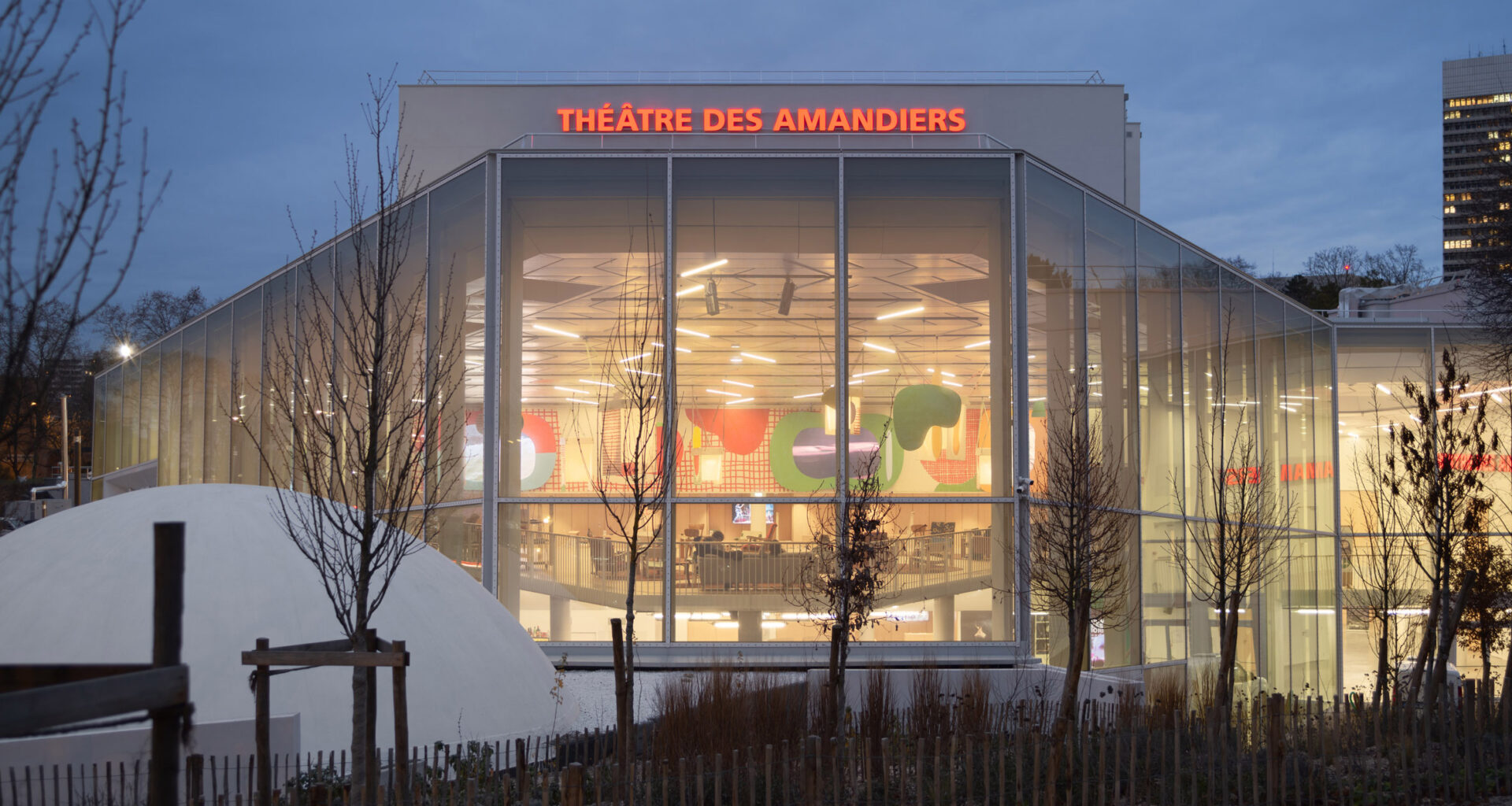
Architecture studio Snøhetta has completed the renovation of Théâtre Nanterre-Amandiers in France, unifying its performance spaces around a tilted glass hall that overlooks a landscaped plaza.
The theatre in the Paris suburb of Nanterre dates back to the 1965 Festival de Nanterre, when it began life as a circus tent and subsequently a temporary warehouse. The permanent building was designed in 1976 by the architect Jacques Kalisz.
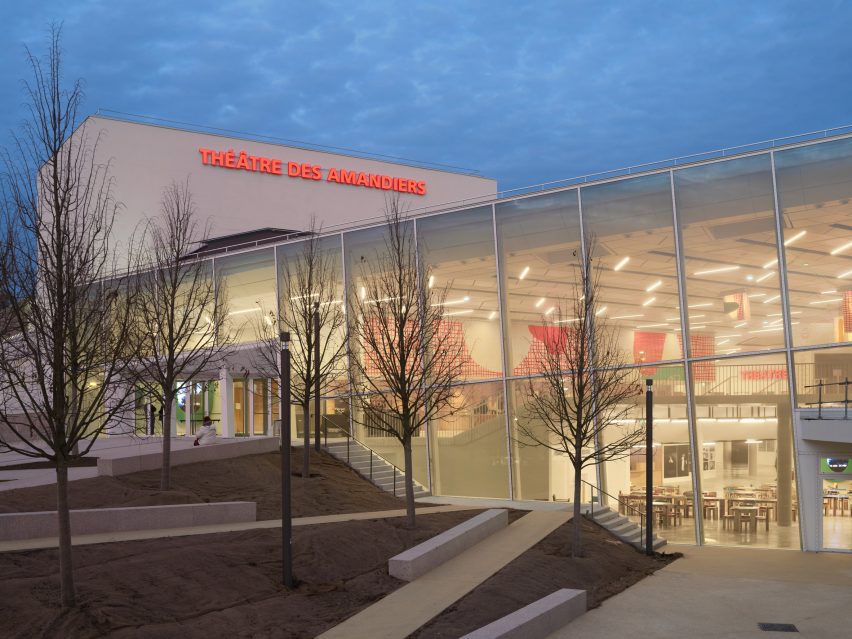 Snøhetta has renovated Théâtre Nanterre-Amandiers in France
Snøhetta won a competition to update Théâtre Nanterre-Amandiers in 2018, thanks to its proposal to upgrade its existing venues, add a new 200-seat auditorium and reconfigure its public spaces with a focus on flexibility and natural light.
At the centre of the renovation is The Grand Hall, a fully-glazed, multipurpose space that overlooks a newly-created sunken courtyard and planting designed in collaboration with landscape studio Atelier Silva Landscaping.
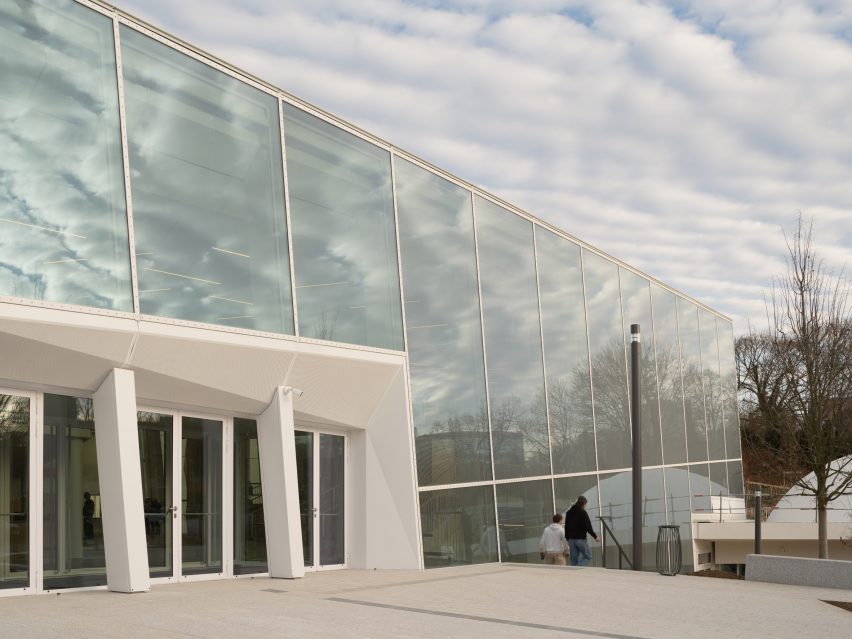 Its tilted glass exterior overlooks a newly landscaped plaza
“The rehabilitation project is neither a rupture nor a spectacular gesture, but a careful transformation aimed at preserving the essence of the place while firmly situating it in the present day,” said Snøhetta.
“The intervention responds to the evolution of artistic practices, uses, and audience expectations, while renewing the dialogue between the theatre, the city, and the park,” it added.
“The themes of materiality and transparency run throughout the project, serving a building that is clear, legible, and strongly connected to its context.”
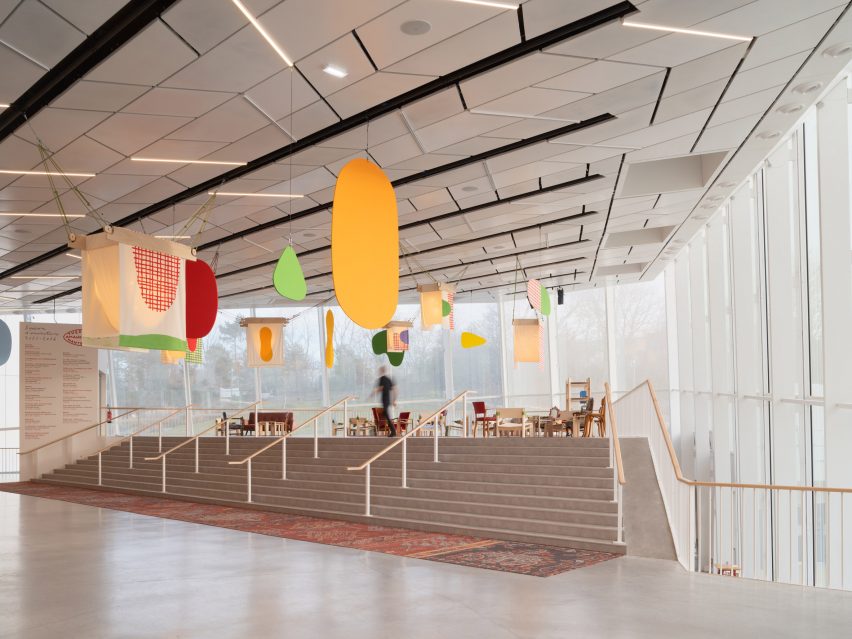 The renovation centres around the fully-glazed hall
The Grand Hall maintains the footprint of the theatre’s previous foyer, expanded with a new roof and sunken floor that allows access from both the upper forecourt and lower stepped plaza.
A mezzanine area above the hall’s flexible double-height spaces provides additional access into the auditoria, while a ceiling with integrated stage equipment enables the entire space to be transformed into an additional performance or meeting venue.
Snøhetta used a “deliberately restrained” palette of concrete, wood and glass for these public areas, with the intention of creating warm, robust spaces and surfaces that would reflect the changing light through the fully-glazed walls.
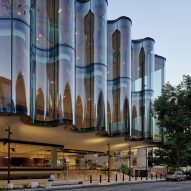
Glasshouse Theatre in Queensland operates “like a finely tuned musical instrument”
“Transparency, omnipresent throughout the space, changes the perception of the building throughout the day and seasons, making the theatre’s energy visible and supporting its mission of artistic transmission and dissemination,” said the studio.
“By day, natural light animates the volumes and reveals the raw materials; by night, the hall is illuminated, transforming the theatre into an urban lantern,” it added.
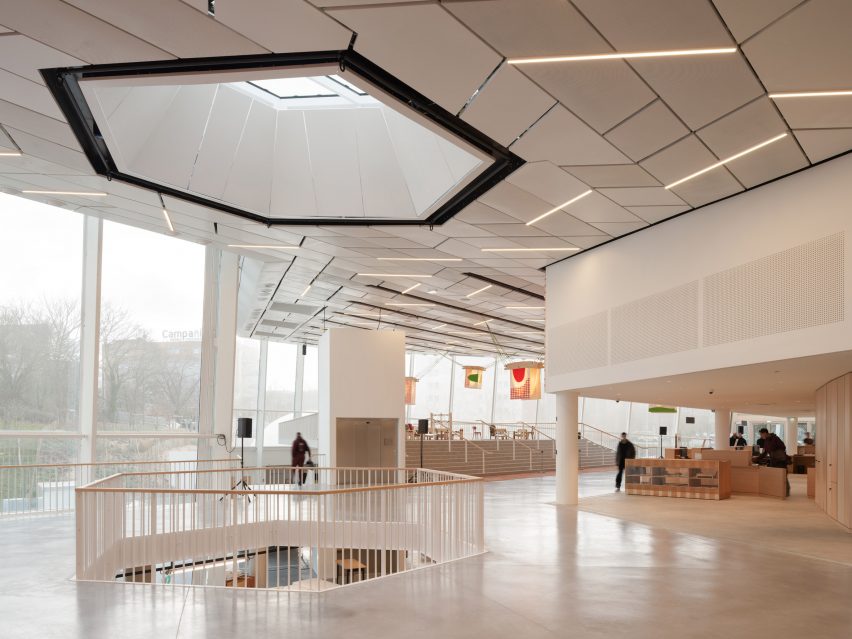 Concrete, wood and glass define the public areas
Théâtre Nanterre-Amandiers’s main 800-seat auditorium has been entirely overhauled, with the creation of accessible entrances, technical upgrades and improved sightlines. Curtains allow the size of the theatre to be reduced if needed.
Two additional performance spaces include an updated flexible auditorium with mobile seating and motorised platforms, and a new 200-seat auditorium for more intimate and experimental performances with a motorised telescopic seating system.
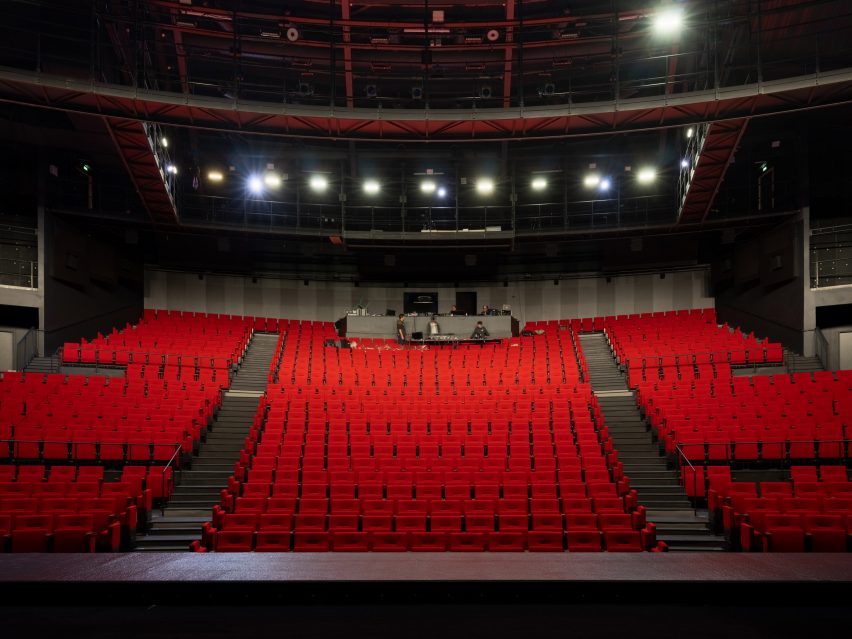 A new 200-seat auditorium was added to the venue
“These three auditoriums, rationally organised with dressing rooms, team workspaces, and circulation areas, form a compact and legible ensemble where each space is directly accessible and fully functional,” said the studio.
Snøhetta recently won a competition to design the new Ontario Science Centre alongside Hariri Pontarini Architects, and is among a number of studios announced to be working on a new masterplan for Istanbul’s northern Beykoz district.
The photography is by Jared Chulski.