
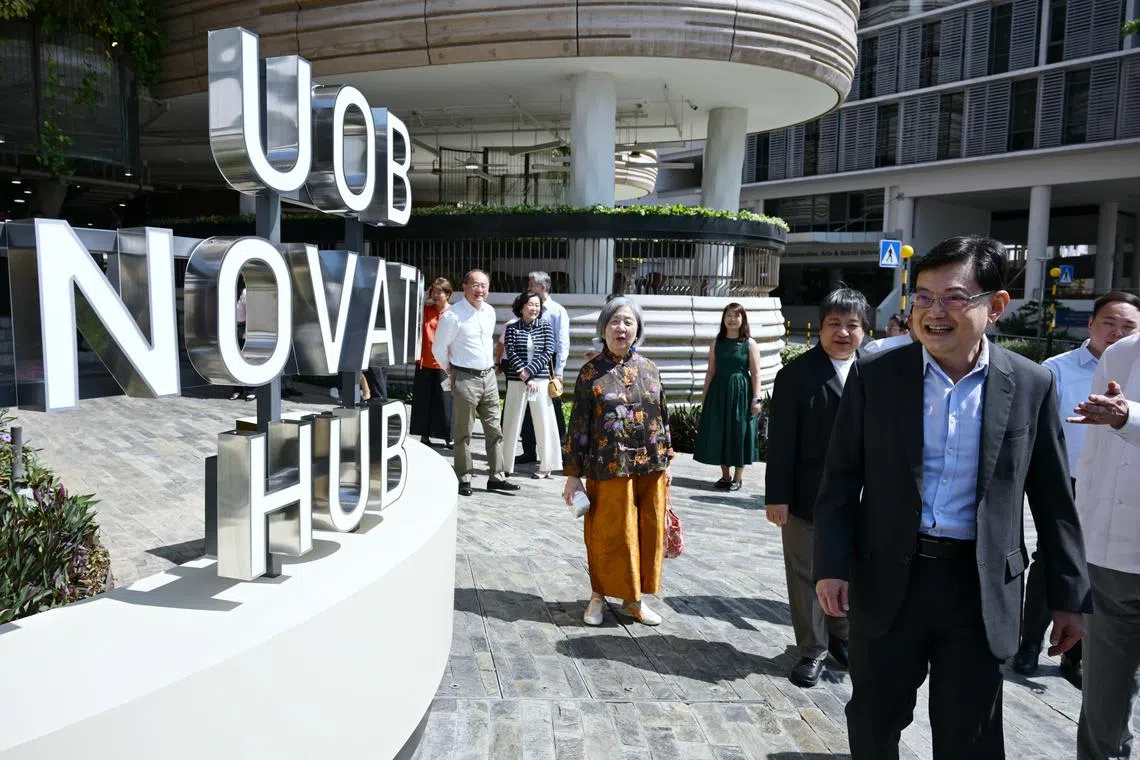
SINGAPORE – Cybersecurity start-up PQStation now has the security of having its own dedicated space to advance its work.
The firm, which aims to help organisations such as banks and government agencies spot gaps in their existing systems that make them vulnerable to hacking by quantum computers, has found a home in a newly launched start-up incubator at Nanyang Technological University.
“It’s the first time we are getting space for our own company because we were previously working out of various research laboratories in the university,” said Dr Prasanna Ravi, chief executive officer of PQStation, an NTU spin-off that he co-founded in August 2024.
It now has access to subsidised office space, sponsored seminars and workshops, and free mentorship programmes by industry experts, including UOB executives, after it moved into the UOB Innovation Hub.
Taking up 2.5 floors of eight-storey learning hub The Hive, the UOB Innovation Hub is set to nurture 90 start-ups in artificial intelligence, sustainability and advanced technologies over the next five years.
The exact funding for the UOB Innovation Hub was not disclosed, but it is backed by a $275 million endowment fund contributed by the bank, the Wee Foundation and the Government.
Speaking at the official launch on March 25 at The Hive, NTU vice-president of innovation and entrepreneurship Louis Phee said: “(The UOB Innovation Hub) is designed as a launchpad where founders can build their ventures with minimal infrastructure costs, while focusing on products that truly matter.”
He added that the hub will expand beyond its current 2.5 floors, and future levels will include more co-working spaces, teaching studios for NTU’s innovation and entrepreneurship curriculum, and exhibition areas that can host dialogues and connect investors with partners.
Another start-up that has made the UOB Innovation Hub its home is NTU spin-off Synvo AI. Previously, it did not have its own office, and its team of three full-time staff worked remotely or at an NTU research lab.
Founded in March 2025, the company has developed an AI platform that helps enterprises in sectors such as healthcare, retail and construction generate insights and complete tasks by analysing and connecting relationships across different data types, including videos, screenshots and diagrams.
“With a gathering of start-ups, hopefully we can exchange notes, learn from each other and build a vibrant ecosystem that can attract commercial partners and venture capitalists,” said Mr Saim Yeong Harng, co-founder of Synvo AI.
The UOB Innovation Hub will also house student teams taking part in the NTU Venture Creation Programme.
The programme will give 50 teams of entrepreneurial students annually up to $5,000 in seed funding to develop a prototype. Promising ventures may receive additional grants of up to $100,000 to test their ideas in real-world settings.
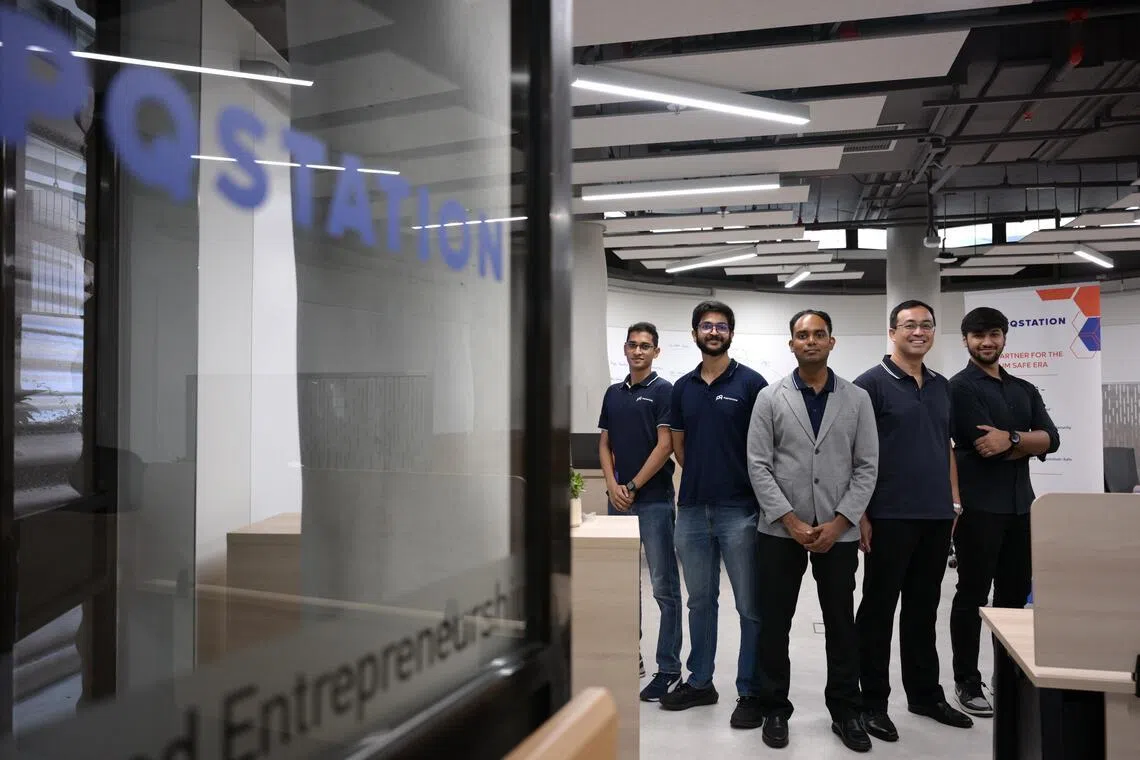
(From left) PQStation’s chief operating officer Arryaan Bhandari, chief technology officer Aarav Varshney, CEO Prasanna Ravi, director Fred Ezerman and senior software development engineer Tushar Agarwal at NTU on March 25.
ST PHOTO: NG SOR LUAN
Over the past 10 years, NTU has incubated and launched more than 430 start-ups.
Mr Heng Swee Keat, chairman of the National Research Foundation and guest of honour at the event, said Singapore is committed to advancing research and development as a cornerstone of national progress.
He added that the country needs to strengthen the linkages among researchers, company management, entrepreneurs, investors and end-users so that research insights can be translated into real-world applications.
“The UOB Innovation Hub is designed as a collaborative place where students, researchers and entrepreneurs can work closely with industry partners,” Mr Heng said.
“I trust the hub will nurture promising ideas into viable ventures, addressing real-world problems.”