
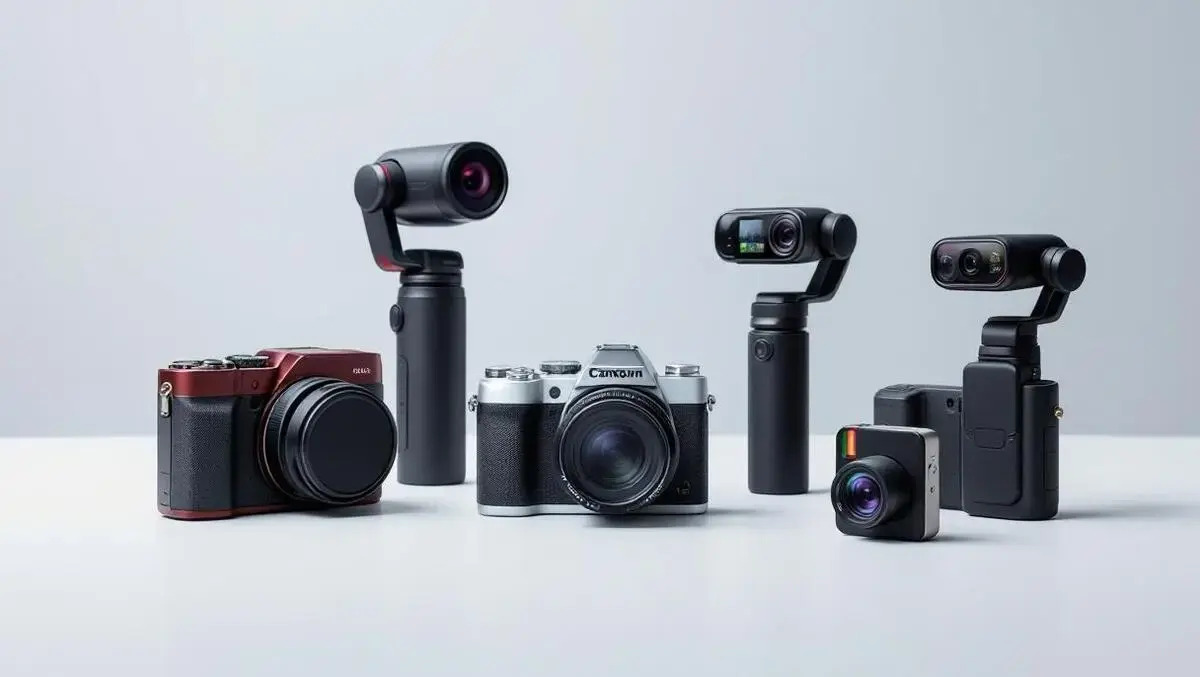
Global handheld smart camera shipments rose 83% in 2025 to 16.65 million units, generating more than RMB 46.1 billion in revenue, according to IDC.
The figures suggest rapid expansion in a consumer imaging category that IDC defines as portable, handheld devices with onboard computing, stabilisation and at least 2K resolution. The segment includes action cameras, panoramic cameras and gimbal cameras, with action cameras divided into detachable and non-detachable models.
Shipments could pass 40 million units by 2030, implying a compound annual growth rate of nearly 20% over five years. IDC attributed the growth to rising demand for short-form video, vlogging and social media content creation, which has broadened the appeal of smaller, simpler devices beyond traditional photography enthusiasts.
The shift comes as conventional digital cameras, DSLRs and mirrorless cameras face a tougher market. Those products now serve a more mature user base focused on image quality, interchangeable lenses and more complex post-production, while handheld smart cameras appeal more to younger consumers, students, women and sports users seeking portability, durability and easier sharing.
Market leaders
DJI ranked first worldwide in 2025 with a 62% shipment share, helped by strong sales of panoramic cameras and detachable action cameras, as well as international expansion.
Its total shipments surpassed 10 million units for the first time. The Pocket 3 led the gimbal camera segment, while DJI’s action camera shipments rose more than 150% and the action series accounted for nearly half of its overall mix.
IDC also highlighted the pace of DJI’s newer launches. Osmo Nano sold more than 600,000 units in four months, and Osmo 360 captured more than 35% market share in the fourth quarter.
Insta360 remained a major rival, retaining its lead in panoramic cameras and detachable action cameras. The company shipped more than 3.4 million units globally during the year.
Its panoramic camera share exceeded 65%, supported by the X5 and X4 ranges, while the Air line targeted lower price points. Ace series shipments grew more than 200%, and detachable camera share rose above 50%.
GoPro, by contrast, lost ground as Chinese competitors stepped up pressure. Its shipments fell in both the action and panoramic segments, with weaker sales in China and greater emphasis on Europe and the United States.
New products including Max2 and Lite Hero drew only a limited response. IDC said GoPro was under pressure across hardware, channels, ecosystem and regional performance.
Segment growth
The action camera segment shipped more than 8 million units in 2025, up 61% from a year earlier. DJI and Insta360 both gained share through new products, while detachable action camera shipments passed 1.3 million units.
Insta360 maintained an early lead in detachable action cameras, but DJI moved quickly into the category with Osmo Nano and gained share in the second half of the year.
Gimbal cameras grew even faster, with global shipments rising by more than 100% in 2025. DJI held a clear lead, with the Pocket series serving as the benchmark in a category widely used for short-video and vlog recording.
Panoramic cameras also expanded strongly. Shipments topped 2.5 million units, up more than 50%, with Insta360 retaining the lead and DJI gaining meaningful share after launching Osmo 360 in the second half.
Industry pressures
IDC said the market still has room to grow because penetration remains low compared with smartphones and PCs. Improving user experience and lower prices are expected to support wider adoption.
At the same time, vendors face pressure from rising memory prices. Handheld smart cameras tend to have lower average selling prices than some other consumer electronics products, but they carry a higher share of memory costs, which could squeeze margins as competition stays intense.
Software is also becoming more important in shaping product performance. Image stabilisation, HDR, night shooting, noise reduction and editing increasingly depend on software and algorithms, giving larger manufacturers more scope to strengthen their positions through data, algorithm design and tighter integration between hardware and software.
Hardware still matters in that competition. Manufacturers are working with suppliers on custom CMOS sensors and system-on-chip designs, in some cases alongside dedicated AI chips, while variable-aperture designs are beginning to appear in a category long dominated by fixed wide-angle lenses.
Although these devices serve different uses from conventional cameras, demand for higher image quality continues to drive hardware upgrades, IDC said.