
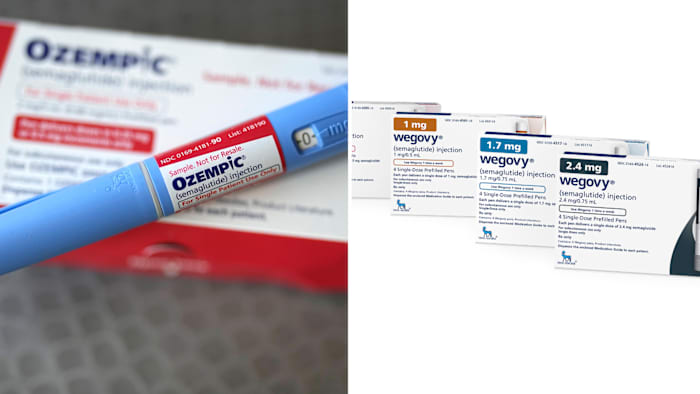
JACKSONVILLE, Fla. – For some, GLP-1 drugs feel like a weight-loss miracle.
For others, the weight comes right back after they stop taking them, which has led a Jacksonville-area clinical research group to work on finding a solution.
Glucagon-like peptide-1, or GLP-1, has become one of the most talked-about breakthroughs in weight loss medicine. The science behind it starts with how the body communicates with itself.
“When you say GLP-1, that’s a type of messenger hormone called an incretin,” said Dr. Michael Koren with the Jacksonville Center for Clinical Research. He is also a cardiologist.
Incretins are hormones sent from the gut to the brain. After a meal, they signal the brain to stop eating.
But for some people, that signal doesn’t work as effectively — making it harder to feel full and easier to overeat.
In fact, Koren explains that GLP-1 medications were not originally designed to help people shed pounds. Their roots are in diabetes care.
“These drugs were originally developed to treat diabetes but turned out to have this satiety effect and helped people lose weight because they just don’t eat as much,” Koren said.
But as millions of people have discovered, GLP-1 drugs don’t work the same way for everyone, and results can stall.
“There are still people that take GLP-1 and they get some weight loss and then they get stuck. We are not always sure why they get stuck, but they do,” Koren said.
Koren, who has worked in clinical research for 35 years, said he is now studying a different class of incretin called an “amylin agonist” that takes a distinct approach to appetite control.
While GLP-1 works by enhancing the body’s natural signaling after a meal, amylin works continuously to quietly reduce the mental “noise” of food cravings throughout the day.
The research question Koren and his team are now trying to answer: Can combining the two do more than either one alone?
“So the research that we are doing now is if we can add an amylin agonist on top of a GLP-1 and if that combination does better than the GLP-1 alone,” Koren said.
Several dozen participants from Northeast Florida are currently enrolled in the study; however, specific participant information is confidential.
The trial is a blind study, meaning participants do not know whether they are receiving the test medication or a placebo.
Results are expected to take two to three years.
If the combination proves effective, it could be a game-changer for the millions of people who have plateaued on GLP-1 medications — or who have regained weight after stopping them.
For more information, visit medevidence.com, encoredocs.com or read more about ongoing obesity trials at this link here.
Copyright 2026 by WJXT News4JAX – All rights reserved.