
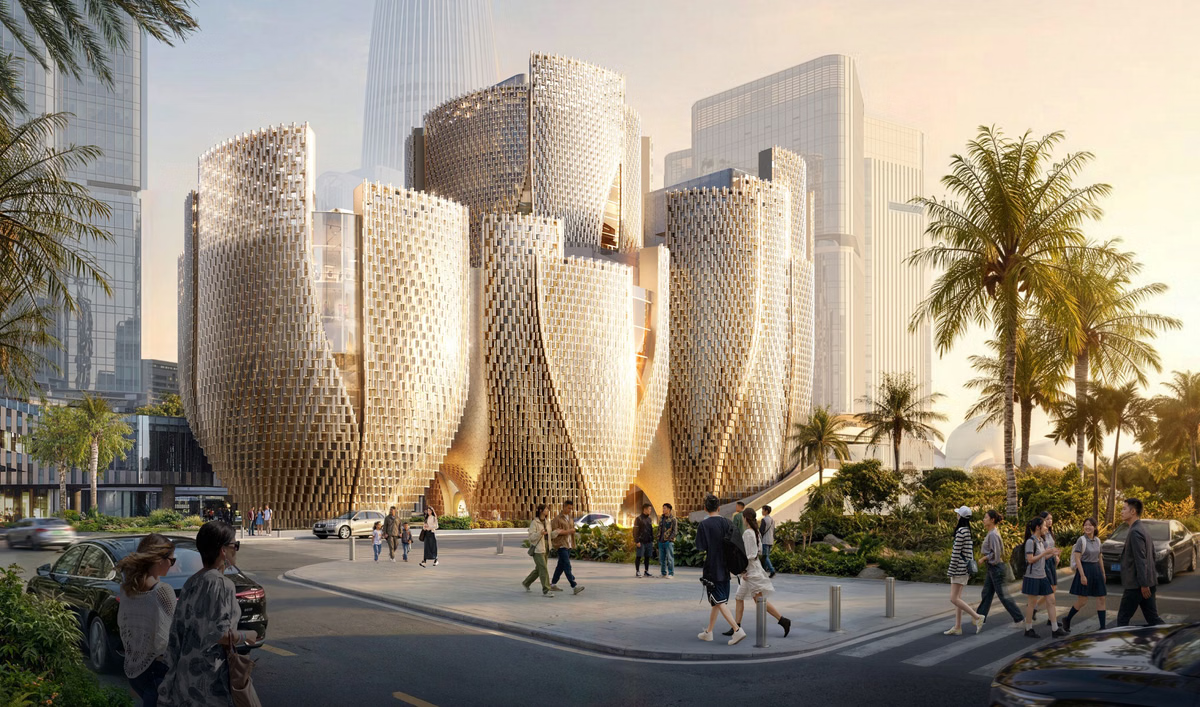
Büro Ole Scheeren has unveiled the design for the Róng Museum of Art, a new cultural institution currently under construction in Shenzhen’s Nanshan District. The museum will focus on the visual culture of the 20th and 21st centuries, encompassing art, design, architecture, and film.
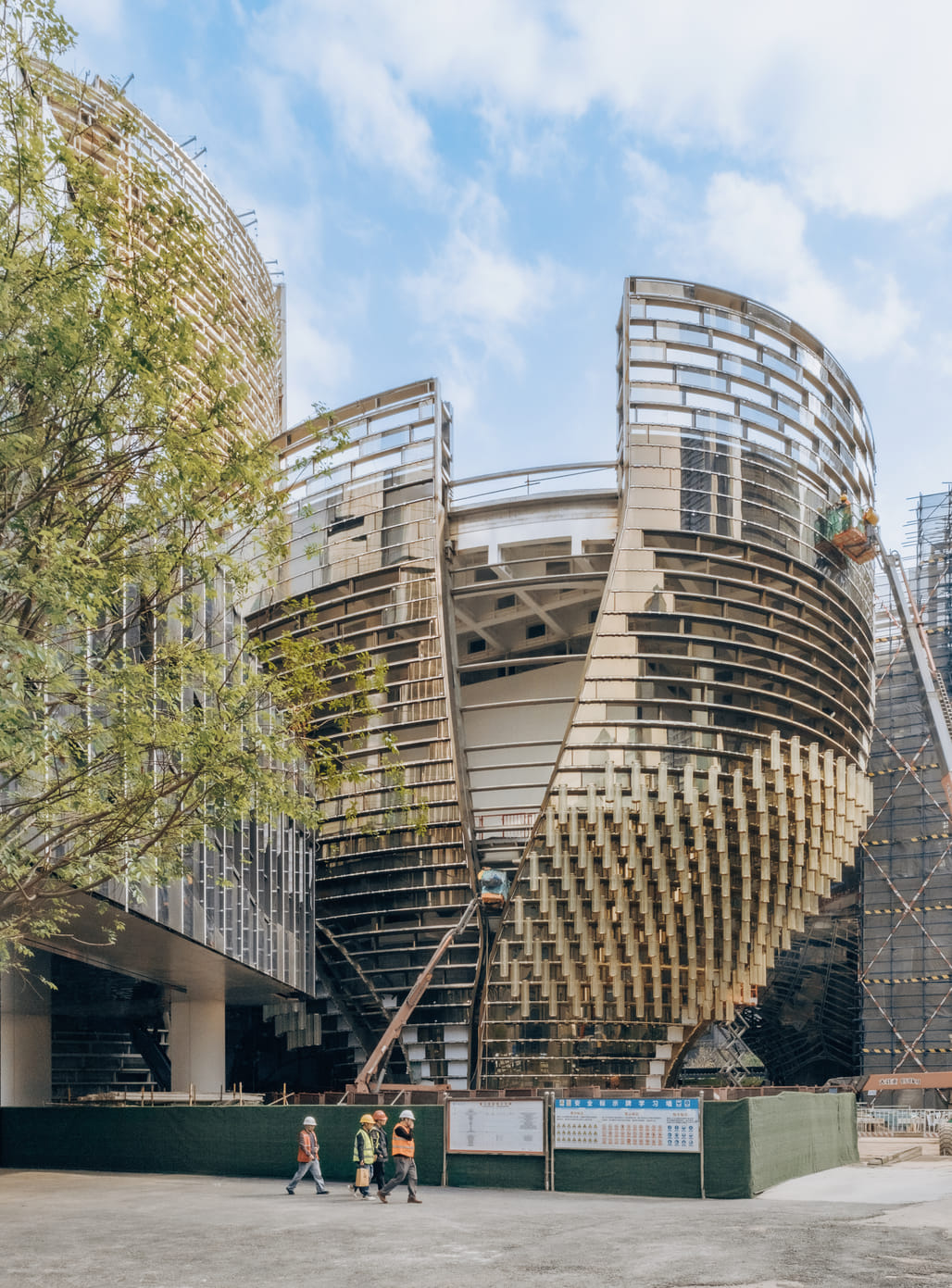
Construction progress. Image credit: Büro Ole Scheeren, photo by Zhu Yumeng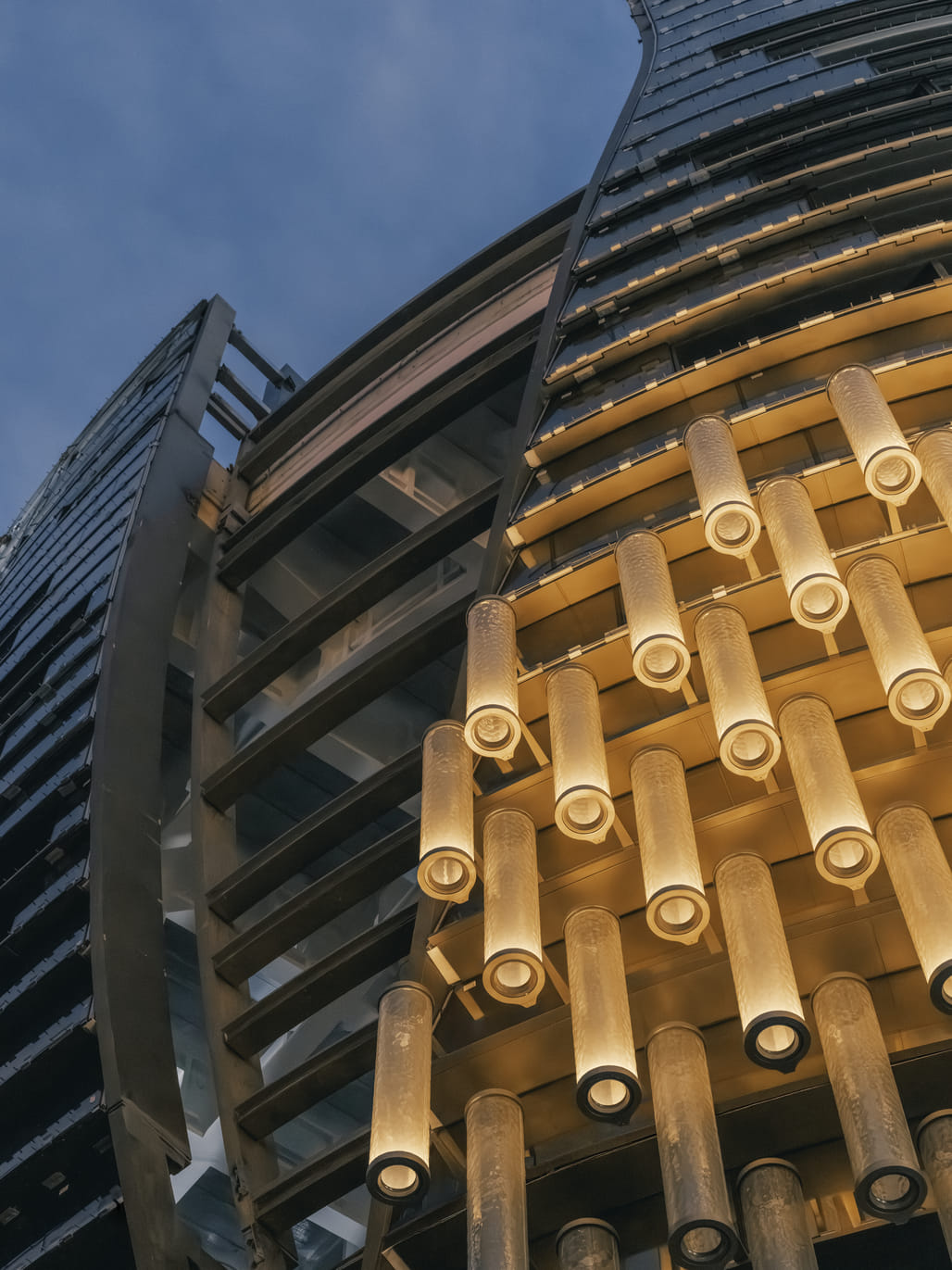 Construction progress. Image credit: Büro Ole Scheeren, photo by Zhu Yumeng
The design of the museum is defined by a series of elevated gallery volumes supported by five slender structural cores. The approach lifts the main exhibition spaces above ground level, creating a shaded public plaza beneath. Designed as a 24-hour “art forum,” the open ground plane will accommodate public circulation, events, and installations.
Construction progress. Image credit: Büro Ole Scheeren, photo by Zhu Yumeng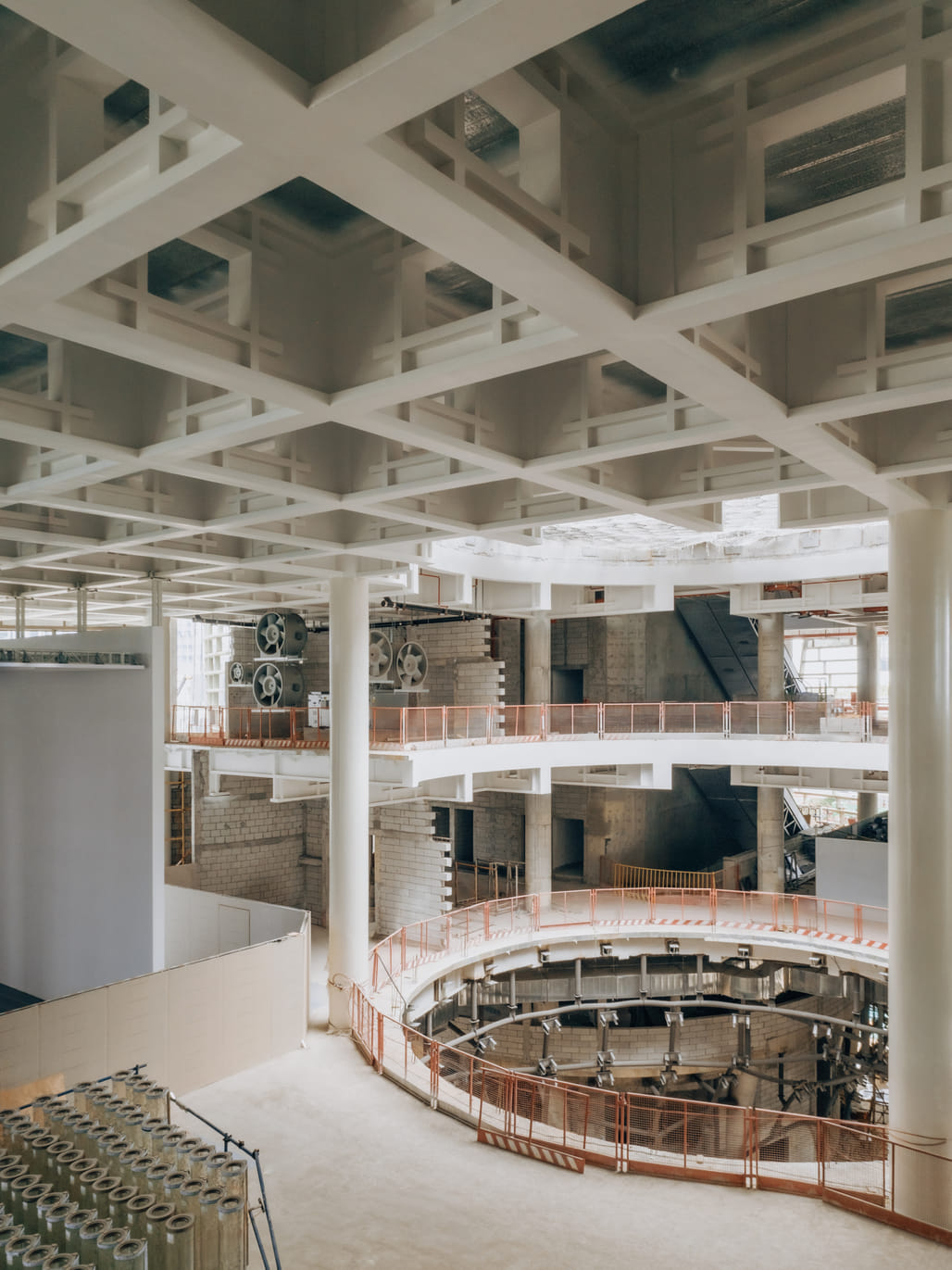 Construction progress. Image credit: Büro Ole Scheeren, photo by Zhu Yumeng
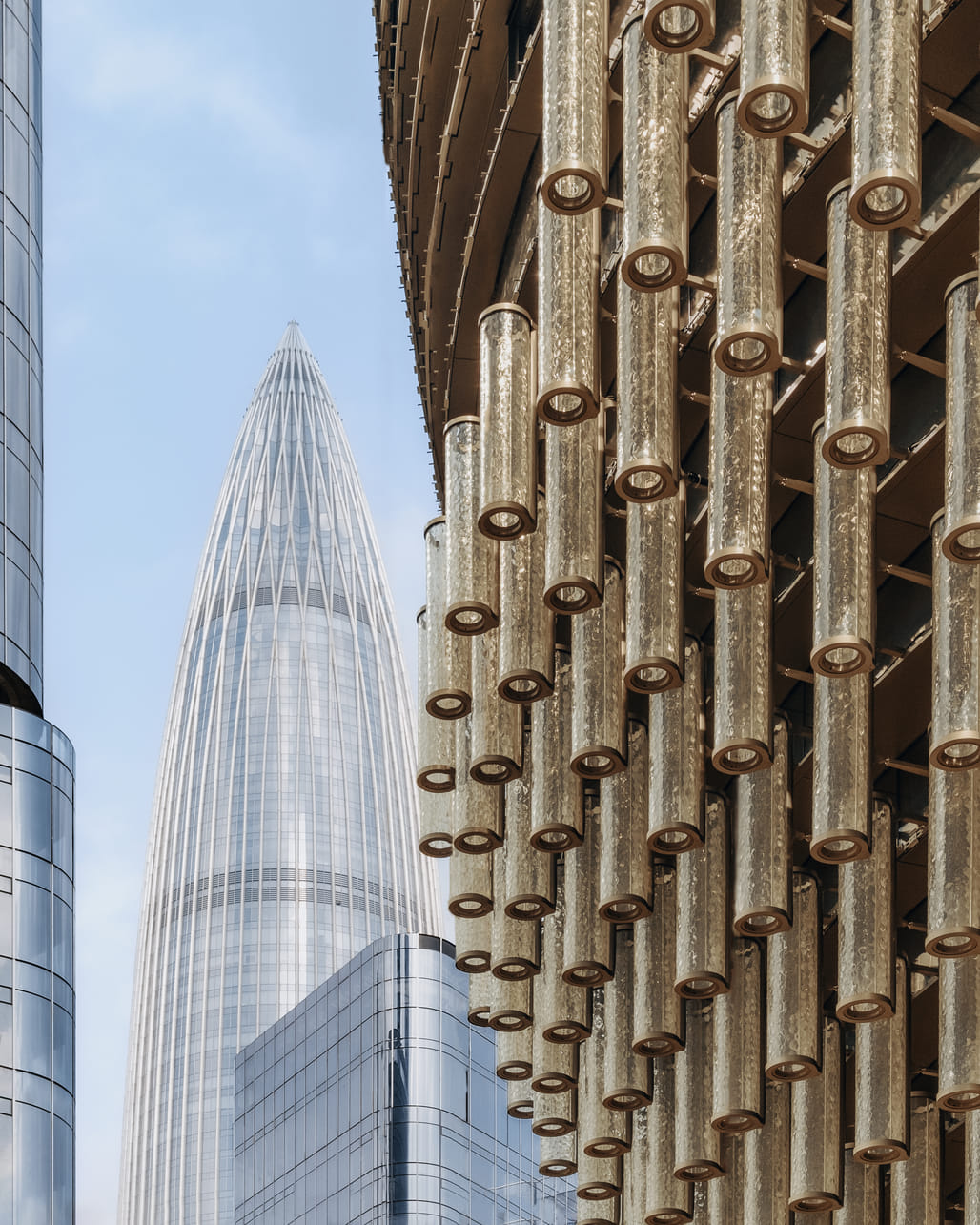
The building’s facade features layered, conical forms wrapped in a secondary envelope of parametrically designed glass tubes. The facade composition is intended to diffuse light, provide shading, and contribute to the building’s environmental performance. Rainwater collection systems integrated into the roof structure will support on-site water management in line with Shenzhen’s “sponge city” strategy.
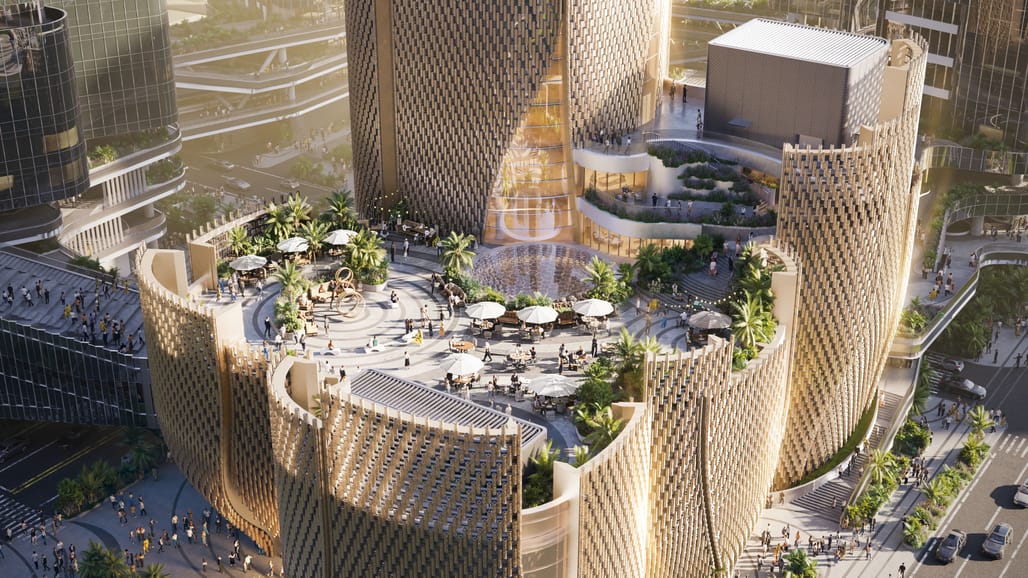
Render image credit: Büro Ole Scheeren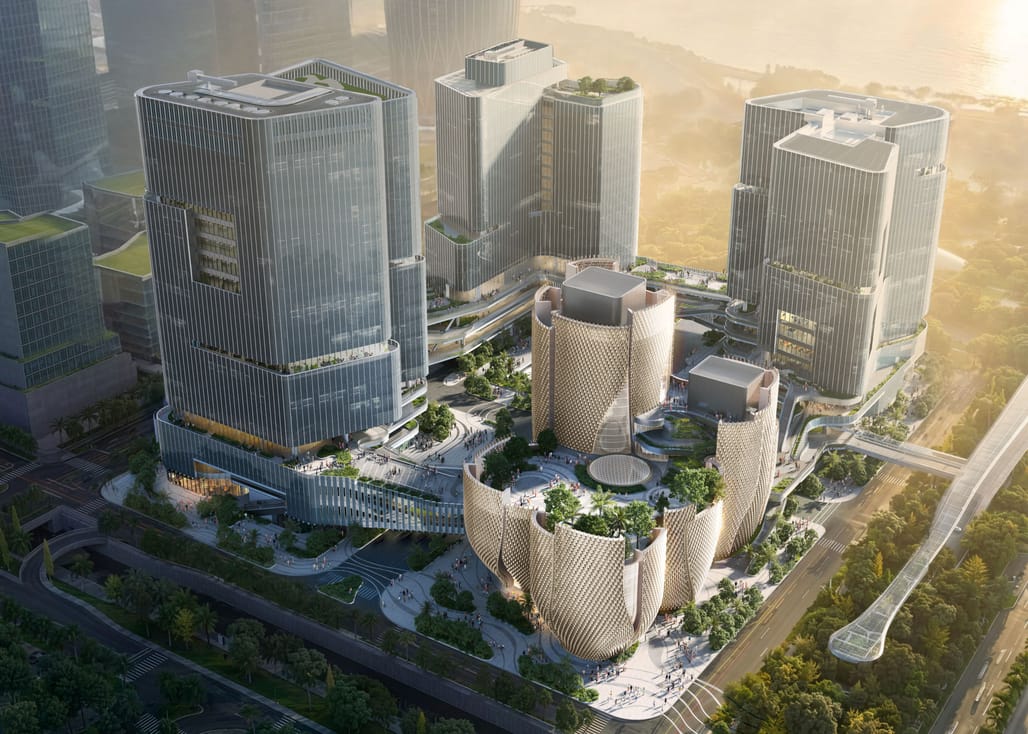 Render image credit: Büro Ole Scheeren
Circulation is facilitated through connections to the surrounding urban infrastructure, including elevated walkways, nearby public spaces, and direct access to the metro network. A rooftop garden will extend the campus’s landscaped areas and provide additional space for outdoor programming.
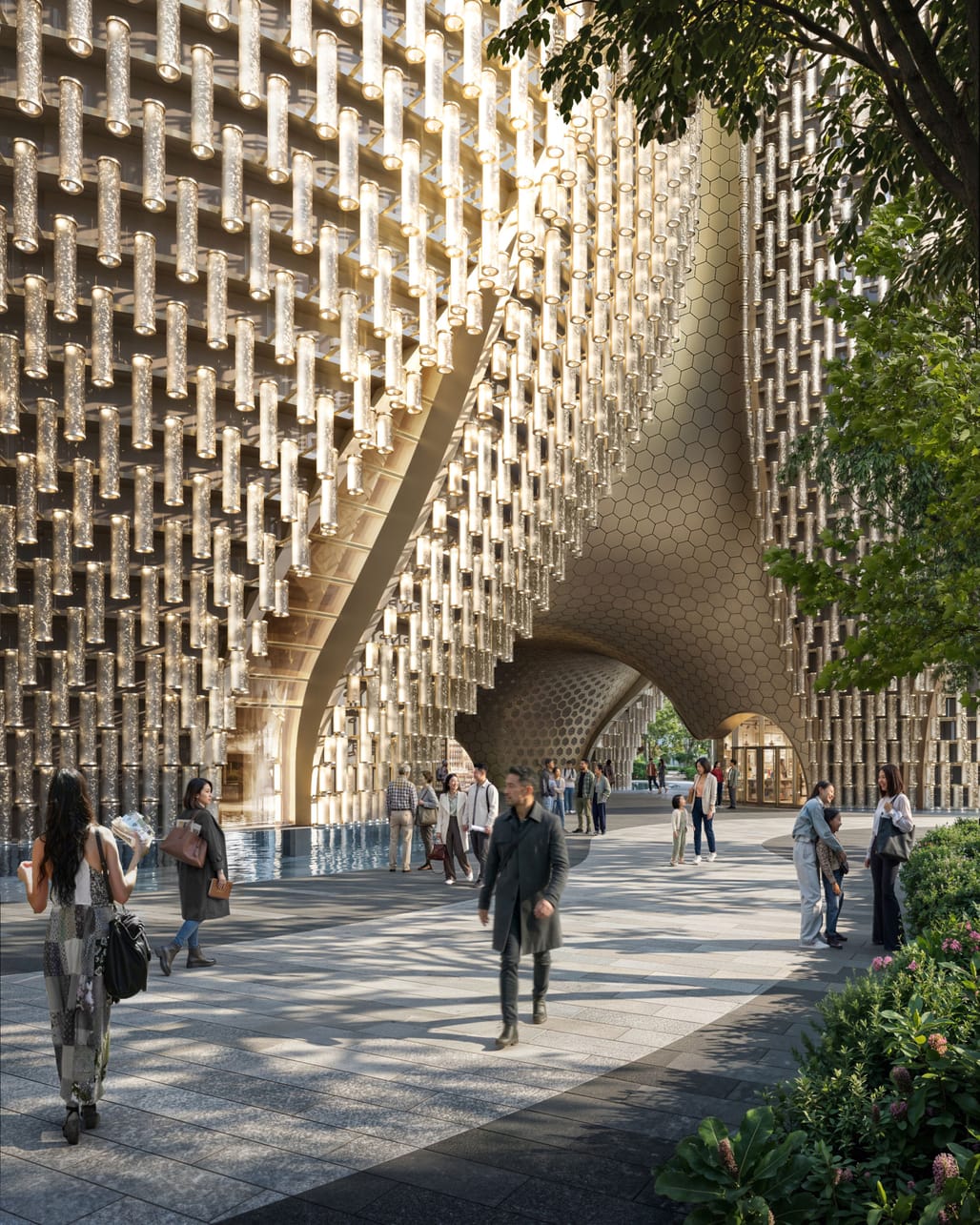
Render image credit: Büro Ole Scheeren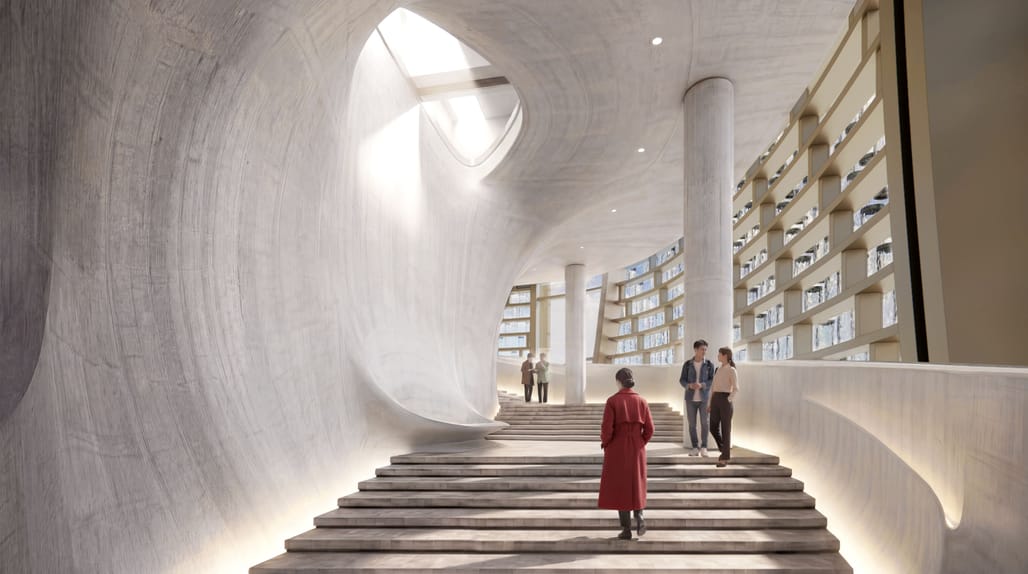 Render image credit: Büro Ole Scheeren
The 45,000-square-foot building will include approximately 23,000 square feet of gallery space, alongside educational facilities such as an art library, workshops, lecture spaces, and retail and hospitality components. The scheme forms part of the larger Houhai Hybrid Campus, also designed by Büro Ole Scheeren, which integrates residential, commercial, and hospitality programmes into a mixed-use development.
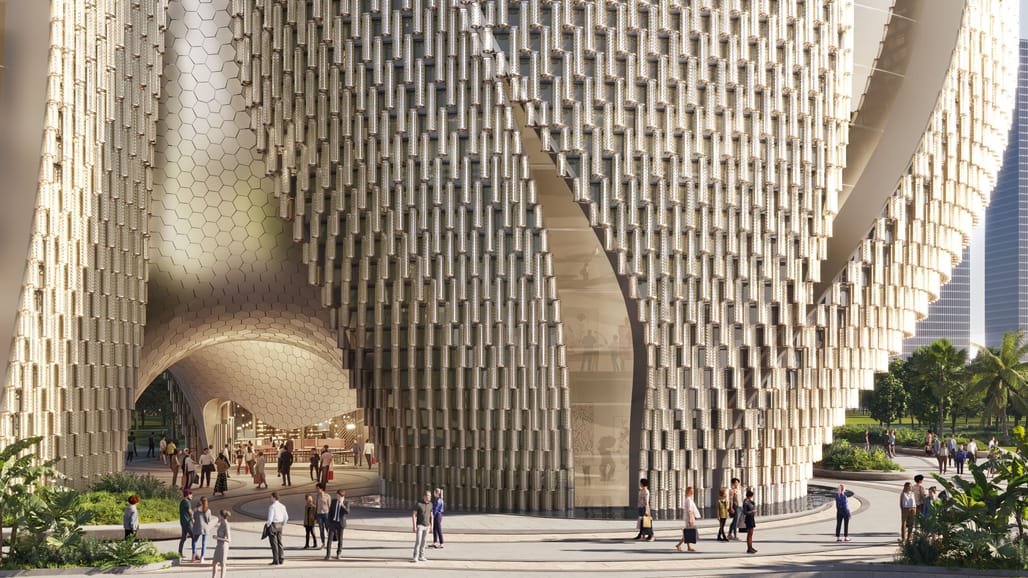
Render image credit: Büro Ole Scheeren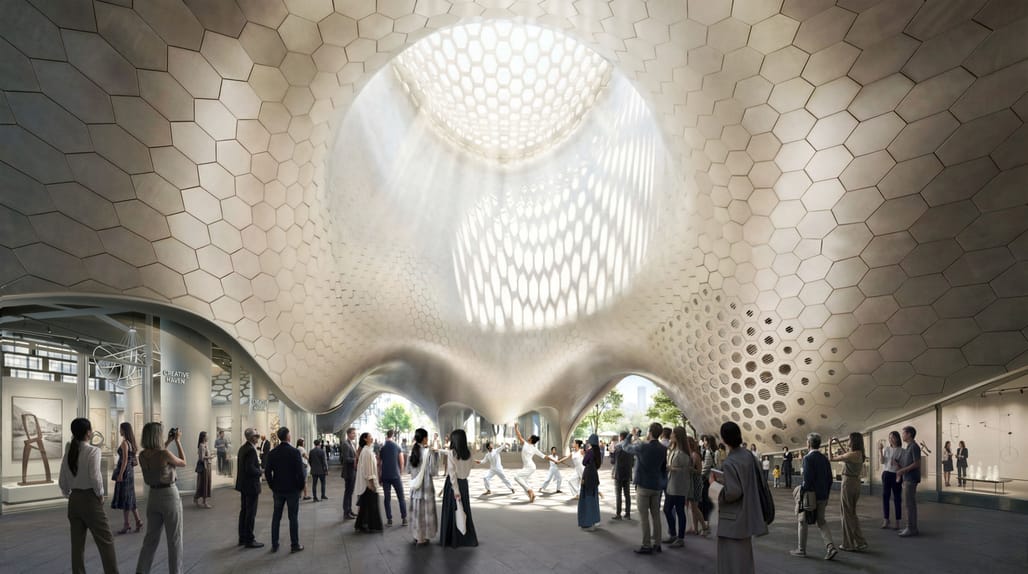 Render image credit: Büro Ole Scheeren
“What is significant is that the founder of Tencent, one of China’s most successful innovation businesses, is using his company’s position at the forefront of China’s tech industry to open new ground for culture and urban development,” Ole Scheeren said about the scheme. “From the very beginning, we worked closely to define a museum and overall complex that is not only a showcase, but a symbiotic urban and ecological statement with big tech as a central cultural patron.”
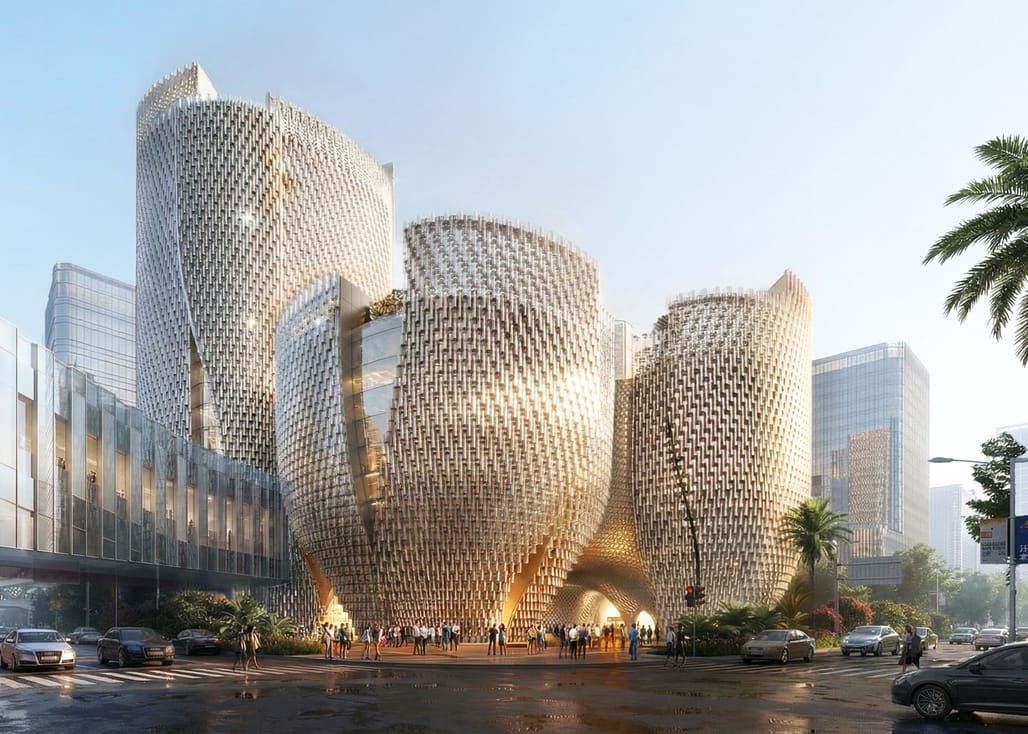
Render image credit: Büro Ole Scheeren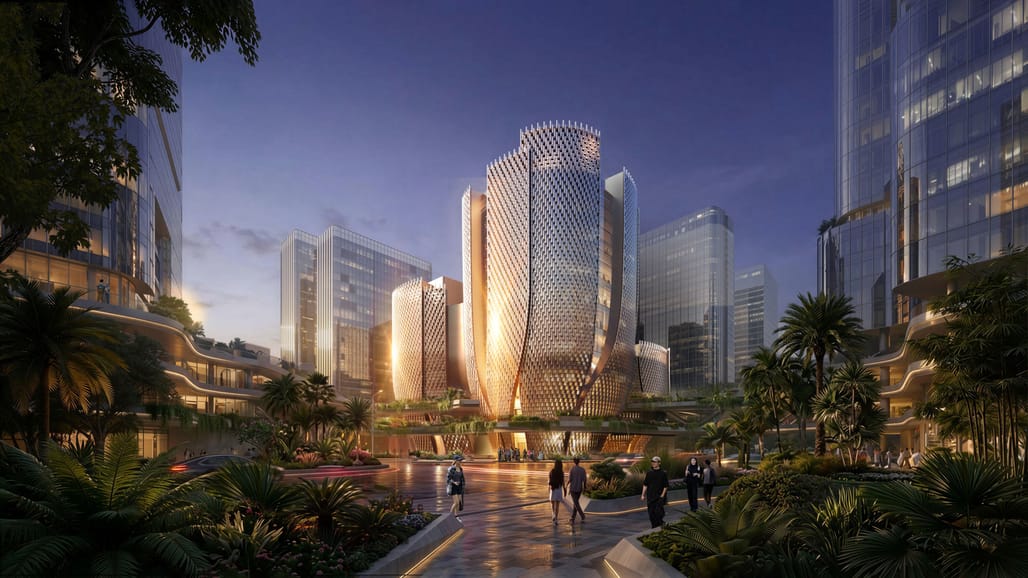 Render image credit: Büro Ole Scheeren
“Around the world, most tech environments are relentlessly self‑focused. Here, the ambition is to chart a different path by investing in public space, cultural venues, and education, and to use economic success to underwrite a deeper, more generous engagement with the city and wider society,” Scheeren added.
Completion of the scheme is scheduled for 2027.