
Govt. rolls out second fuel price cap with expanding tax cuts, focusing on diesel
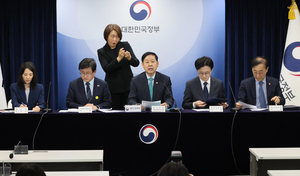
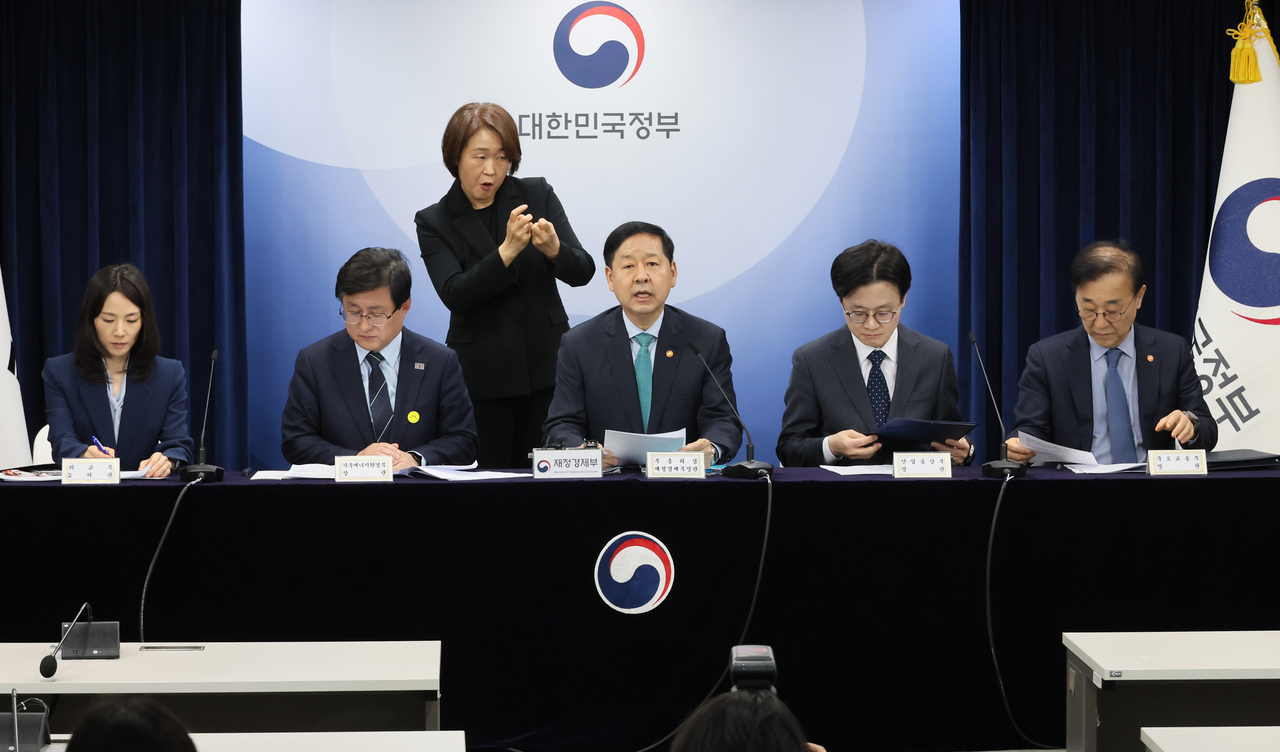 Deputy Prime Minister and Finance Minister Koo Yun-cheol (center) speaks during a joint government briefing on emergency economic measures in response to the Middle East conflict at the Government Complex in Seoul on March 26. From left: Second Vice Foreign Minister Kim Jina; Climate, Energy and Environment Minister Kim Sung-whan; Koo; Minister of Trade, Industry and Resources Kim Jung-kwan; and Minister of Land, Infrastructure and Transport Kim Yun-duk. (Yonhap)
The South Korean government on Thursday unveiled a phased, comprehensive emergency plan to shield its economy from the Middle East war, as risks mounted to energy supplies and key industrial feedstocks.
The policy package, titled “Emergency Economic Response Measures to the Middle East War,” was announced a day after the government shifted into a full-fledged “emergency economic response system” and activated an emergency economic headquarters led by Prime Minister Kim Min-seo
The measures include naphtha export controls and a ban on hoarding of urea and urea solution from Friday, priority domestic naphtha supply through support for higher-cost overseas procurement, alternative liquefied natural gas cargoes, and eased limits on coal-fired power generation.
“The government, recognizing the gravity of what amounts to an economic wartime situation, will prepare for even the worst-case scenario and make every effort to ensure a full emergency response,” Deputy Prime Minister and Finance Minister Koo Yun-cheol said during a joint news conference at the Seoul Government Complex.
“Beyond a supplementary budget, we will deploy the full range of policy tools — including fiscal, tax and financial regulatory measures — and respond in three stages under a scenario-based plan to deliver the most effective policy mix.”
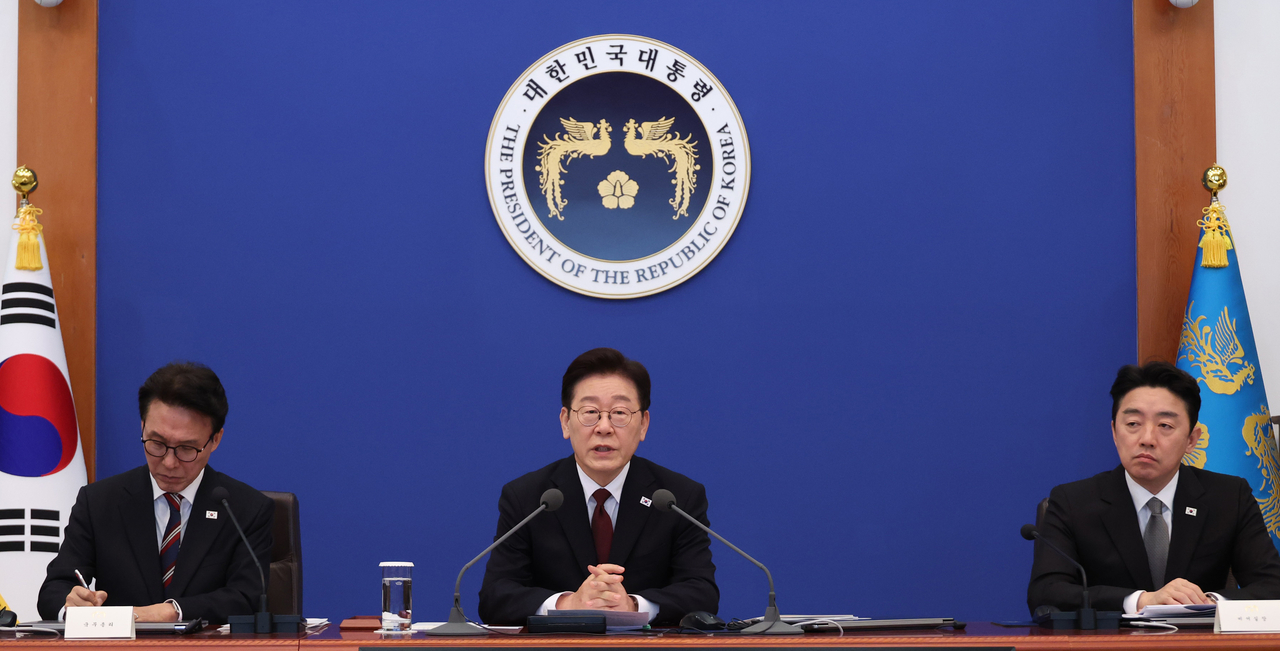 President Lee Jae Myung (center) attends an emergency economic review meeting at Cheong Wa Dae in Seoul on Thursday, to cushion the impact of the Middle East crisis on the economy amid the ongoing Iran war. (Yonhap)
The joint news conference by related ministries came after President Lee Jae Myung presided over an emergency economic review meeting at Cheong Wa Dae on Thursday morning.
In the first phase, the government will throw all available resources and tools behind four goals: stabilizing energy prices and living costs, preempting supply chain disruptions, supporting vulnerable sectors, and keeping foreign exchange and financial markets steady.
On supply chain disruptions, Koo said he “will take the lead in activating a supply chain crisis response task force to conduct daily intensive monitoring of items highly dependent on the Middle East.”
“We will establish a special support program within the supply chain fund to help secure alternative import sources and provide emergency operating funds,” he added.
More specifically, Koo announced that export controls on naphtha — a key feedstock used to produce plastics, vinyl, synthetic resins, synthetic rubber and synthetic fibers — would take effect Friday.
The government will furthermore impose a ban on the hoarding of urea and urea solution from the same date, while stepping up crackdowns on illegal and unfair practices and expanding imports, according to Koo.
Urea is a raw material used to produce fertilizers and urea solution, an essential liquid to reduce diesel vehicle emissions.
On energy supply, the country aims to “obtain substitute LNG volumes, including through LNG swaps, to replace Qatari supplies,” according to Koo.
Koo explained the government would raise the nuclear power utilization rate to over 80 percent and ease seasonal curbs on coal-fired power generation, which are typically imposed from December through March to reduce fine dust pollution.
“This will allow us to expand alternative power supply, including by adjusting the closure schedule of two coal-fired power plants,” Koo added.
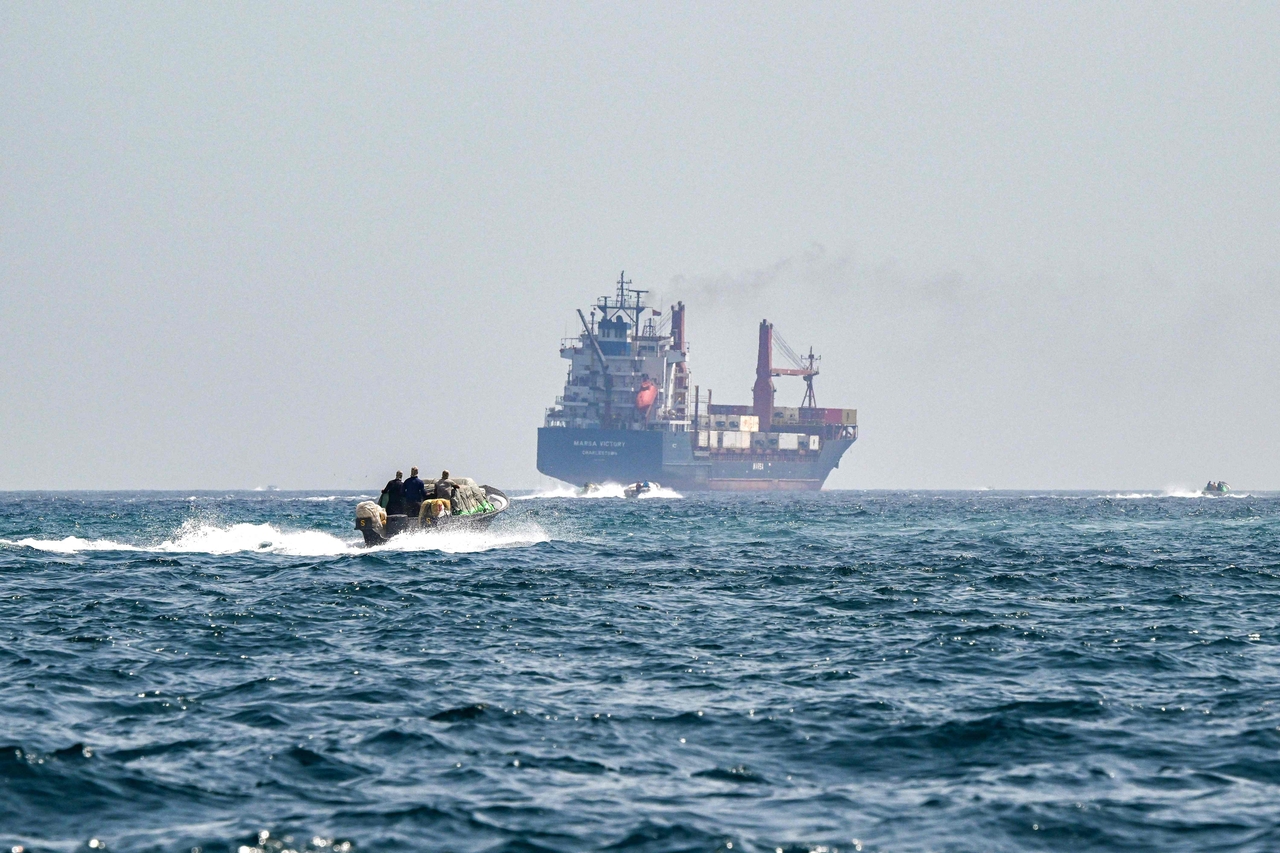 A boat approaches the St Kitt’s and Nevis-flagged container ship Marsa Victory while cruising in the waters of the Strait of Hormuz off the coast of Khasab in Oman’s northern Musandam peninsula on June 25, 2025. (File Photo – AFP)
On oil price stabilization, Koo said the government would raise the capped prices of petroleum products on Friday in a second round of price caps, following the first introduced on March 13, to reflect higher global oil prices. To cushion the impact, the government will simultaneously expand fuel tax cuts to ease the burden on households and businesses.
The government is to focus in particular on stabilizing diesel prices, given diesel’s essential role in industry and logistics, according to Koo.
Koo explained that marine diesel would be newly included under the price cap system, while fuel tax cuts would be expanded — with the tax reduction on gasoline widened from 7 percent to 15 percent and that on diesel from the current 10 percent to 25 percent.
Minister of Trade, Industry and Resources Kim Jung-kwan said the impact of the Middle East war on oil supplies had begun to materialize, noting that the last Korean tanker to pass through the Strait of Hormuz arrived in the country on March 20.
“The government reached a consensus to encourage private-sector efforts to secure alternative supplies and to strategically deploy stockpiled reserves in preparation for a prolonged disruption,” Kim said.
On naphtha supply, Kim said the government “would prioritize naphtha supply to ensure there is no disruption to health care, critical industries and the production of essential goods.”
“To secure sufficient naphtha volumes, we will maximize imports through measures such as subsidizing higher costs for overseas purchases,” Kim said. “Disruptions in naphtha supply could lead to production setbacks in petrochemical products essential to both daily life and key industries.”
Speaking at the news conference, Koo said the government will “respond more fully to the crisis by swiftly implementing a ‘war supplementary budget’ of around 25 trillion won ($16.6 billion) in April, financed by excess tax revenues” in the second stage of response.
“In the third stage, we will proactively prepare additional economic stabilization measures in case the situation prolongs beyond May and implement them immediately if necessary.”
Separately, Lee held an on-site roundtable with representatives of LG Chem, Lotte Chemical, Hanwha TotalEnergies Petrochemical and Hyundai Chemical at a petroleum reserve facility operated by the state-run Korea National Oil Corporation in Seosan, South Chungcheong Province.
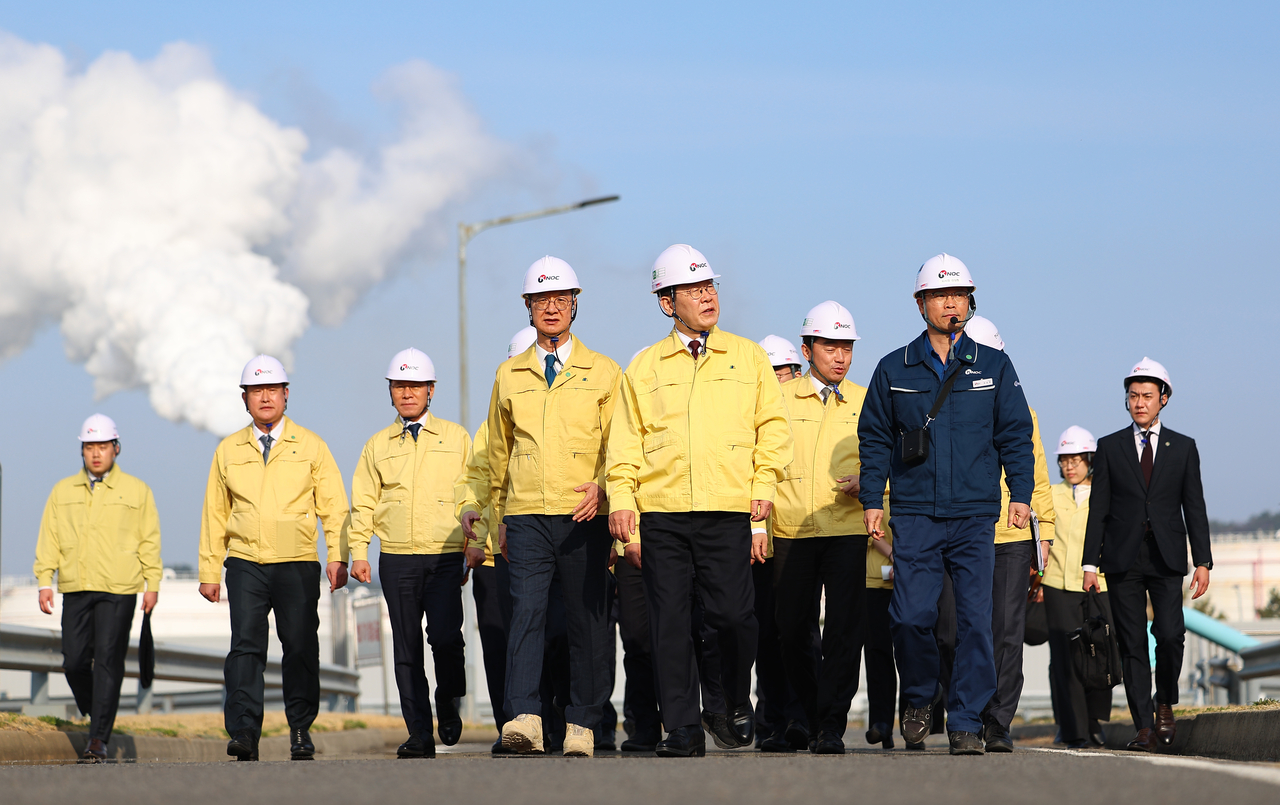 President Lee Jae Myung inspects crude oil storage tanks after holding an on-site roundtable with representatives of LG Chem, Lotte Chemical, Hanwha TotalEnergies Petrochemical, and Hyundai Chemical at a petroleum reserve facility operated by the state-run Korea National Oil Corp. in Seosan, South Chungcheong Province, Thursday. (Yonhap)
dagyumji@heraldcorp.com