
His optimism echoed Hipkins’ assurance as Covid-19 Minister in November 2020 that “when vaccines come to the market, we will be at the front of the queue”.
But even more sophisticated leaders are capable of embarrassing clangers.
Just months before Al-Qaeda attacked the US in 2001, Prime Minister Helen Clark infamously declared that New Zealand existed in an “incredibly benign strategic environment”.
Combined, the three faux pas reflect Kiwis’ delusion that geographical isolation is somehow an advantage and New Zealand is a well-known, well-regarded first-world country that “punches above our weight” both economically and in international affairs.
The current crisis should remind us that, in a deeply interconnected world, events 15,000km and 10 time zones away can affect us as much as they do the rest of the world. Being the last station on the southern line makes New Zealand more vulnerable to disruptions to supply lines, not less. And not being in the top 50 world economies – and with high debt and increasing borrowing costs – means we have no special claim on the world’s resources.
Far from being “incredibly well positioned”, we are among the most vulnerable to the impacts of the current crisis, except for the Gulf states and Israel, directly engaged in hostilities.
The Taxpayers’ Union’s excellent new FuelClock.nz brings together all the relevant Government data, plus information from the private sector and abroad.
The exact supply situation is disputed. The Ministry of Business, Innovation and Employment (MBIE) was forced to admit yesterday that it may have been confused by ships being discharged in port. In contrast, the union yesterday afternoon stood by its FuelClock.nz that indicated New Zealand had just 14 days’ supply of diesel onshore, plus another seven days confirmed as on its way.
This differs from MBIE’s estimates, which include vessels that haven’t yet been confirmed by automatic identification system (AIS) tracking – in other words, are only likely or scheduled.
As with the Covid vaccine, frantic efforts are underway to secure more diesel, but if they are unsuccessful, FuelClock.nz suggests that New Zealand could run out of diesel on April 16 under business-as-usual. Even with an emergency lockdown, it suggested diesel stocks might run dry as early as the end of next month.
According to predictions markets, informed both by the wisdom of crowds and insider trading, the probability of a ceasefire by the end of April and a reopening of the Strait of Hormuz is no better than a third.
There is more than a 50% probability that fighting will continue until the end of June, and only a 54% probability of peace by Christmas.
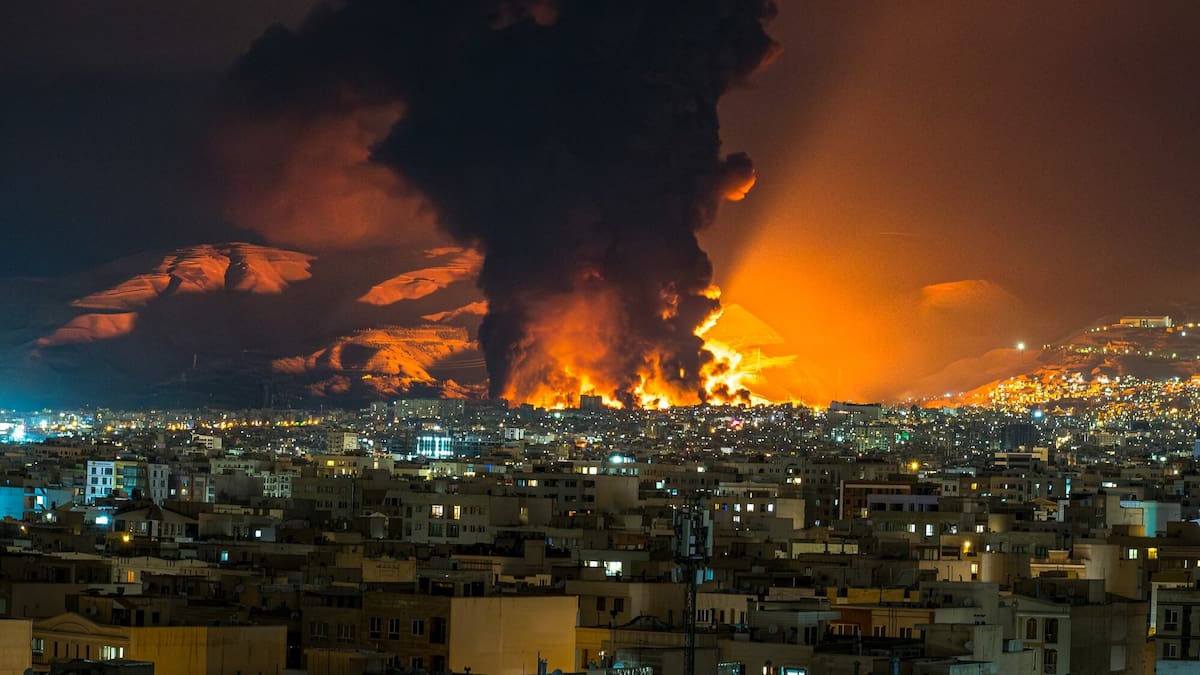
US President Donald Trump seems to have recognised he has bitten off more than he can chew and is now desperate for a ceasefire. But Iran has little incentive to agree, and both the Arab states and Israel understand that the Khomeinist regime and its terrorist Islamic Revolutionary Guard Corps (IRGC) cannot now be left in power. “What doesn’t kill you makes you stronger” applies just as much to the Ayatollahs as anyone else.
US President Donald Trump seems to have recognised he has bitten off more than he can chew in attacking Iran. Photo / Kyle Mazza / NurPhoto via AFP
If Trump walks away, Iran will be entitled to declare victory and exercise hegemony over the Strait of Hormuz, including deciding which ships may sail through it.
Neither geographical isolation nor the collapsed rules-based system will protect New Zealand from the fallout, far less any gauche displays of moral superiority of the sort being recommended on Luxon by the Greens and others on the far left.
More so even than securing Covid vaccines five years ago, this is an era of the most brutal and amoral realpolitik, with states seeking economic self-sufficiency rather than the benefits of mature international trade.
Australia is trying to aggressively push itself to the front of the queue for diesel, petrol and jet fuel by using its market power in coal and iron-sands markets.
“You want coal?” Canberra is asking. “Then gizza your diesel.”
New Zealand may have lowered its environmental standards for fuel on Monday to match Australia’s, but Canberra has since lowered theirs again.
In a Mad Max world, it’s always a race to the bottom.
For his part, Luxon is conducting urgent telephone diplomacy with the likes of Singapore, South Korea and Malaysia. To use one of the Prime Minister’s favourite words, this really is a situation where he should be “hustling”, including in the most disreputable dictionary sense.
“We’ve got food,” he ought to be saying, “and, if you want some, your money’s no good here – the price is diesel, jet fuel and petrol.” This will require some sort of state control over international trade that we haven’t seen since 1984 – but, then, we’ve never faced a crisis of this potential magnitude since then either.
Diesel rationing needs to be implemented urgently, while knowing that even the strictest regime will only buy us a few more weeks if regular shipments don’t resume soon. Just as it would have been better had Jacinda Ardern acted against Covid in late February or early March rather than wait, the sooner tough measures are taken, the better off we will all be.
Of course, the war may end tomorrow, our oil companies and political leaders might succeed in securing more diesel for New Zealand than those in Australia and elsewhere, and this will all turn out to have been a false alarm.
But I would much rather that this column’s call to action soon becomes as embarrassing for me as Luxon’s, Hipkins’ and Clark’s unfortunate pronouncements above, than the alternative, where our ability to feed even ourselves, let alone our export markets, comes into question over the next 21 days.
Catch up on the debates that dominated the week by signing up to our Opinion newsletter – a weekly round-up of our best commentary.