
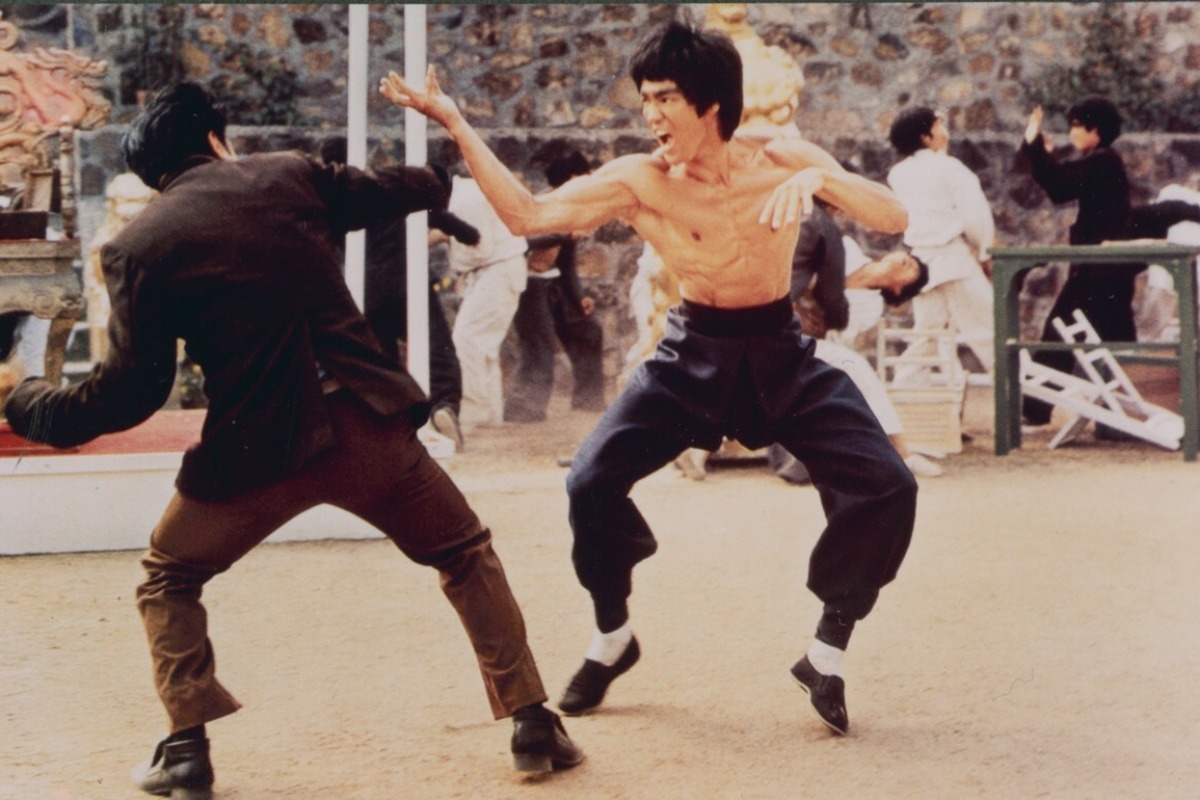
He faced Bruce Lee once, then turned down the chance to share the screen again. Was it pride, strategy, or something Hollywood would rather not admit?
Before Enter the Dragon reached theaters, a different showdown nearly took shape: Chuck Norris as O’Hara, the enforcer at Han’s side.
He passed, not out of rivalry, but calculation.
Fresh from trading blows with Bruce Lee in Way of the Dragon, Norris refused another stint as the man who loses, steering instead toward primary roles and a career that would not live in someone else’s shadow.
As chronicled in Matthew Polly’s Bruce Lee: A Life, that single no helped reroute him toward star turns from Massacre in San Francisco and Breaker! Breaker! to the run that made his name in American action cinema.
A milestone that defined martial arts cinema
Released in 1973, Enter the Dragon became the touchstone that fixed Bruce Lee’s global aura. Directed by Robert Clouse and backed by Warner Bros., the film premiered in Hong Kong on 7/26/1973 (6 days after Lee’s death). Its premise was razor-sharp: a martial artist infiltrates a crime lord’s island tournament. The result felt both pulpy and precisely choreographed.
A role offered to Chuck Norris
During early casting talks, Chuck Norris was approached to play O’Hara, Han’s ruthless enforcer. On paper, it promised a fiery clash with Lee, echoing their Roman Colosseum showdown in Way of the Dragon (1972). Industry chatter spiked quickly; a rematch between two real fighters sells itself. Yet Norris declined, and the whisper network wanted answers.
The reasons behind Norris’s decision
According to Matthew Polly’s biography Bruce Lee: A Life, Norris made a clear-eyed calculation. He had already served as Lee’s defeated foil, and he read O’Hara as a repeat: a villain built to lose and to glorify another man’s myth. He feared typecasting and aimed to reposition himself as a leading man. That meant saying no, even to Bruce Lee (a decision that carried weight).
Chuck Norris’s ascent to stardom
Norris doubled down on projects where he could anchor the frame. He moved from Massacre in San Francisco to Breaker! Breaker! in 1977, then took flight with Missing in Action, Invasion U.S.A., and Delta Force. The screen persona sharpened: laconic, unflinching, almost elemental. By the mid-1980s, Norris was a bankable emblem of American action cinema, his brand unmistakable and self-sustaining.
Two legends, two distinct paths
Norris’s refusal didn’t dent the regard between the men, nor did it soften Enter the Dragon’s seismic legacy. Lee remained the singular icon who merged philosophy, speed, and camera sense; Norris became the dependable crusader built for multiplexes. The missed reunion is a footnote, not a fracture. Fans still debate the what-ifs, but the work speaks louder than any hypothetical.