
There is a huge shift on the horizon locally — the most significant change since the Super City was formed. Several major plans are on the table that will shape where we live, what sort of homes we live in and how we move about this great city of ours.
For the first time, we are working with the Government on a joint Regional Spatial Plan to align land use with infrastructure. Land use is the most powerful economic lever the council has; if we speed up consenting, we unlock growth. If we can get land use right, it could be the biggest opportunity of all.
Alongside that, the water services strategies, and the 30-year Integrated Transport Plan will take care of our pipes, roads and the networks that keep our city running. The transport plan will be created by a new Auckland Regional Transport Committee with equal representation from council and government, and a jointly appointed chairperson.
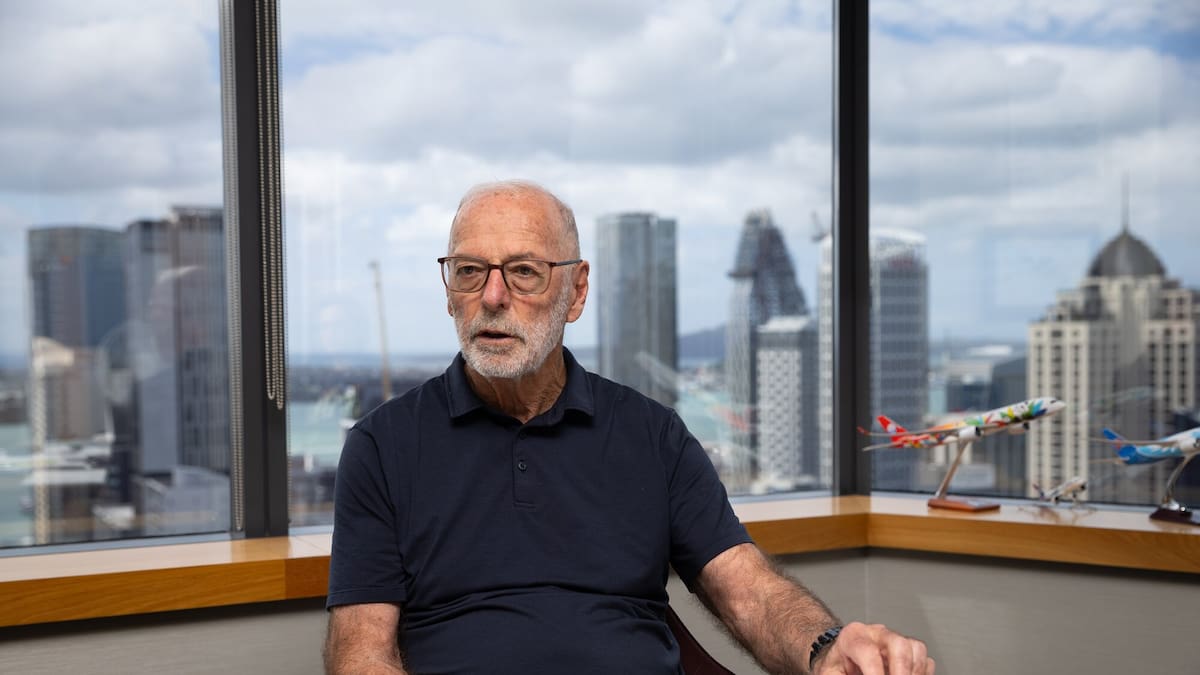
The 30-year Integrated Transport Plan will take care of our pipes, roads and the networks that keep our city running, Mayor Wayne Brown says. Photo / Sylvie Whinray
The Long-term Plan (LTP) is the 10-year budget that will deliver on these plans.
This global and local change means we must continually be critical of what our roles are to prepare for the incoming growth, but we also to make the most of the opportunities ahead. We must continue to build back better, faster, and cheaper.
My challenge to everyone considering our city’s future is simple: What is the problem you are trying to fix? There are too many people pushing solutions that don’t address the actual problem. This is a waste of money that must stop.
My agenda for this term is defined by five key pillars:
1. Stop the waste and make the most of what we have. Core maintenance and infrastructure matter. Rates affordability matters. Every dollar we spend is a dollar Aucklanders have earned; we must treat it with respect. If a project cannot be done better, faster, or cheaper, we should seriously question whether it should be done at all.
2. Operate as one council group. “Taking back control” was the theme of my first term. It means acting as a single organisation — aligning our CCOs, making better use of the Auckland Future Fund, and finally getting our stadia operating model right. The Government must see us as one joined-up group representing 40% of national GDP. Aucklanders expect coherence, not silos.
3. Fix Auckland’s transport system. An efficient, reliable transport network underpins productivity and quality of life. We must free up Auckland’s roads. That means reform, not just more “projects”. Now that the council is the road-controlling authority and we have regained control of Auckland Transport (AT), we can demand more ambition. We will move away from over-done projects with low return and towards easy fixes and technology-driven solutions like dynamic lanes and smarter intersections. Long-term planning must be done with us, not to us.
4. Build a greener, more efficient city. Pipes first, then roads, then buildings. This is about championing urban development that works for Aucklanders. Pitting generations against one another isn’t the way to find solutions here. Auckland needs to grow up to become a global city, not remain the world’s biggest suburb, stacked with congestion. This means adapting to climate change practically through our Making Space for Water programme and finally opening up our waterfront. Our new Auckland Urban Development Office will serve as a front door for developers, treating them as the single customer they are, as partners taking the risk to build the city we want.
5. Lift Auckland’s contribution to the economy. A “wait and see” approach will not work. Auckland must be open for business. We need jobs, investment, and innovation. That means a serious approach to Auckland as a destination: our city centre, technology and innovation and international relationships. It also means asking the Government for legislative change where necessary to unlock our potential. Advocating for a user-pays bed levy for major events funding, founding the Auckland Innovation and Technology
Alliance and forging city-to-city friendship agreements are just the beginning.
Taken together, this is about lifting the economy to build a more efficient global city while stopping waste and getting Auckland moving.
This is why the Auckland Deal matters. While it may not be as aspirational as some hoped, it signals a new way of working and is a foundational element of this upcoming Long-term Plan.
Auckland needs to grow up to become a global city, not remain the world’s biggest suburb, stacked with congestion. The Government needs to stop telling us what to do, focus on its own knitting, and step aside so that Auckland can reach its full potential as a global city.
Wayne Brown
My manifesto later this year will set out exactly how I expect any incoming government to build on this partnership.
The current Government is still overreaching into Auckland’s affairs in ways they don’t fully grasp. Their approach is often unprecedented and is not always in the spirit of partnership.
Regardless of who is in Wellington at the end of the year, our job remains the same: navigating half-baked ideas — like rates caps — while staying anchored to what is best for Auckland.
In this election year, we must remind everyone that elections are won or lost in Auckland.
In size and scope, our city is more akin to an Australian state. The Auckland Deal recognises this, but the message to Wellington must remain clear: the Government does people; we do places.
The Government needs to stop telling us what to do, focus on its own knitting, and step aside so that Auckland can reach its full potential as a global city.