
In science, one thing often — perhaps even invariably — leads to another. But the connections are rarely as intriguing as this: Discovery of a newly evolved ability to break down a synthetic drug leading to development of a compound that can clean up soil contaminated by military explosives.
Half a dozen years ago, College of Biological Sciences Distinguished McKnight University Professor Larry Wackett was studying how bacteria degrade metformin, a diabetes medication commonly found in wastewater. After isolating the protein that does the job, he began to wonder whether bacteria might be enlisted to break down other problem chemicals not found in nature.
We can publish good science and teach people how these things come about in the environment, but then at the same time if it gets used in a practical sense, then it’s so much the better.
Professor Larry Wackett
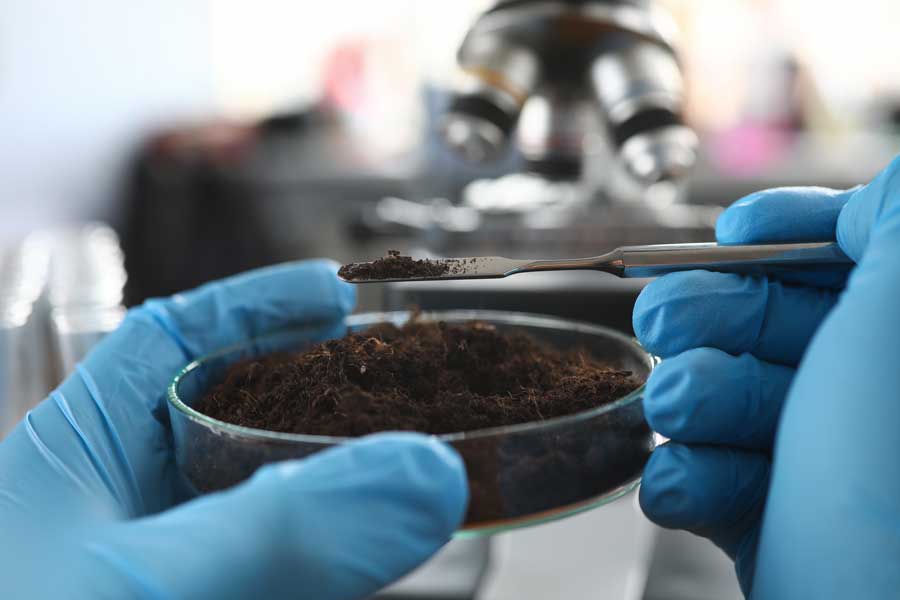
One stood out: Nitroguanidine, a modern substitute for TNT. In battlefields, on training grounds and at munitions testing sites around the world, untold amounts of the explosive have soaked into soils. There, microbes partly degrade it into another compound, nitrosoguanidine, which causes mutations and likely cancer in humans.
“Nitroguanidine is being used by militaries around the world, and it’s being manufactured all around the world,” Wackett says. “We thought, well, this is an emerging problem. Let’s get ahead of it and figure out how it’s degraded.”
Our researchers and students are creating a better tomorrow by uncovering new knowledge and solutions to some of the most complex challenges facing society today. Learn more about research opportunities at an R1 university.
Following a similar protocol to that used for the metformin research, Wackett and postdoctoral fellow Joel Rankin identified enzymes that could break down both nitroguanidine and nitrosoguanidine into harmless gases, then determined their molecular structures and evolutionary history.
Wackett is now working with Master of Biological Sciences student Hannah Dvorak to test it in different soils, and is collaborating with former doctoral student Serina Robinson, now at the Swiss Federal Institute of Aquatic Science and Technology, to help fine-tune the molecule’s efficacy.
Even as the team is working to optimize the enzyme, Wackett is pursuing opportunities to bring it to practical application. The first step in that process is to produce more than lab-sized quantities; to his good fortune, the University of Minnesota two years ago opened a state-of-the-art biomanufacturing facility on St. Paul Campus with everything needed to scale production to the next level. Wackett is now working to make enough of the molecule for large-scale testing.
“Our hope is to be able to get funding to field test — and, ultimately, to have the enzyme applied to fresh spills to destroy nitroguanidine rather than leaving it lurking where it could cause problems for decades to come,” he says. “We can publish good science and teach people how these things come about in the environment, but then at the same time if it gets used in a practical sense, then it’s so much the better.”
This story is adapted from the College of Biological Sciences
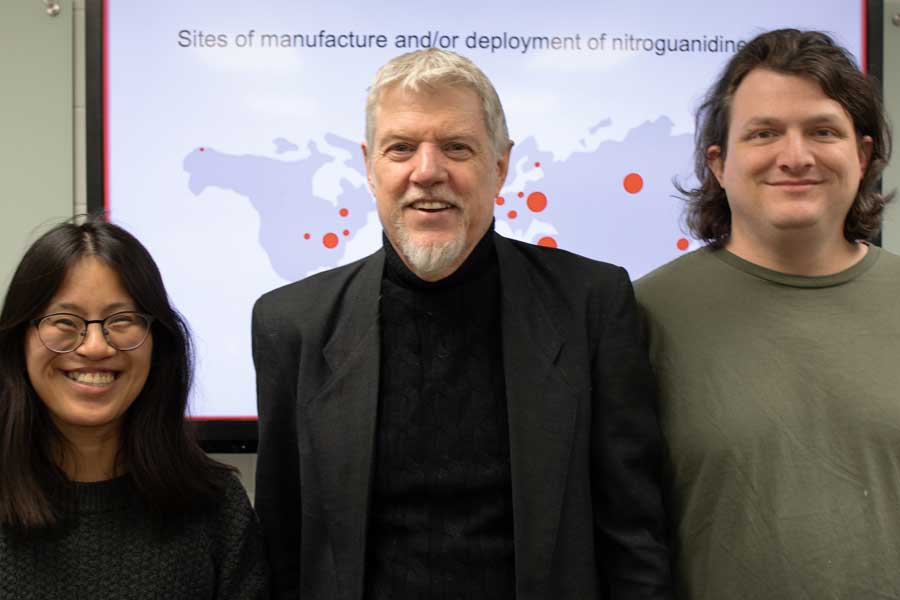
Pictured from left: Master of Biological Sciences student Hannah Dvorak, Distinguished McKnight University professor Larry Wackett, and postdoctoral fellow Joel Rankin.