
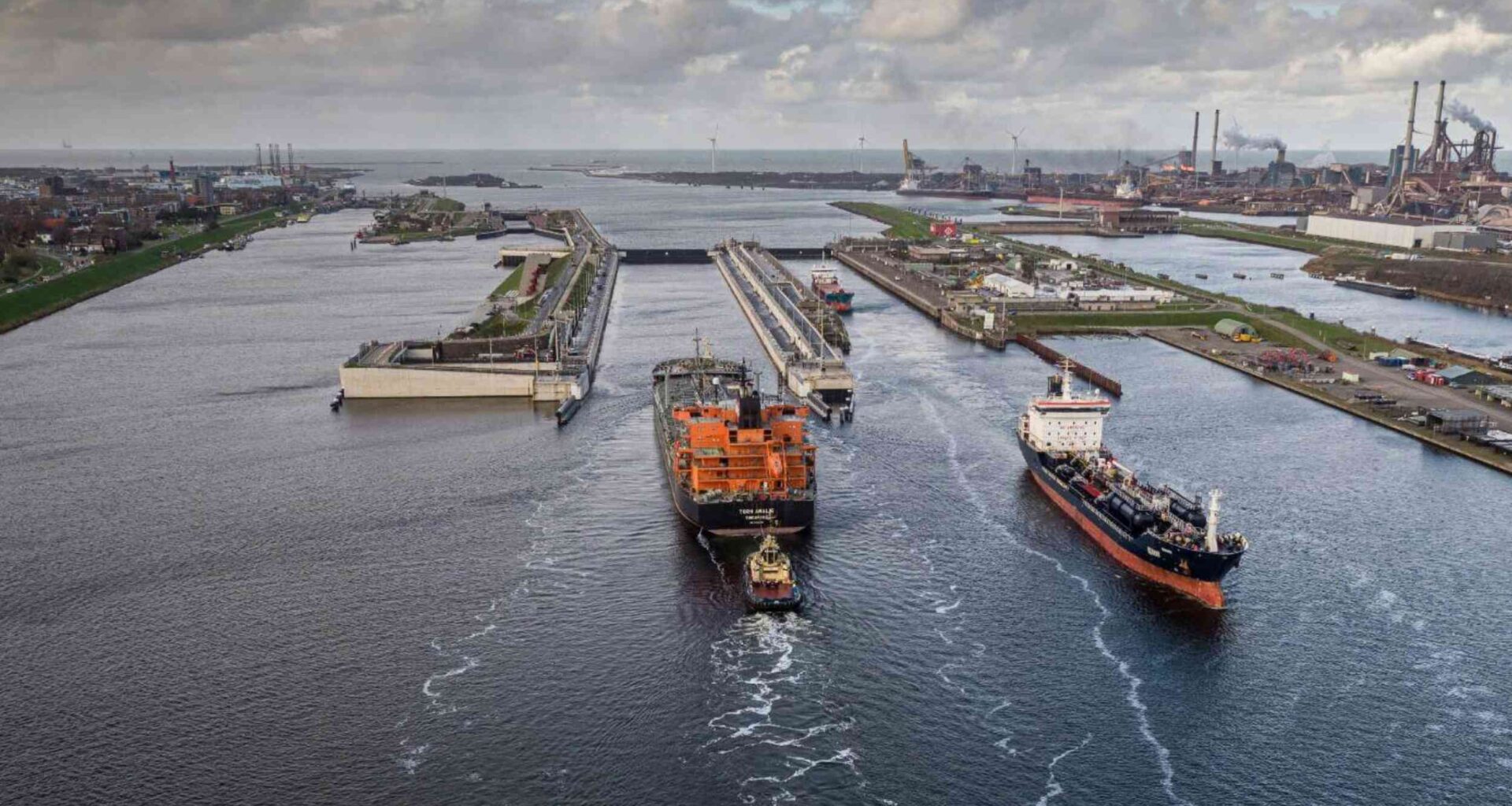
Sea locks have emerged as a far more dynamic source of inland saltwater than earlier estimates captured, with routine operations driving significant intrusion.
That finding reframes everyday gate cycles as a central pressure point on freshwater systems, especially when drought limits the ability to flush salt back out.
Salt inside sea locks

Field measurements from working sea locks showed that salt does not simply rush in once and vanish after a single gate cycle.
Using those measurements, researcher Otto M. Weiler at Deltares tested a phase-by-phase model and found operation choices strongly changed the total load.
At Deltares, validation against field data showed the model underestimated salt by 7-10%, close enough to expose weak assumptions.
Older estimates often treated a gate opening like a full chamber exchange, a shortcut that can overstate or misplace risk.
Why assumptions fail
Older formulas often assumed the chamber effectively swapped most of its contents once a gate opened.
Instead, the new model tracks water volumes through each stage of a locking cycle rather than treating the event as one blur.
“Details of this operation have a larger influence than is often assumed,” wrote Weiler in the paper.
That finer view makes it easier to test future traffic patterns, new locks, or different operating rules before changes are built.
What the gates do
Each cycle moves water through water-level changes, gate opening, and ship movement, so the salt load builds in steps.
Once the gate opens, a lock exchange, the back-and-forth swap driven by density differences, starts pulling denser seawater inward. Because salty water is heavier, it sinks low and pushes fresher water back across the chamber.
Those repeated exchanges mean a chamber can stay partly brackish, changing what happens the next time operators open it.
Traffic changes everything
Heavier ship traffic can raise salt intrusion, saltwater moving into water that should stay fresh, even when the structure stays the same.
Longer gate-open times give dense water more time to move, while more vessels can change how much water the chamber displaces.
Ship displacement was usually smaller, with average vessel volume often around 10% or less of a chamber.
Even so, ship movement still alters the water left behind, which changes the starting point for the next cycle.
Why timing matters
Short gate openings do more than reduce one burst of inflow, because they also leave less salty water behind.
After a partial exchange, the next opening starts with a weaker contrast between waters, which slows the next inward push.
Inside the chamber, that carryover leaves the water more brackish, so the system remembers what happened before.
That memory explains why small timing changes can have outsized effects across many lock cycles.
Bubble screens help
At the gate, bubble screens can act as curtains of rising air bubbles and weaken the dense bottom flow that carries salt inland.
Related laboratory work found bubble size changed performance, showing design details matter as much as air flow.
Smaller bubbles made a stronger surface flow in one case, yet larger bubbles separated fresh and salt water better in another.
That tradeoff means a mitigation device cannot be judged by hardware alone, since the lock schedule helps decide the outcome.
Drought can dominate
Where locks dominate the salt load, the model suggests drought can bite harder than sea level rise by cutting flushing water.
With less river water available, managers have fewer chances to wash salt back out after it enters inland canals.
Dutch freshwater planning already expects drier summers and more shortages, which makes that warning feel more immediate than abstract.
That does not make sea level rise irrelevant, but it does reorder which pressure may hit first in some systems.
Planning new locks
New sea locks are often built for bigger ships and heavier use, which can enlarge the problem before anyone notices.
Rather than waiting for years of measurements, engineers can use this model in places where no long operating record exists.
That matters for canals, coastal reservoirs, and dammed lakes where one lock may dominate the inland salt source.
Early estimates become more useful when they reflect real lock behavior instead of relying on one conservative shortcut.
From model to action
Water managers often need answers before every vessel movement is known, especially during drought or fast-changing conditions.
For that reason, the model can run on average operating data and still estimate the salt moving through a lock.
It can also feed broader dispersion models, tools that estimate how the salt spreads after entry.
This connection helps managers link a gate decision at one structure to water quality farther inland.
Freshwater choices ahead
In this model, a lock becomes a controllable source of inland salt rather than a passive passage for ships.
Better timing, better barriers, and better forecasts could keep navigation moving while protecting freshwater under more stressful conditions.
The study is published in the Journal of Coastal and Hydraulic Structures.
—–
Like what you read? Subscribe to our newsletter for engaging articles, exclusive content, and the latest updates.
Check us out on EarthSnap, a free app brought to you by Eric Ralls and Earth.com.
—–