
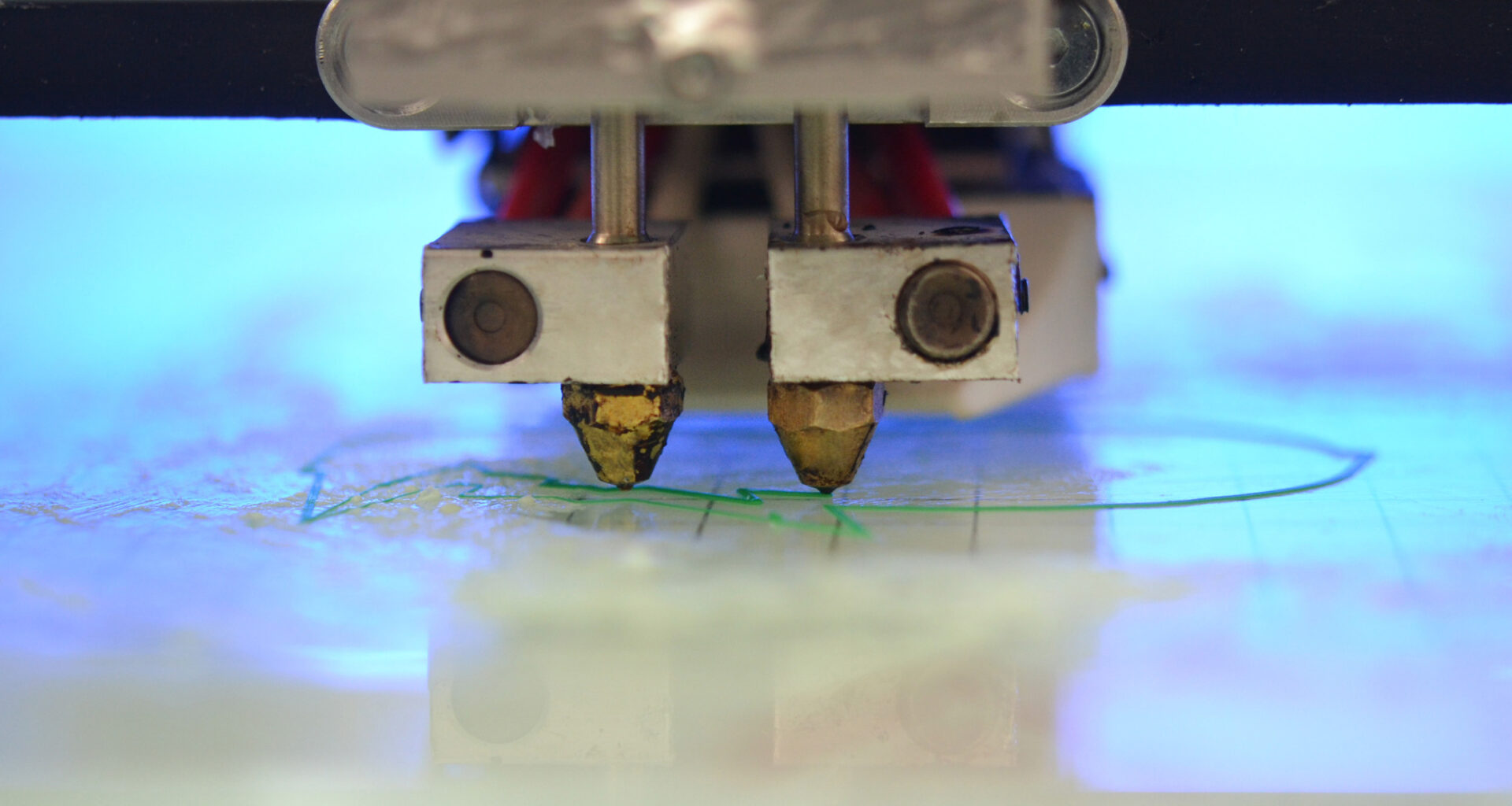
Wood powder has been transformed into a 3D-printable material that continues to glow after ultraviolet light is removed.
That result turns an abundant, renewable resource into a functional material that can emit light without power, expanding how wood can be used in engineered systems.
Wood produces afterglow

In the printed samples, the afterglow remained visible for 1.2 seconds after the ultraviolet lamp went dark.
At Northeast Forestry University (NEFU), associate professor Yingxiang Zhai and colleagues traced that afterglow to chemically reworked wood powder.
Instead of adding petroleum-based binders, they attached oxygen-rich chemical groups to the wood and made the material printable in water.
That single change linked brightness and printability, which had usually worked against each other in wood inks.
How glow is sustained
Added groups nudged wood’s internal structure away from neat crystal order and left more room for molecules to lock together.
Those added hydrogen bonds, weak attractions that help neighboring molecules stay put, limited motion that normally drains away stored energy.
Wood’s two main ingredients both contributed, with one part of the glow arising from each. Because less energy leaked out as motion, the material kept emitting visible light after the lamp shut off.
What the numbers showed
Performance rose sharply as the chemical modification increased, and the afterglow lifetime climbed from 35.4 to 358.7 ms.
Along the same path, the quantum yield, the share of absorbed energy released as light, rose from 0.93% to 4.60%.
Earlier formulas cited in the paper lasted 28.97 ms and 72.74 ms, leaving this wood well ahead. That timing suits brief markers and sensors, but not objects meant to glow all night.
Printing process explained
Printing only worked because the modified wood formed a water-based paste that flowed through a nozzle and then stiffened again.
Engineers call that direct ink writing, a form of 3D printing that extrudes paste through a nozzle, and it demands careful control of flow.
Under low force, the paste moved smoothly; once deposited, it recovered enough firmness to hold the intended shape.
That balance let the team print intricate forms without adding the plastic-rich binders many wood inks still depend on.
How shapes stayed
After drying, the printed pieces kept about 90% of their original shape, despite some shrinkage as water evaporated.
Internal porosity, a network of tiny open spaces, appeared as the particles locked together without extra hardening steps.
The material also showed good mechanical behavior and resistance to burning, which matters if glowing parts are meant to be handled.
Practical use will still depend on setting, because objects without permanent links can dissolve in water during storage or handling.
How color changed
The color of the light was not fixed, since shorter and longer ultraviolet wavelengths activated different parts of the modified wood.
In one test, the researchers added a common dye and produced a red afterglow with a 78.08 ms lifetime.
Humidity also changed performance, yet the material recovered across drying and humidity cycles instead of fading away permanently.
That responsiveness points to sensing uses, where a material’s glow can report changes in its surroundings.
Recycling adds value
Water did not just threaten the structures; it also made them reusable, because printed parts could be turned back into ink.
After reprocessing, the material was printed again several times while keeping its stable light-emitting behavior.
Environmental modeling strengthened the case: the ink’s global warming potential, a standard estimate of warming impact, was 12.03 kg carbon dioxide equivalent.
That figure came in at 27.6% of simulated wood ink and 56.4% of another plant-fiber ink.
Wood gains new function
A paper had already shown that natural wood could glow weakly after a simpler chemical treatment.
Separate work printed water-based wood structures, but light emission was not its main aim.
Within NEFU’s broader research line, this material mattered because it merged those two directions, turning one biomass feedstock into ink and light.
That merger narrowed a gap between lab demonstrations and objects that can be shaped for specific jobs.
Uses for glowing wood
NEFU’s results point first to custom parts for interiors, anti-counterfeiting marks, and humidity-responsive sensing tools.
Its glow appears after the excitation source stops, which helps a printed mark stand out against ordinary fluorescent backgrounds.
Large structural uses seem farther away, since afterglow remains brief and water stability still depends on the final design.
Even with those limits, wood that prints, glows, and recycles cleanly opens a rare combination of functions in one feedstock.
What comes next
Researchers now need to stretch the glow time, harden water resistance where needed, and test how these prints age outdoors.
If those steps succeed, a familiar material may start doing quiet jobs that ordinary wood never could before.
The study is published in Nature.
—–
Like what you read? Subscribe to our newsletter for engaging articles, exclusive content, and the latest updates.
Check us out on EarthSnap, a free app brought to you by Eric Ralls and Earth.com.
—–