
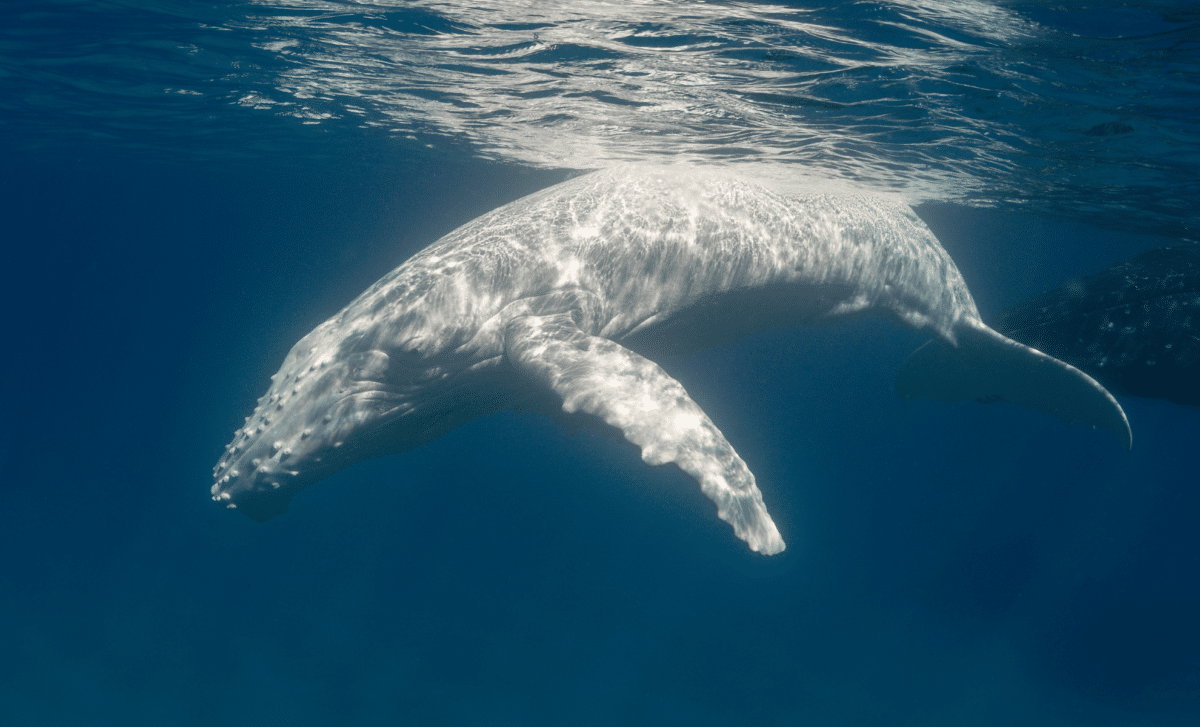
Australian photographer Jono Allen has captured the first-ever footage of an extraordinary white humpback whale calf, named Mãhina. This groundbreaking discovery, featured by Yahoo Life, showcases the incredible beauty of nature while shedding light on the importance of global conservation efforts. The footage has not only won Allen the World Nature Photographer of the Year award, but it has also given the world a glimpse into one of the rarest and most captivating moments in marine life.
A Once-in-a-Lifetime Encounter
Australian photographer Jono Allen’s remarkable experience began like any other day of shooting marine life in the crystal-clear waters of Tonga. However, what unfolded before him was nothing short of extraordinary. Allen spotted Mãhina, a rare white humpback whale calf, swimming alongside its protective mother and a male escort. With only a handful of known white humpback whales in existence, Mãhina’s presence represents a rare phenomenon, one that occurs in roughly one out of every 40,000 humpback whale births. The calf’s pure white color sets it apart from the hundreds of thousands of humpback whales that populate the world’s oceans.
“I drop my camera, calm my nerves, slowly breathed, and come back to my senses,” Allen shared in an Instagram post after the encounter. The moment was far from ordinary, and the sheer rarity of the experience took Allen by surprise. It was a powerful reminder of the beauty and fragility of the natural world, a scene that would forever be etched in his memory.
The Emotional Weight of the Discovery
As Allen took in the sight of Mãhina and her companions, he experienced a wave of emotions that any nature photographer would understand. The calm presence of the mother whale and the gentle curiosity of the calf created an atmosphere of awe and reverence. Allen reflected on his ability to stay composed and document the interaction, despite the intense feelings of excitement and wonder. “I began to gently engage with Mãhina as I have with many other beautiful curious yet cautious humpback whale calves I have met,” Allen explained, acknowledging the patience required to capture such a rare moment.
The encounter wasn’t just a professional triumph for Allen; it was a personal one, as well. The opportunity to witness this rare sight firsthand deepened his appreciation for the importance of wildlife conservation. “This encounter will forever be the most beautiful, breathtaking, and heart-stopping moment I have ever experienced underwater,” he said, emphasizing the profound impact the moment had on him both as a photographer and as a passionate conservationist.
The Global Significance of Mãhina’s Birth
White humpback whales are incredibly rare, with only a few documented cases worldwide. Mãhina, however, holds additional significance as the first of its kind to be seen and recorded in Tonga, a region known for its rich marine biodiversity. The birth of such a rare calf is a reminder of how critical it is to protect marine life and preserve the natural habitats these species depend on. Global conservation efforts, including the protection of humpback whales from past generations of whaling, have played a crucial role in allowing such rare phenomena to occur.
Allen’s stunning footage of Mãhina is a testament to the strides made in wildlife protection. By capturing and sharing these moments, he raises awareness about the need to safeguard vulnerable species and ecosystems. Through his lens, viewers around the world have been granted the rare privilege of seeing an animal that few will ever encounter in person.
A Call to Action for Conservation
This remarkable footage of Mãhina is more than just a moment of awe; it serves as a powerful call to action. The rare sighting of the white humpback whale calf reminds us that the work of conservationists and marine protection organizations is far from finished. Although the endangered humpback whale population has rebounded thanks to decades of international protection efforts, there is still much to be done to ensure that species like Mãhina continue to thrive in the world’s oceans.
For Allen, the experience solidified his belief in the importance of preserving these creatures and their habitats. “We have an obligation to protect these magnificent creatures and their natural habitats so that future generations may experience the same awe and wonder that I felt,” he shared, urging his audience to consider their role in safeguarding the planet’s biodiversity.