
Unlike past years, there were no marine reserve breaches, the spokesman said.
Nationally, there were almost 13,000 recreational inspections, with a compliance rate of about 94%.
In Auckland, officers carried out 5806 inspections, uncovering 361 breaches. Many led to warnings, and more than 85 infringement notices were issued. Officers are still investigating more than 25 Auckland cases.
Steve Ham, Fisheries New Zealand director of fisheries compliance, says most rule-breakinginvolved undersized or excess fish. In many cases, officers educated fishers rather than issue fines.
“In saying that, we will prosecute when required. For example, we recently prosecuted an Auckland man for selling recreational fish,” Ham said. “This man was banned by the court from all fishing for three years.”
Set nets remain a major concern.
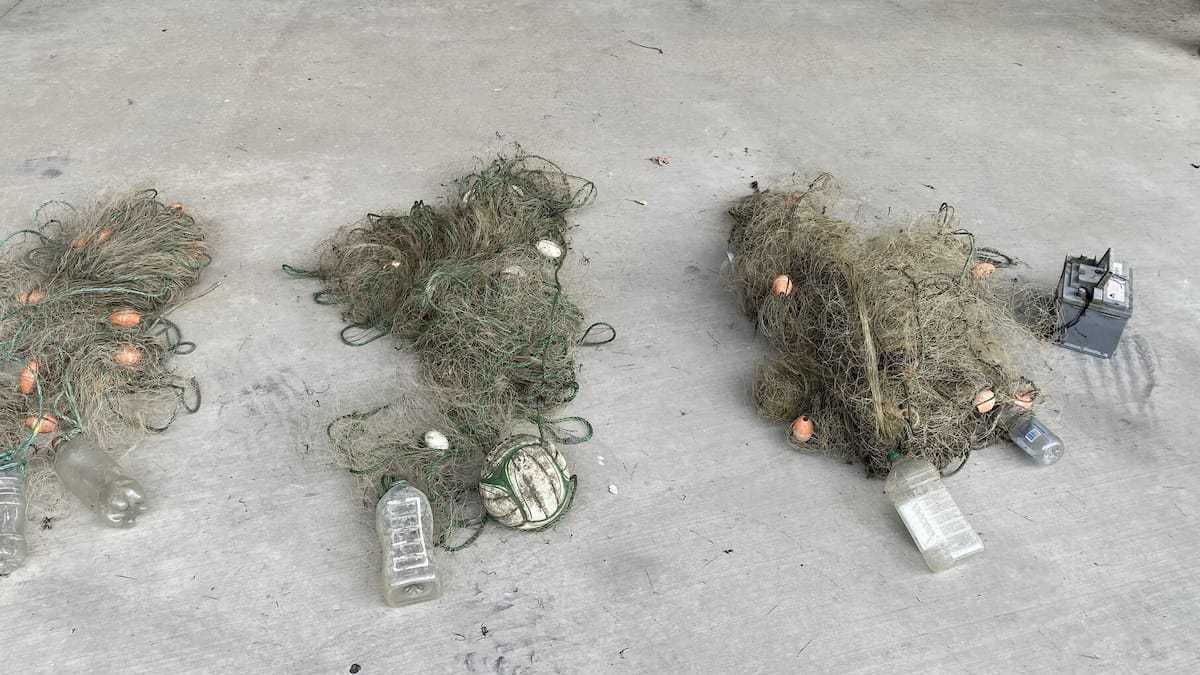
Ham said officers regularly confiscate illegal nets and recently found three tied together, covering 160m.
“Some fishers are just blatantly breaking the rules, and while most people will face a $250 fine, in more serious situations, the courts can issue more severe fines.”
Officers have also found set nets without required markings or buoys displaying contact details – a safety hazard to other water users.
Among the most concerning discoveries nationally was the use of a car battery as a set net anchor, which Ham described as environmentally irresponsible.
Officers also found a decoy duck used to disguise a net, and “staked” nets that left fish dead above the waterline.
Further south, the Wellington region recorded 2435 recreational inspections, with 192 instances of non-compliance, mostly for excess or undersized pāua and crayfish.
Fishery Officers also issued about 100 infringement notices.
More serious cases, such as people selling illegal takes, are put before the court, Ham said.
In the South Island, Fishery Officers undertook 4488 inspections and recorded 261 breaches.
Officers issued 93 infringements and are still investigating about 25 cases.
Many involved excess pāua, crayfish and undersized blue cod or cod being landed in an illegal state.
Some of the undersized paua seized from recreational fishers during MPI’s 2025/26 summer surveillance period.
Steve Ham, Fisheries New Zealand director of fisheries compliance.
Ham said officers were still finding blue cod being used as bait in Southland and Otago, despite rules requiring the species to be landed whole or gutted – or in some areas, headed and gutted.
This behaviour threatens the sustainability of blue cod fisheries, he said.
Ham urged recreational fishers to know the rules before heading out. He recommended people download the free NZ Fishing Rules mobile app for up-to-date information on limits, size rules, closures and gear restrictions. Set netting regulations can be found here.
Anyone who suspects illegal activity is asked to report it through MPI’s 0800 4 POACHER line (0800 476 224).
Sarah Curtis is a news reporter for the Northern Advocate, focusing on a wide range of issues. She has nearly 20 years’ experience in journalism, most of which she spent court reporting in Gisborne and on the East Coast.