
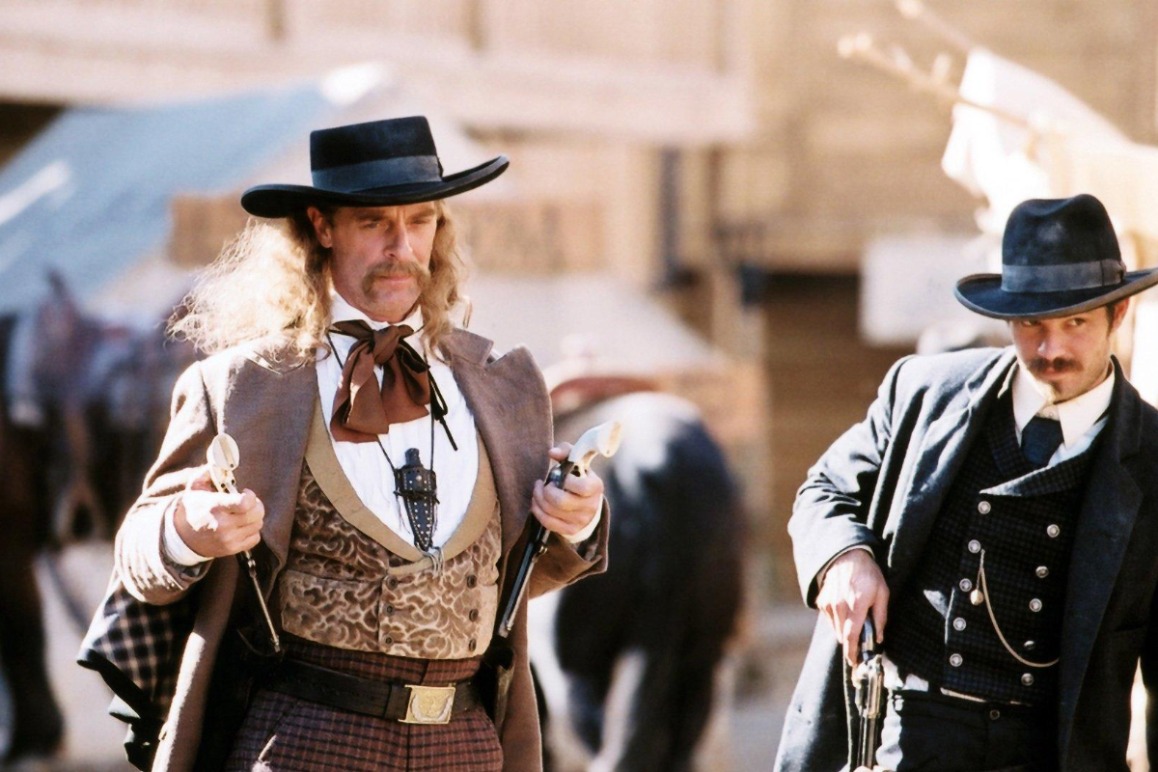
They spoke like Shakespeare and cursed like devils, yet some swear there was not a single bad hour. Which frontier town turned television into high art with mud on its boots?
In HBO’s history, few series arrived with the swagger and grime of a western that turned a gold camp into a theater of power. Premiering on March 21, 2004, David Milch’s Deadwood planted its stakes in the 1870s Dakota Territory, its pilot steered by Walter Hill to Emmy-winning effect. Seth Bullock and Sol Star push for order as Al Swearengen and Wild Bill Hickok shape the town’s fortunes, their world voiced in dialogue that veers from Shakespearean cadence to unvarnished profanity, with sparks flying even in Jack McCall’s exchanges. The ride ended after three seasons and returned for a 2019 farewell, yet its craft still sets the benchmark for HBO’s ambitions.
HBO’s golden era and the birth of Deadwood
HBO spent more than 30 years reshaping what television dares to attempt; 22 years ago, the network unveiled Deadwood with a flawless pilot. Premiering on March 21, 2004, David Milch’s western walked viewers straight into the 1870s Dakota Territory. The camp felt half-built and fully alive, its messy push-pull between commerce and law already palpable, indeed almost mythic in its muck.
A pilot episode for the ages
The opener arrived with uncommon precision and grit, guided by (Emmy-winning director Walter Hill). It sets the moral coordinates and stakes without sermonizing. We meet the men who will chart Deadwood’s fate: a principled retailer with a sheriff’s past, his steady partner, a saloon despot who brokers power, and a celebrity gunslinger whose legend distorts every room he enters. In addition to character, the pilot maps conflicts and hustles.
Seth Bullock (Timothy Olyphant), restless conscience edging toward duty
Sol Star (John Hawkes), pragmatic ballast and builder
Al Swearengen (Ian McShane), proprietor and ruthless rainmaker
Wild Bill Hickok, reputation that warps the town’s gravity
https://youtu.be/_skOXRbVLLU?si=rYT349zpi97P7MLV
The language of Deadwood: Shakespearean grit
What truly separates Deadwood is its tongue. Milch fuses street profanity with cadences that critics called “Shakespearean” (and the result is startling). The dialogue lands both poetic and visceral; clauses snap, then unspool like verse. For example, Jack McCall’s unfiltered barbs at Wild Bill Hickok turn simple exchanges into duels, revealing bruised pride, frontier etiquette, and the show’s faith that language can draw blood.
Enduring legacy despite a short lifespan
Deadwood lasted only 3 seasons, yet its footprint keeps growing. The series’ consistency remains striking, with even the lowest-rated episodes holding strong (7.9/10 on IMDb). HBO answered long-simmering hopes in 2019 with Deadwood: The Movie, a fitting coda rather than a reset. This is the case study many writers cite when chasing character-driven drama and world-building that feels excavated, not arranged.