
The pattern ought to be familiar by now. The president makes a bold pro-Israel military move in the Middle East. Israel’s principal adversary retaliates by restricting the flow of oil through the Gulf. The economic consequences look so grim — the nightmare combination of stagnation and inflation — that the president hastily switches to diplomacy.
If the past four weeks seem familiar — at least to older readers — it is because this is what happened in 1973. The catalyst was Richard Nixon’s decision to airlift a colossal military aid package to Israel. Nixon wanted to tilt the balance of power in the Middle East decisively in Israel’s favour following the Arab states’ surprise attack on Yom Kippur, October 6.
The retaliation took the form of oil price hikes by Middle Eastern producers, culminating in an embargo on oil exports to the United States imposed on the orders of King Faisal of Saudi Arabia on October 17. The ultimate effect was to nearly quadruple the price of oil on the world market.
Nixon, Henry Kissinger and other senior US officials had been warned that this might happen. As Martin Indyk showed in his excellent 2021 book Master of the Game: Henry Kissinger and the Art of Middle East Diplomacy, they ignored those warnings.
Kissinger was dismayed at the situation he now found himself in. As he fumed to his staff, in the 19th century the western powers would simply have invaded Saudi Arabia and carved up its oil fields. The defence secretary Jim Schlesinger even drew up a plan to occupy the Arabian oil fields “as a last resort”.
Stunned by the economic consequences and their likely political cost, Nixon instructed Kissinger to get the embargo lifted. The secretary of state made his first trip to Riyadh on November 8. For all his skill as a negotiator, and for all the shuttle diplomacy he undertook, it took more than four months to get the embargo lifted. By that time the energy supply shock had been enough to push the US economy, and much of the rest of the industrial world, into recession. Is something similar happening now as a result of President Trump’s war?
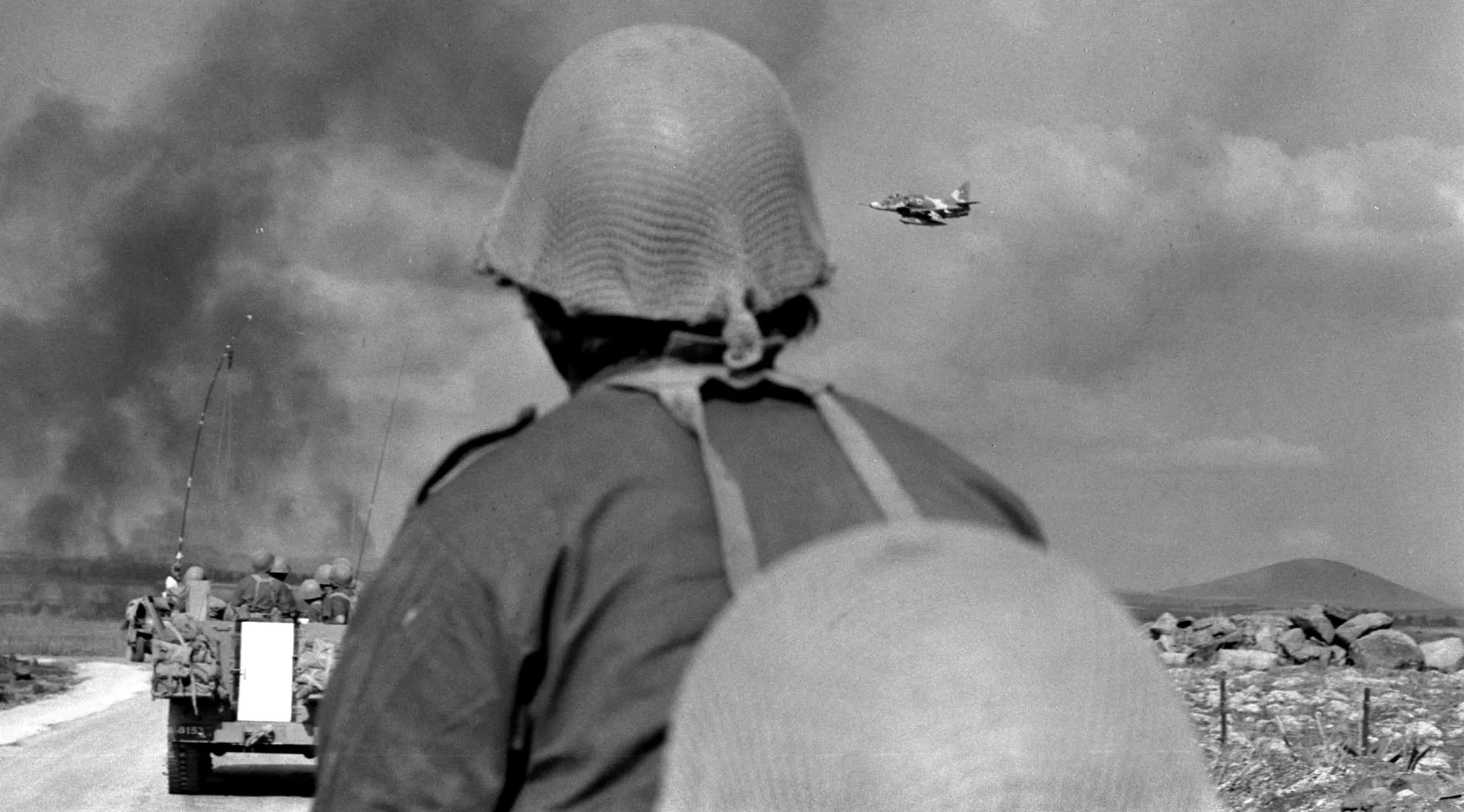 Israeli infantry advance, two days into the Yom Kippur war, which led on to the 1973 oil crisisShlomo Arad/GPO/Getty Images
I have heard the argument that, by switching back to diplomacy with Iran, Trump has sufficiently reassured markets to avoid a recession. This argument is usually backfilled with the claim that nothing can stop the mighty artificial intelligence boom. I am sceptical. First, Trump has effectively deferred one military option — striking Iran’s power stations.
The rest of the war goes on. Air strikes on other Iranian targets go on. US ground forces — special forces, marines and others — converge on the Gulf. And why would the Iranians settle in a hurry? They have been blindsided by two surprise attacks in less than a year, each of which interrupted a period of diplomacy.
More importantly, they understand game theory. Faced with a gambler-bully who is bluffing roughly half the time, the dominant strategy is always to retaliate with additional force: “tit-for-tat plus”. That is what the Chinese did last year by matching Trump’s tariffs and then restricting exports of the rare earth elements it monopolises. That is what the Iranians did by firing missiles and drones not only at the Americans and Israelis attacking them but also at all their Gulf neighbours.
To use another 1970s analogy, we have a new Iran hostage crisis. In 1979-80 the hostages were the staff in the US embassy in Tehran. Today the hostages are the Gulf economies. The Iranian threats that forced Trump back to diplomacy were to mine the Strait of Hormuz and to strike at even more vital Gulf infrastructure than has already been hit — potentially even the desalination plants on which the Gulfies rely for their fresh water.
 A demonstration in front of the US embassy in Tehran during the 1979-80 hostage crisisALAIN MINGAM/GETTY IMAGES
The amount of economic damage depends on how long it will take to reopen the Strait of Hormuz but also on how long markets expect it to take. If it took Kissinger four months — when the US wasn’t a combatant in the war — why would Jared Kushner and Steve Witkoff do it in less? As they know only too well from their dealings with Vladimir Putin, wars that start quickly can take an agonisingly long time to end.
 Jared Kushner and the White House special envoy Steve Witkoff, right, have their work cut out trying to negotiate an end to the Iran warJacquelyn Martin/AP
The Gulf states have cut their output of crude by ten million barrels per day, roughly 10 per cent of the global total. Were the Strait of Hormuz reopened to normal traffic, it would take between two and four weeks to bring this back online, while some estimates are as high as two months. Qatar’s Ras Laffan plant, the source of nearly a fifth of the world’s liquefied natural gas (LNG), has been shut since March 2.
An Iranian missile strike has seriously damaged nearly a fifth of its capacity. Repairs could take up to five years. A piece in The Economist last week reckoned that even if Trump and Iran stopped fighting tomorrow, it would take “another four months before markets regained some semblance of normality”.
I described in my 2021 book Doom: The Politics of Catastrophe how disasters create cascades of second and third-order effects through the vast and complex network that is the global economy. Here we go again. Asian refiners’ output is down 8 per cent. The disruption to fertiliser supplies is hurting farmers from Iowa to India. There is “panic buying” of aluminium by carmakers that fear supplies could run out. Critical metals such as tungsten and germanium are soaring in price. I could go on.
For those who still believe a recession is not going to happen, I have a reading recommendation: my former student and erstwhile Hoover Institution colleague Tyler Goodspeed’s brilliant new book, Recession: The Real Reasons Economies Shrink and What to Do About It. The Goodspeed view is that economic expansions do not die of natural causes. Recessions, Goodspeed writes, are typically the result of “the confluence of random and mutually independent adverse shocks”. What kind of shock is most common? Energy shocks.
True, there have been recessions in which an energy shock played little or no part (1937-38, 1960-61, 2020). There have been recessions caused by a sudden contraction in the supply of a non-energy commodity — cotton, for example, which caused a recession in Britain in 1862. But energy shocks are part of the explanation for around half of American and British recessions — and that has been true for nearly 300 years.
It is commonly thought the 1721 British recession had something to do with speculative mania over the South Sea Company. Wrong: try the combination of a coal shortage and severe winter weather. Something similar happened in 1879. As Goodspeed shows, coal was so vital as an energy source for the Industrial Revolution that it played a key role in nearly all UK recessions of the early 20th century — in 1900, 1902, 1926 and 1927.
It was the same story in the US. The recession of 1899-1900 was the result of a six-week strike by the United Mine Workers of America. It was even worse in May 1902, when 150,000 coal workers went on strike for 163 days, leading to a chronic shortage of hard coal and a tripling in the price of inferior soft coal. It happened on both sides of the Atlantic in 1919 and 1920. In the General Strike of 1926, 1.1 million miners laid down their picks and shovels — and there was a deep recession. I am old enough to remember the final act of King Coal’s reign: the British miners’ strike of 1984.
By that time coal was much less dominant in the UK’s energy mix thanks to the discovery and development of North Sea oil. However, the rise of Queen Oil did not reduce the vulnerability of the US and UK economies to energy shocks. It merely transferred the leverage from Pennsylvanian, West Virginian, Welsh and Scottish miners to the monarchs and sheikhs with a claim to the subsoil rights in the region with the world’s cheapest and most abundant oil.
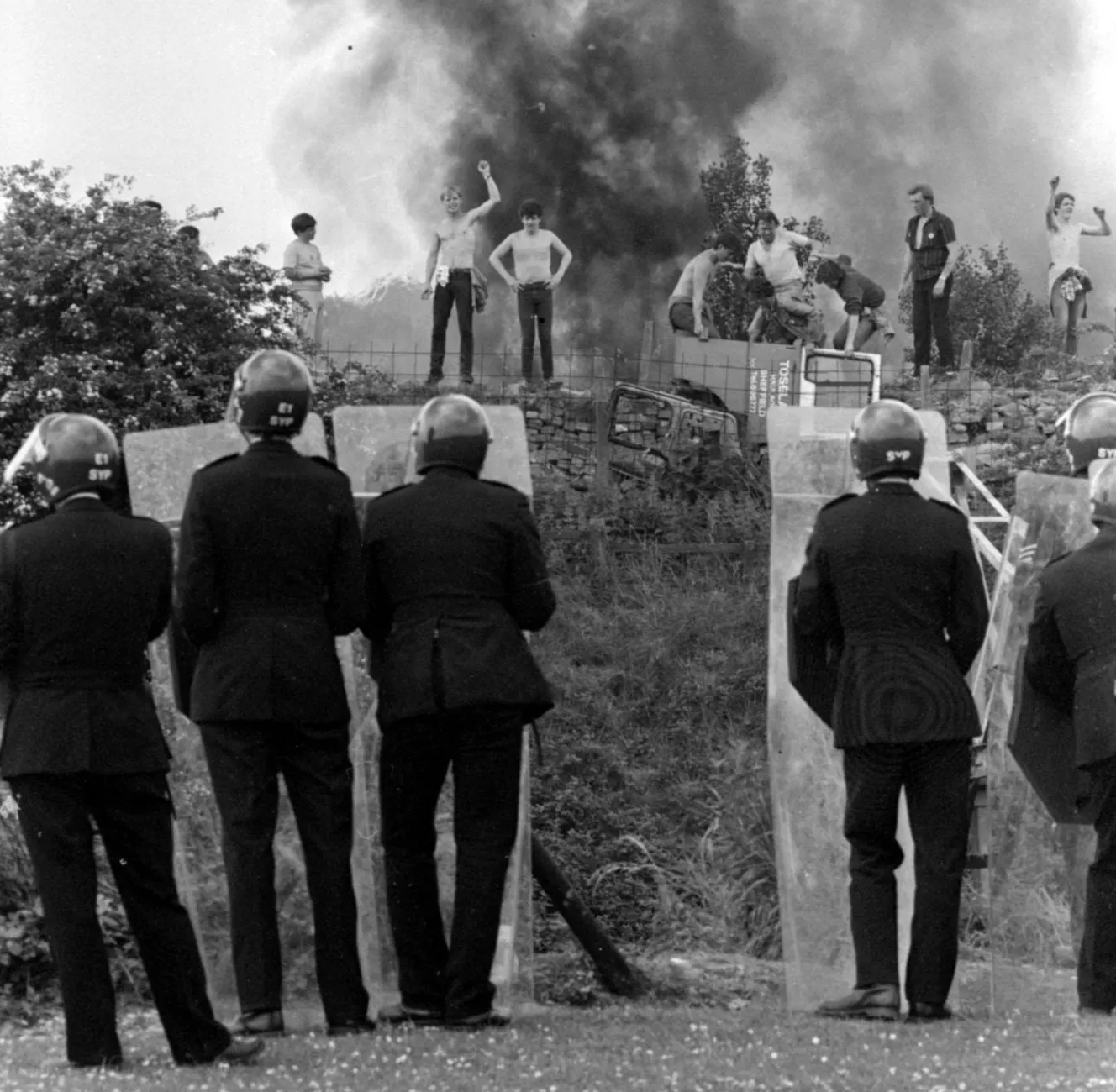 Riot police and a picket line at Orgreave coke works in Yorkshire during the miners’ strike in 1984 PA
In the petroleum age, what does it take for an energy shock to cause a recession? In his 2005 paper “Oil and the Macroeconomy”, the economist James Hamilton finds that “a 10 per cent increase in oil prices above their previous three-year high is predicted to reduce quarterly GDP growth by 1.4 per cent”. We have already passed that point in this crisis: $110 a barrel is 10 per cent above the trailing three-year figure and Brent crude hit that on March 20.
Hamilton’s work does not tell us what the effect is of a short price spike, as opposed to a prolonged one. The bad news (as my Greenmantle colleague Ryan Yost has pointed out) is that even quite short oil shocks can do a lot of economic damage if markets fear they may last longer than they do and they coincide with other adverse economic events.
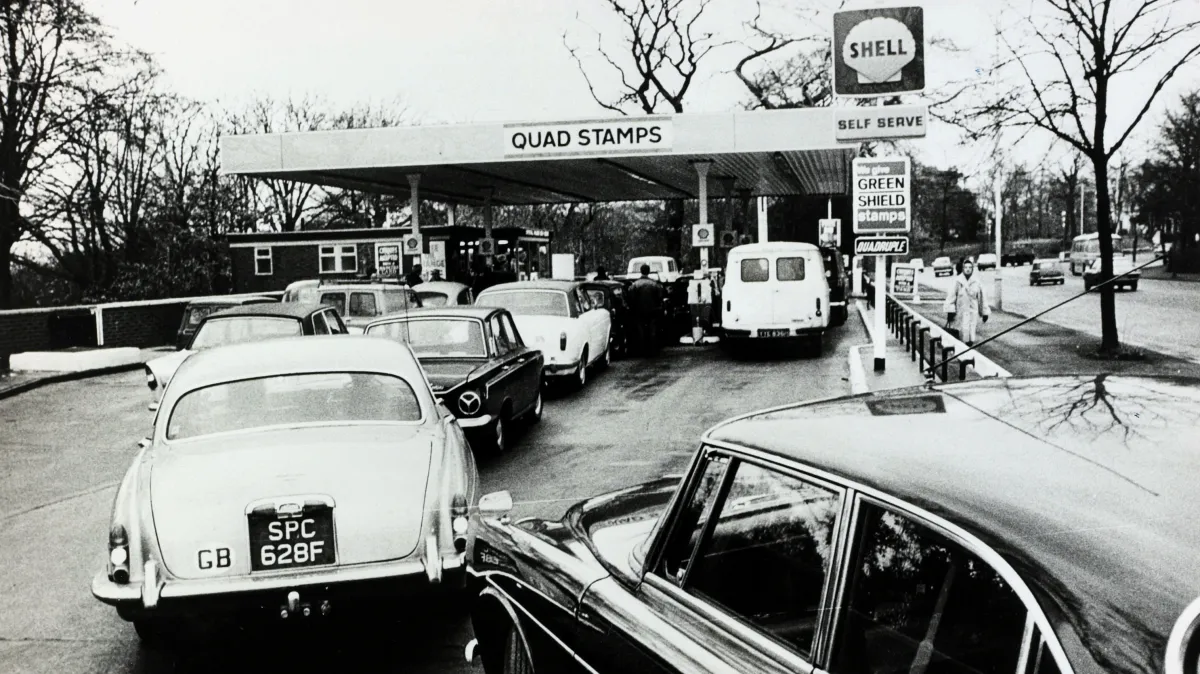
Boomers recall the petrol queues
Here is why. According to Goodspeed, energy shocks have an impact on demand in four ways. First, they reduce the amount of money households have to spend on other goods and services. Second, uncertainty prompts consumers to postpone big-ticket purchases. Third, fear about potential job losses leads consumers to save more and spend less. Finally, consumers cut back on buying energy-guzzling durable goods. Then there is the monetary dimension: the effect of rising energy costs on the central bank, which will tend to raise interest rates to dampen the effect on inflation.
Compare this with food price shocks. If the price of wheat soars because of a bad harvest or a disruption of trade, people can switch to less appealing but also nutritious substitutes. The problem with an energy shock is that if your economy runs on coal, you cannot switch to oil overnight. If you heat your house by burning oil, good luck switching to solar, wind or a heat pump while the US negotiates with Iran to reopen the Strait of Hormuz.
Oil-induced recessions happened in the US in 1948-49, 1953-54 and 1957-58, after the Suez Crisis disrupted about 12 per cent of global production. This hit western Europe harder than the US, but it crushed US exports. The 1970s were much worse, of course. Nixon, Kissinger and co greatly underestimated the power accumulated by the Arab oil producers who had wrested control of output and pricing from western companies. They ignored the signs of an overstretched global oil market and pressed ahead with environmental (“clean air”) policies that favoured oil over gas.
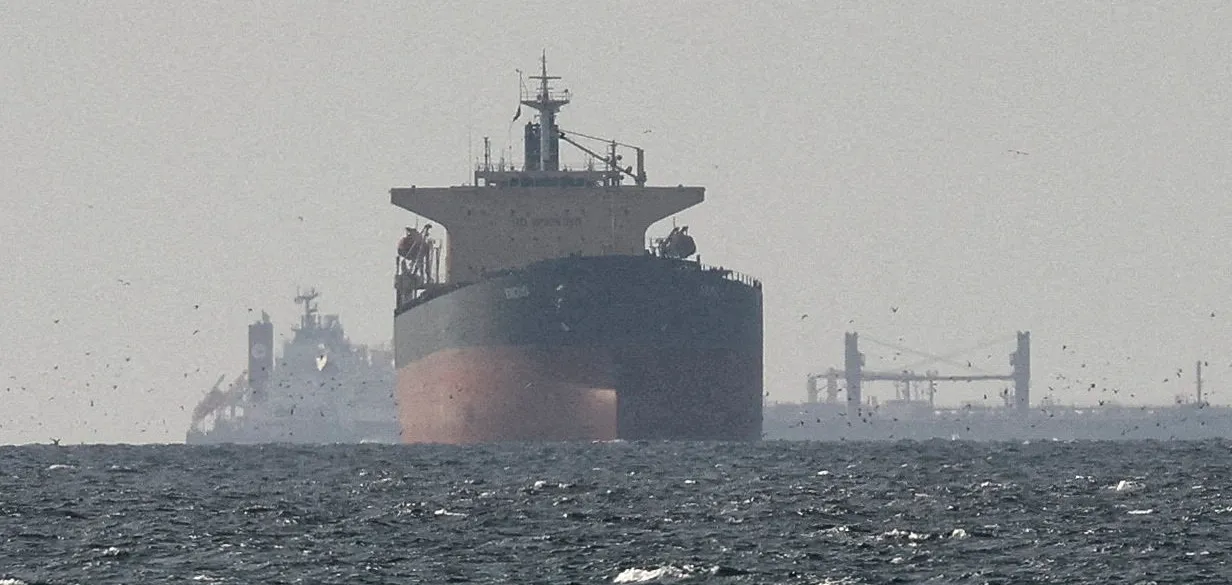 Cargo ships in the Gulf, near the Strait of Hormuz, on March 11, 2026Reuters
Between October and December 1973, the Arab members of Opec cut oil production by 4.4 million barrels a day (mmbd), then about 7.5 per cent of global supply. The US did not yet have a strategic petroleum reserve to cushion the blow. By January 1, 1974, the price of West Texas Intermediate crude had increased from $4.31 to $10.10. The US resorted to rationing. It did not help. The ensuing recession lasted from November 1973 to March 1975: 16 months.
It is the petrol shortages American boomers remember. By December 1973, time spent queueing for petrol in urban areas effectively added an additional 12 per cent to the cost of fuel, which had already risen by 50 per cent. It was even worse in rural areas. The conventional wisdom is that Watergate destroyed Nixon’s presidency. But the US stock market tanked by nearly 40 per cent between Nixon’s re-election in November 1972 and his resignation in August 1974. That was the energy crisis.
There was no Watergate in Britain, but Edward Heath still lost the February 1974 election. It was not Bob Woodward who wrecked political careers around the world in the 1970s; it was Queen Oil. And, of course, she did it all over again five years later.
Between September 1978 and January 1979 — from the first big protests in Iran to the shah’s flight — Iranian oil production collapsed from 5.8 mmbd to less than 0.5 mmbd, a contraction equivalent to roughly 7 per cent of world supply. The US economy entered recession in January 1980, emerging six months later.
There was a fresh blow to Iranian output when Iraq invaded in September 1980. Global oil production declined 22 per cent over three years. US petrol prices soared again. So did the queues at forecourts. On top of all this towered the implacable figure of the Federal Reserve chairman Paul Volcker, determined to break the inflationary spiral. He ultimately succeeded, but not until two years after the melancholy end of the presidency of Jimmy Carter, the man who had appointed him.
 Members of the Islamic Revolutionary Guards Corp in Tehran during the Iran-Iraq war, May 1985Kaveh Kazemi/Getty Images
The list goes on. Operation Desert Storm was an impressive military success, driving Saddam Hussein out of Kuwait, but the Gulf War was still a significant economic shock. The resulting US recession lasted from July 1990 to March 1991. Of course, that recession was not all about oil: the savings and loan crisis played its part. But the political casualty was President George Bush Sr, defeated in November 1992 by Bill Clinton. “It’s the economy, stupid,” translates as, “Another oil shock slays another incumbent.”
Other crises are growing too
The mistake many Americans make is to think: “But that’s history. We’re much less reliant on oil today. We’re now an oil exporter. And I drive a Tesla, don’t I?” However, as Goodspeed shows, energy shocks played a significant part in the recessions of 2001 and 2008. The latter case will surprise those convinced that the global financial crisis had its sole cause in the subprime mortgage market and the securitisation of dodgy liabilities by over-leveraged banks.
I, for one, had not appreciated that the all-time highest price for a gallon of petrol (adjusting for inflation) was in summer 2008. The US, Goodspeed writes, “was already eight months into an energy-induced recession before the collapse of Lehman Brothers and subsequent banking crisis”. Now that’s the kind of revisionism that makes the historian’s life worth living.
Could there be an energy shock without a recession? Yes. It has happened twice quite recently, in 2011-12 (when the Arab Spring and Libyan civil war removed about 1.5 mmbd of supply) and 2018 (when the first Trump administration exited the Obama-era nuclear deal with Iran). But in both cases the effect on global oil supply was roughly a quarter of what we see today. The present disruption to global oil supply, not to mention LNG and fertiliser, is the biggest of our lifetime.
We face, to repeat, the biggest energy shock of our lifetime. In addition, we have a mounting crisis in the opaque realm of private credit; a softening labour market, with jobs growth increasingly confined to the healthcare sector; and a central bank in the midst of a leadership transition, under pressure from the White House to cut rates but from the inflation data to do no such thing.
I know, I know: economists have predicted nine out of the last five recessions. But energy shocks have a far better record. I have noted before Trump’s strange, almost mimetic relationship to Nixon. He is now following him down an exceptionally perilous path.
A version of this article first appeared on The Free Press