
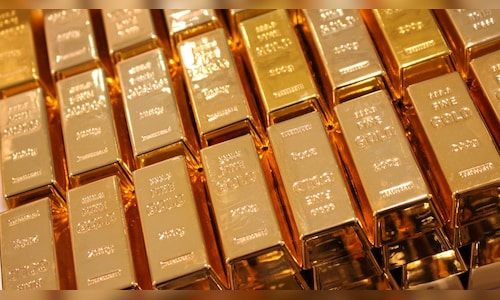
According to a report by bne Intellinews, Russia has begun selling physical gold from its central bank reserves for the first time in 25 years as the government attempts to plug a widening budget deficit driven by sustained military spending.
The report said that between 2022 and 2025, combined sales of gold and foreign currency exceeded RUB 15 trillion ($150 billion). In addition, Russia sold around RUB 3.5 trillion ($35 billion) worth of reserves in the first two months of 2026 alone. Data cited in the report showed that the Central Bank of Russia sold 300,000 ounces of gold in January and a further 200,000 ounces in February.
The development marks a notable shift in the country’s reserve management strategy.
Previously, most gold-related transactions were largely notional, involving internal transfers between the finance ministry and the central bank without any physical bullion entering the market. However, in recent months the central bank has begun selling physical gold directly into the market.
As a result, Russia’s gold reserves have declined to 74.3 million ounces, their lowest level in four years. The disposal of 14 tonnes of gold in January and February represents the largest two-month sale since the second quarter of 2002, when 58 tonnes were sold in a single tranche.
The report noted that fiscal pressures have intensified amid heavy military spending. Russia ended 2025 with a budget deficit of 2.6% of GDP, significantly higher than the initial estimate of 0.5%. Economists cited by the news agency suggested that the actual deficit may be closer to 3.4%, as some payments scheduled for December were deferred to 2026.
Budgetary strain has also been exacerbated by falling oil prices in the second half of the year and tighter US sanctions. Consequently, the share of oil and gas tax revenues has dropped to around 20% of total revenues, roughly half of pre-conflict levels.
bne Intellinews added that the decision to sell gold has coincided with a sharp surge in prices, which have crossed $5,000 per ounce. The rally has pushed Russia’s international reserves to more than $809 billion as of February 28, including about $300 billion in frozen assets. Gold holdings alone are now valued at approximately $384 billion.
Following sanctions imposed in 2022, Russia’s total reserves have risen by around $200 billion, recovering roughly two-thirds of the frozen funds.
Data from the World Gold Council cited in the report shows that Russia holds more than 2,000 tonnes of gold, making it the world’s fifth-largest sovereign holder. The country has steadily accumulated gold to reduce dependence on dollar-denominated assets, particularly after sanctions imposed following the annexation of Crimea in 2014 and the escalation of the conflict in 2022. At the same time, Russia has lowered its external debt to about 14% of GDP, among the lowest levels globally.
Also read: India discusses trade expansion with EU, Russia, other nations on sidelines of WTO
Since 2022, the finance ministry has relied on multiple funding channels to manage war-driven deficits. These include drawing from the National Welfare Fund, which still holds about RUB 4 trillion, enough to cover the current year’s projected deficit of 3% to 4% of GDP. The government has also increased issuance of domestic OFZ bonds and raised VAT rates by two percentage points, with VAT now accounting for about 40% of total revenues.
The move towards selling physical gold suggests a more direct drawdown of liquid reserves, highlighting the growing strain on Russia’s fiscal position as the conflict in Ukraine enters its fourth year.