
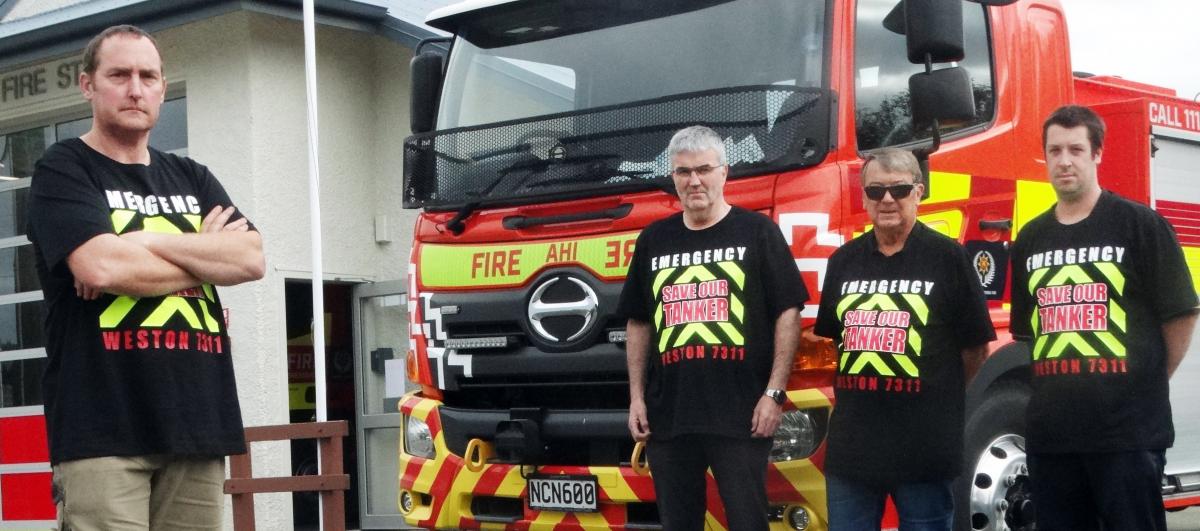
The Weston Volunteer Fire Brigade has been left in limbo about the future of its water tanker.
The brigade was informed this month by Fire and Emergency New Zealand (Fenz) its water tanker would be removed on Friday last week.
However, the removal was then delayed and on Wednesday a Fenz spokesperson said the decision was being reviewed.
‘‘Following consultation with volunteers this week, Fire and Emergency New Zealand is reviewing its decision regarding removal of the Weston brigade’s tanker.
‘‘We expect a final decision to be made in the coming weeks.’’
Weston Chief Fire Officer Richard Cranston said he and the brigade believed the water tanker was essential to their jobs.
‘‘The brigade has put a lot of effort into making our case for retaining the tanker because it is one of the busiest in the region.
‘‘We believe we can justify it because we have so many calls.
‘‘We believe it’s an asset to the North Otago community and we don’t believe that removing that asset from the North Otago area best serves that community.
‘‘We pride ourselves on being here to support the community and look after the community and removing an asset [would be a] real blow to the brigade.’’
He said there was ‘‘a lot of uncertainty’’ among the brigade.
‘‘That’s obviously had a massive effect on morale for our brigade and as we work this process it will definitely be a challenge to build that back up again.’’
There is a water tanker at Waitaki Volunteer Fire Brigade in Deborah which is just under 4km south of Weston.
CFO Cranston said if the water tanker was removed from Weston, the one from Waitaki would be used instead.
‘‘The tanker will now have to come from Waitaki, so it will be a little bit further to travel and potentially a delayed response.’’
Kakanui, Hampden and Kurow are the other North Otago brigades with a water tanker.
The Weston brigade used the tanker in 44% of their 125 callouts in 2025.
It contains 6000L of water as opposed to the 2000L the regular appliance holds.
‘‘The appliance will usually be first out the door and get there. It will start fighting with the water that it has in its tank.
‘‘But at a reasonable fire, you quickly go through that and you need that next lot of water right behind you so that you can continue to limit the spread of the fire or limit the damage.’’