
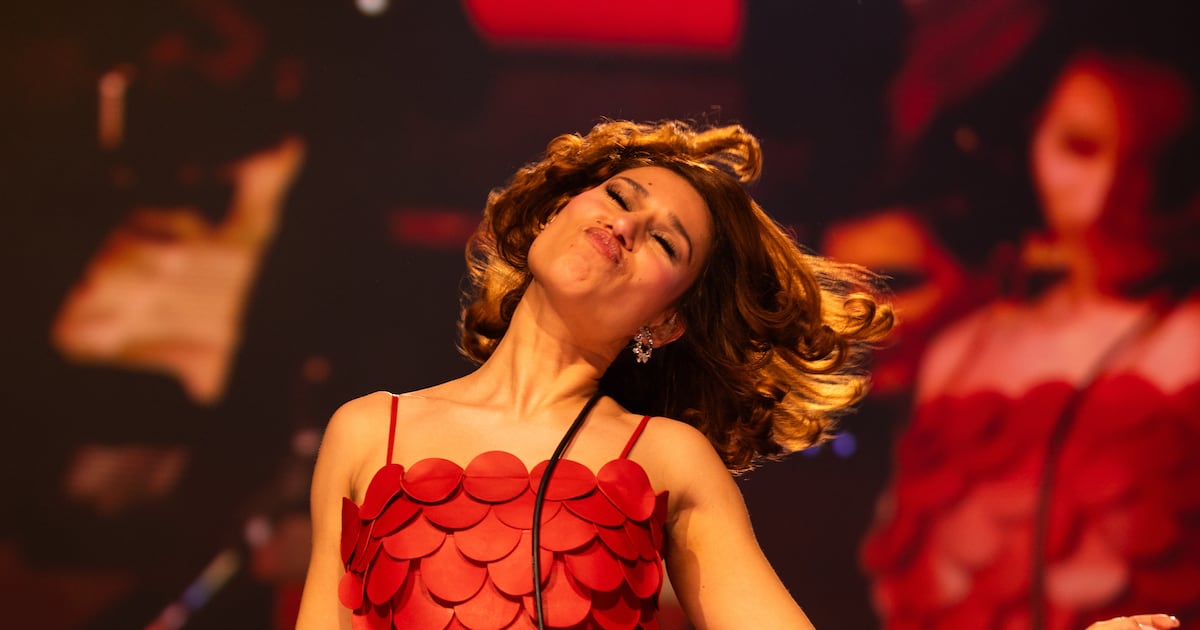
The spotlight followed Raye as she announced herself in a belted fur coat, claimed her microphone from behind the red curtain and wrapped its cable around her body.
“Funny, some people say I remind them of Amy / Some spit through their keyboards, I’ll never amount,” she sang, all drama and defiance.
This was I Will Overcome, the introductory song on the singer’s recent European tour. At the 3Arena in Dublin earlier this month I was struck by the directness of that lyric. How many of the crowd understood, from what was likely their first time hearing it, that the “Amy” Raye namechecked was the late Amy Winehouse?
Excluding the youngest fans present, I would wager that most people there were fully aware. Comparisons are often said to be invidious. The one made between Raye and Winehouse, who died in 2011, aged 27, has certainly been persistent.
I Will Overcome is on Raye’s second album, This Music May Contain Hope, which was released this week, though the British singer has responded to such comparisons before now. In an interview with Vogue in September 2025, she was described as being “bent double over her lap, creasing breathlessly” with laughter as she recalled seeing an online comment dubbing her the “Shein Amy Winehouse”. (Before the rise of the fast-fashion website she might have been branded the “Poundland Amy Winehouse”.)
Until I saw her remarkable This Tour May Contain New Music show I also flirted with this trap of judgment. After Raye split with Polydor, which signed her up, in 2014, but refused to let her release an album, I wondered if she could match the joy of Natalie Don’t, the splendid pop single she co-wrote and released in 2020, close to the end of her big-label era. The sound she settled on as a newly independent artist was dismaying precisely because it was indeed so redolent of the icon that was Amy.
I still like to think of Winehouse at the Village, on Wexford Street in Dublin, where I once saw her unfurl a set drawn from her debut album, Frank, with youthful, untarnished panache.
It was a warm June night in 2004, and she plucked away at her argyle sweater dress in an effort to cope with the unfortunate marriage of heat and wool. This was the only wrinkle. Everyone at the Village was compelled by her, but the British tabloids had not yet discovered her vulnerabilities.
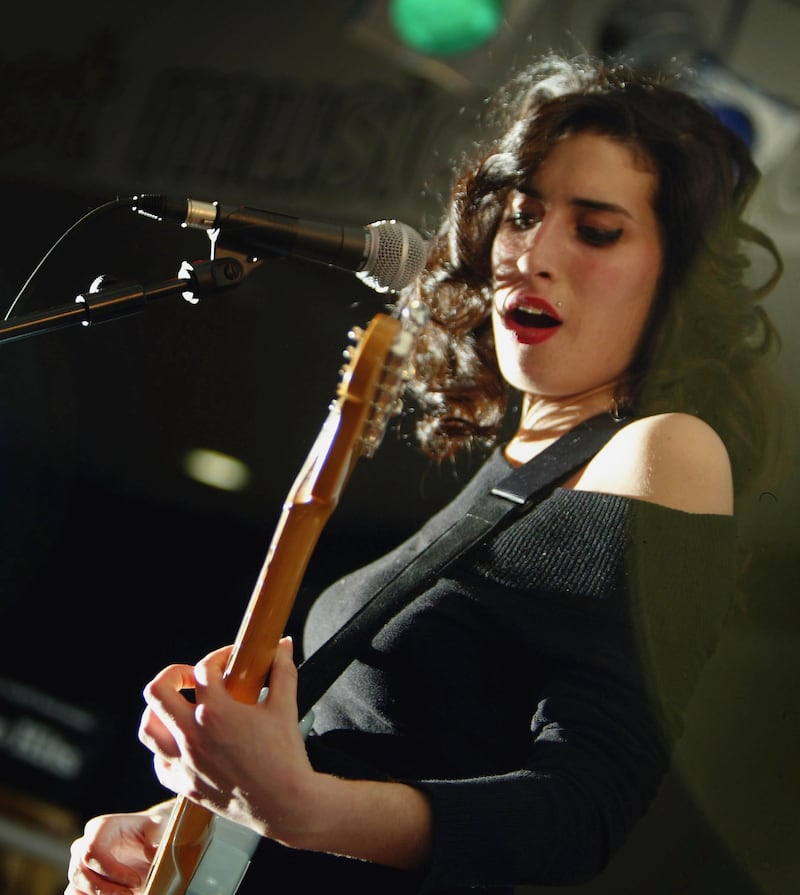 Youthful, untarnished panache: Amy Winehouse in 2004. Photograph: Bruno Vincent/Getty
Since her death I find it painful to listen to this once-in-a-generation artist of startling vocal richness and devastating songwriting capacity. No one could survive a comparison to her intact.
Yet Raye, aka Rachel Keen, is both a survivor and a woman who stands her ground. Notwithstanding Vogue’s report that she laughed at the “Shein Amy Winehouse” jab, there have been other occasions when remarks have seemed to come “from a similar place” as the cruelty meted out to Winehouse in the unenlightened recent past.
The idea that the talent of the Back to Black singer, herself much mocked and mistreated in the anything-goes climate of the 2000s, is now being used as a stick with which to beat a new generation of female artists has set off Raye’s irony meter, and it’s not hard to see why.
“I’m aware that what she did is irreplaceable and inimitable and that is what it is,” the 28-year-old told Elle magazine in January, as she explained why she wrote I Will Overcome. “What’s difficult for me is when people are so horrible, rude, nasty and evil with their words. ‘You’ll never be her. You are an absolute failure. You disgust me trying to think that you could even be remotely like she was’.”
The comparison itself is not wild. Here are two Londoners who went to the same performing-arts school and plumped for a similar vintage glamour in their look and retro quality to their music. Raye has “lived and breathed” many of the same influences as Winehouse and was also inspired by her. It’s easy to imagine Winehouse delivering some Raye songs: The Thrill Is Gone, for instance.
But, leaving aside the valid question of whether female artists are more frequently lumped in with their peers and predecessors than male artists are with theirs, such a shorthand can only ever go so far.
Because there are clear differences. Winehouse had a sharp wit; Raye has a comedic onstage persona. Hurt permeated Winehouse’s music; Raye’s output is also heartfelt, but it can be more outward-facing, more meta. That she is also more of a genre-hopper and conveys a wider palette of musical moods is both true and sad, as we never got to see what Winehouse would go on to do. It’s a tribute to her artistry that her legacy lingers.
But it has been 15 years. Her successors are their own people, and they deserve to be listened to on their own terms.