
NASA’s Curiosity Rover has concluded its exploration of the Martian “boxwork terrain,” offering new revelations that could reshape our understanding of the Red Planet’s geological history. This recent mission, described in detail by NASA scientists, highlights Curiosity’s tireless work in uncovering the secrets of Mars. The rover’s scientific instruments provided unprecedented insights into a unique landscape, marking a crucial milestone in the ongoing study of Mars and its potential to support life.
The Boxwork Terrain: Mars’ Hidden Treasure
Curiosity’s latest adventure took place in the southern reaches of Mount Sharp, one of Mars’ most iconic geological features. Over the past several months, the rover studied the “boxwork terrain,” an area characterized by unusual rock formations that resemble intricate, geometric patterns. This terrain is believed to have formed under specific environmental conditions, and studying it can provide valuable information about Mars’ ancient climate and the processes that shaped its surface.
Using its Mastcam, ChemCam, and APXS instruments, Curiosity meticulously mapped the region, analyzing the composition of rocks and the Martian atmosphere. The rover’s observations of key targets, like “Salar de Maricunga” and “El Misti,” have added layers of data that could be pivotal in answering long-standing questions about the planet’s geological evolution.
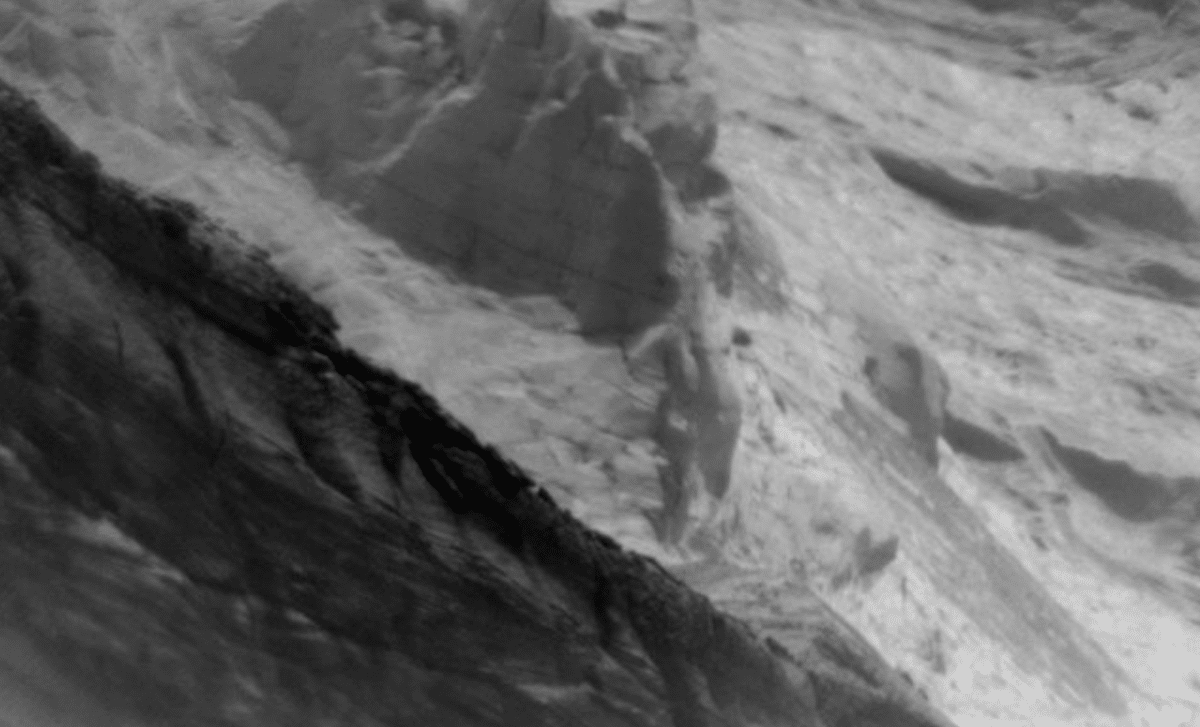
 NASA’’s Mars rover Curiosity acquired this image, of one of the many magnificent ridges seen from the rover’s telescopic Remote Micro-Imager camera (RMI) on its Chemistry & Camera (ChemCam) instrument, on March 20, 2026. ChemCam is an instrument that first uses a laser to vaporize rocks and soil, creating a plasma of their component gases, then later analyzes their elemental composition using an on-board spectrograph. The laser and RMI, which captures detailed images of the area illuminated by the laser beam, sit on Curiosity’s mast (its “forehead”), while the spectrometer is located in the rover’s body. Curiosity captured this image on Sol 4841, or Martian day 4,841 of the Mars Science Laboratory mission, at 03:02:35 UTC.
NASA/JPL-Caltech/LANL/CNES/CNRS/IRAP/IAS/LPG
Breaking Ground in Martian Science: Curiosity’s Role in Discovery
NASA’s Curiosity Rover has consistently been at the forefront of Mars exploration. Since its landing on the Red Planet in 2012, it has uncovered vital clues about Mars’ potential for past habitability. In this recent phase of its mission, Curiosity’s findings in the boxwork terrain have provided deeper insight into Mars’ sedimentary history, hinting at a more complex past than previously thought. By analyzing sediment layers and studying the geological structure of the terrain, scientists are beginning to understand how the Martian environment might have supported life billions of years ago.
Curiosity’s work also highlights the rover’s role in studying the Martian atmosphere. Its ability to capture dust devils, measure atmospheric dust, and observe changes in the sky provides crucial data about weather patterns on Mars. These findings are key to planning future missions, especially those aimed at human exploration.
Why This Discovery Matters: The Bigger Picture
NASA’s recent blog post reveals the importance of this discovery in the context of Mars’ evolution. By studying the boxwork terrain and the various rock formations in this area, scientists are piecing together the history of water on Mars. This is vital because water is considered a key ingredient for life. Understanding how water once flowed across the surface of Mars and shaped its terrain could have implications for future missions aimed at searching for life beyond Earth.
The ongoing work by the Curiosity team not only deepens our understanding of Mars’ past but also brings humanity one step closer to answering one of the most profound questions: Was Mars ever capable of supporting life? The data collected from the boxwork terrain will serve as a foundation for the next phase of Mars exploration, which includes the Perseverance rover and future human missions.